
Description
Excelsa Green Beans represent one of Indonesia’s most distinctive and culturally significant coffee varieties, belonging to the Liberoid group alongside Liberica. Known for their bold aroma, complex flavour, and strong adaptability, Excelsa beans thrive in tropical lowlands where other coffee species struggle. This makes them an important heritage crop with rising recognition in the specialty coffee market.
Their flavour identity combines lively fruit acidity, natural sweetness, and subtle spice, giving Excelsa a character that stands apart from Arabica and Robusta. Often sought after for blending, it brings depth and maturity to cup profiles while maintaining a unique sensory signature that appeals to coffee enthusiasts exploring new origins.
Plant Characteristics and Growing Conditions
Excelsa Green Beans come from Coffea liberica var. dewevrei, a species historically grown in low-altitude regions between 0–750 masl. The plant is highly adaptable, especially in acidic peat soils like those found in Jambi and several parts of Kalimantan. Its resilience makes it suitable for environments unsuitable for Arabica cultivation.
With a maturation period of just 3.5 years, Excelsa offers quick yields of around 1.2 tons per hectare. Moderate tropical rainfall and warm temperatures further support stable production, allowing farmers in Indonesia to cultivate Excelsa sustainably while benefiting from the plant’s disease resistance and environmental tolerance.
Bean Structure and Flavour Profile
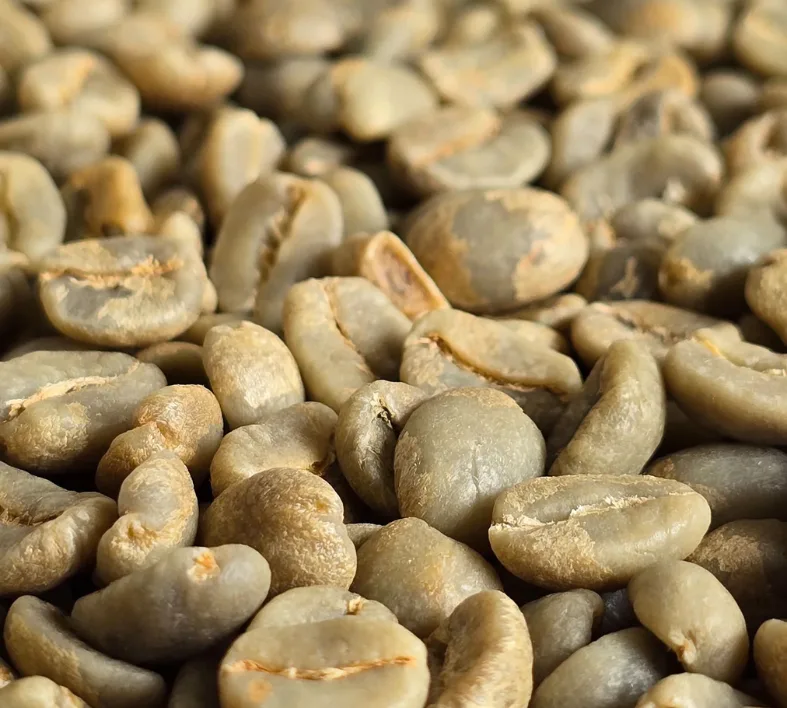
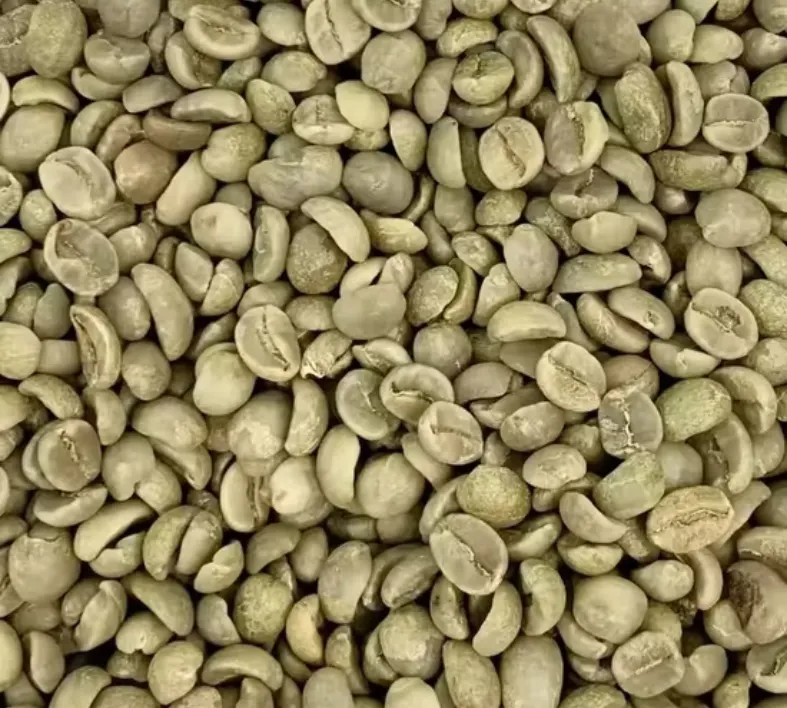
The beans are larger and more irregular in shape compared to Arabica and Robusta, though slightly smaller than Liberica. Their darker hue and textured surface reflect their unique botanical lineage. Once roasted, Excelsa Green Beans produce an aroma that is sharp, fragrant, and reminiscent of tea-like notes.
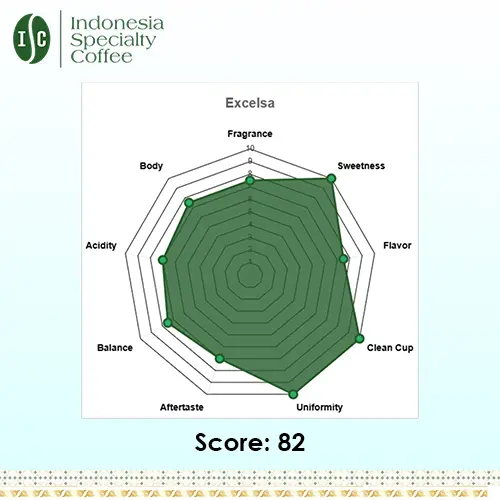
The flavour profile highlights refreshing fruit acidity, caramel-like sweetness, cocoa tones, and delicate spice elements such as clove or cinnamon. A thick body, gentle smokiness, and subtle herbal undertones round out the cup. These attributes make Excelsa well-suited for manual brewing methods like V60, tubruk, and cold brew.
Historical Significance and Indonesian Production
Excelsa was first discovered in West Africa in 1905 and later introduced to Indonesia during the Dutch colonial era. It played an essential role after Arabica plantations were devastated by leaf rust in the late 1800s. Its natural resistance helped revive coffee cultivation across the lowland areas of the archipelago.
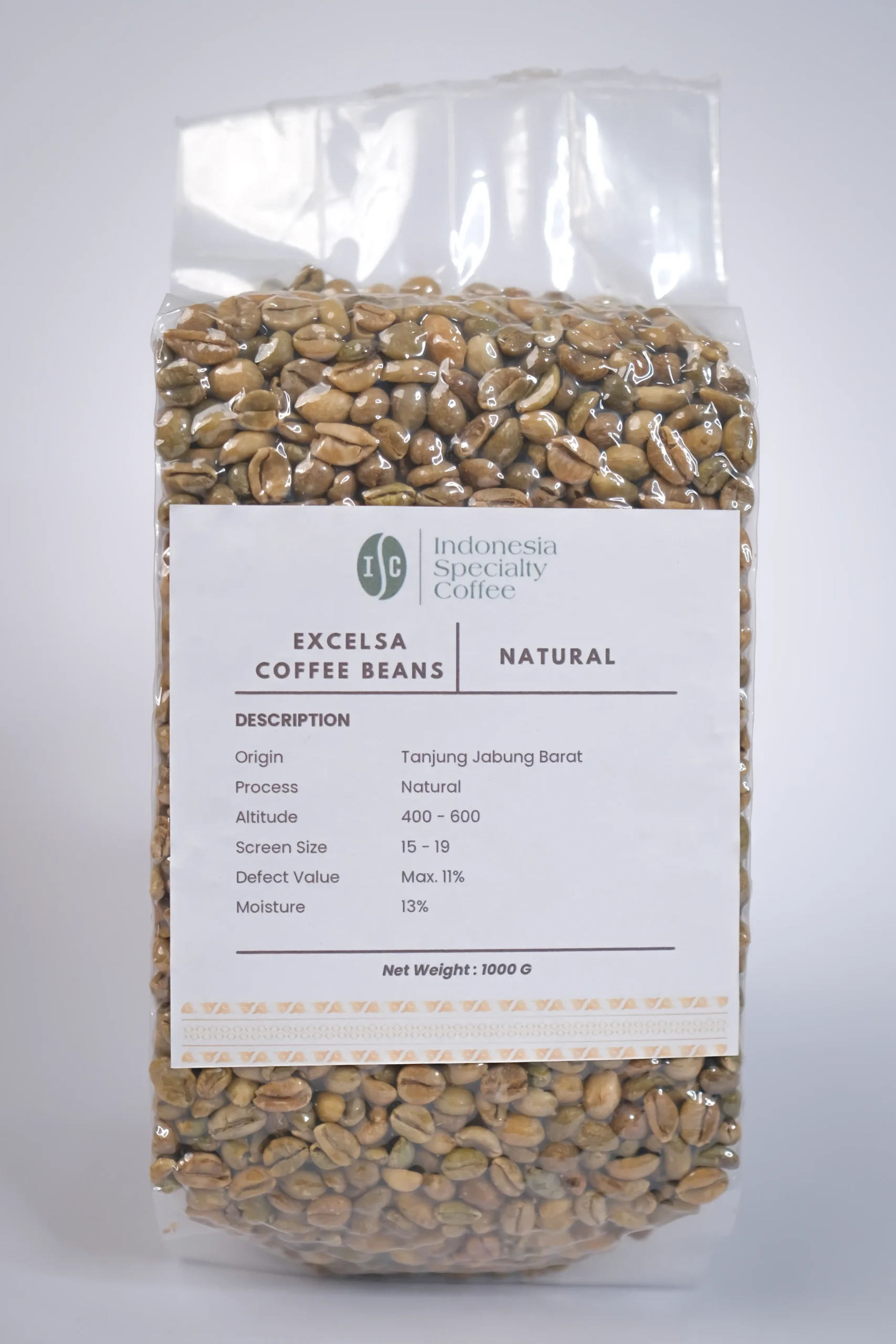
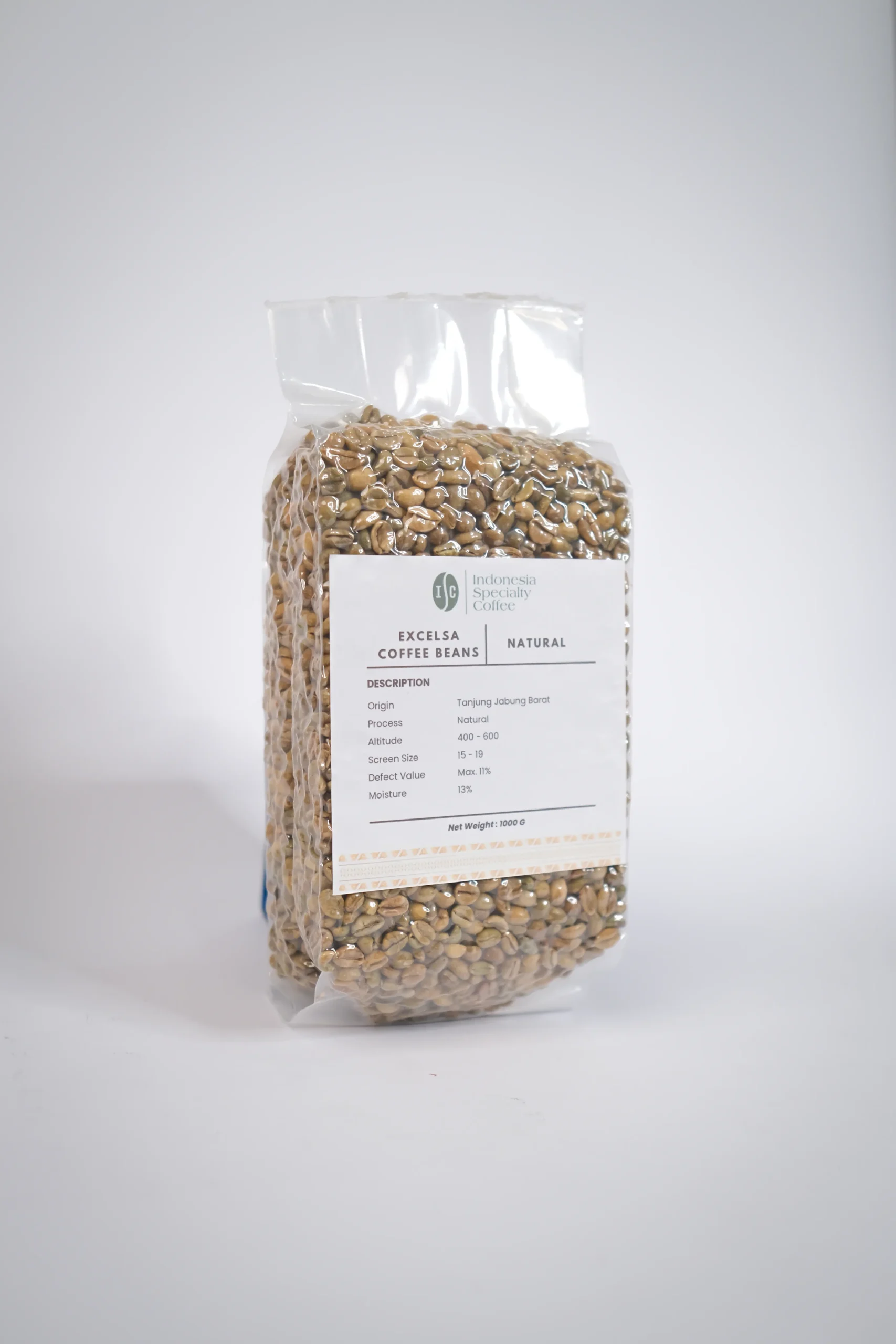
Today, Excelsa Green Beans are produced in regions such as Jambi (Tanjung Jabung Barat), East Java (Wonosalam), and parts of the Riau Archipelago. These areas have preserved Excelsa as a heritage crop, and its increasing presence in specialty competitions showcases its rising international recognition and commercial potential.
Plant and Habitat Specifications
- Scientific Name: Coffea liberica var. dewevrei (formerly Coffea excelsa)
- Group: Liberoid (same group as Liberica Coffee)
- Ideal Planting Altitude: 0–750 meters above sea level (lowlands)
- Growing Conditions: Thrives in tropical areas with moderate rainfall; grows well in acidic peat soils such as those in Jambi, Indonesia.
- Harvest Time: Fast-maturing fruits can be harvested in about 3.5 years.
- Production: Around 1.2 tons per hectare within 3.5 years.
- Main Distribution: Indonesia (Jambi, Riau Archipelago, East Java), West Africa (original discovery site).
Bean and Flavour Specifications
- Bean Shape: Larger and more irregular than Arabica and Robusta, but smaller than Liberica. Darker colour and rougher texture.
- Aroma: Strong and complex, often slightly sharp and fragrant, with tea-like notes.
- Flavour Profile:
- Fruity & Acidic: Refreshing fruit acidity (grape, green apple, or tropical fruit), milder than Robusta.
- Sweet: Naturally sweet undertones like caramel or chocolate; gives a light impression on the palate.
- Spices: May include hints of cinnamon or clove.
- Others: Thick body, slightly smoky, with herbal undertones.
- Uniqueness: Its sweetness makes it ideal for blending, mellowing the sharp acidity or fruitiness of other coffees for a more mature taste.
Processing and Brewing Specifications
- Processing Methods: Washed, natural, or honey process, each producing different flavour nuances.
- Recommended Brewing Methods: Best suited for manual brewing (single origin) to highlight its unique character:
- Tubruk
- Pour Over (e.g., V60)
- Cold Brew
- Espresso Use: Less commonly used as a single-origin espresso compared to Arabica or Robusta.