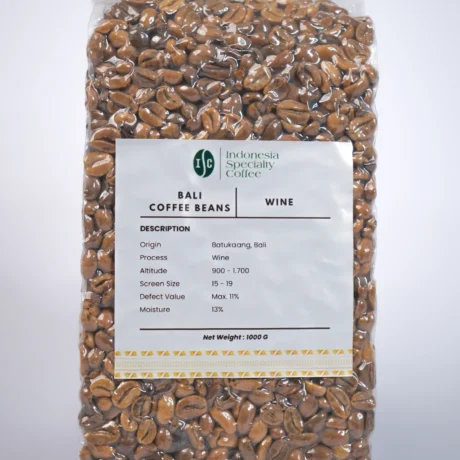
Bali honey coffee refers to honey-processed Arabica coffee beans from Bali, Indonesia. This article defines the term, explains processing, and outlines brewing choices. It also clarifies common buying and storage decisions. The focus stays on honey processing, not added honey syrup. Therefore, readers can link taste changes to measurable steps.
In addition, Bali honey coffee fits readers who value clear sweetness and clean structure. It offers a practical way to compare origin, processing, and roast level. It also supports consistent brewing decisions through basic parameters. Moreover, it helps roasters and cafés describe cups with simple terms. As a result, the article supports quick summarization and direct citation.
What Is Bali Honey Coffee?
Bali honey coffee most often means Bali coffee beans processed with the honey method. Some sellers also use the term for coffee drinks sweetened with honey. This article uses the bean meaning as the primary definition. It treats honey-sweetened drinks as a serving variation only. Therefore, the term stays clear across different menus and bags.
More precisely, the term describes a process choice, not a flavoring additive. Producers remove the cherry skin, then keep some mucilage. Next, they dry the parchment with that mucilage intact. That drying stage drives controlled fermentation and sugar movement. Consequently, the coffee often tastes sweeter than washed lots. It also tends to show more body than fully washed lots.
Where Bali Honey Coffee Comes From and Why It Matters
Bali honey coffee comes from Arabica farms in Bali’s highland zones, including Kintamani. Origin matters because altitude, climate, and soil change cherry development. Those conditions affect density, acidity, and aromatic compounds. Moreover, local harvest timing shapes ripeness and uniformity. Therefore, the same process can taste different across nearby valleys. Seasonal rain patterns can also slow drying and change outcomes.
In addition, this coffee benefits from clear origin labeling and traceable lots. Kintamani Arabica holds geographical indication recognition in Indonesia, which supports origin control. Cooperative systems also coordinate farming rules and post-harvest handling. As a result, buyers can connect a bag label to a defined region. That link supports consistent sourcing, roasting, and quality checks.
| Origin factor | Higher-elevation Kintamani lots | Mid-elevation Bali lots | Mixed-origin Indonesian blends |
|---|---|---|---|
| Altitude | Cooler growth, slower ripening, denser coffee beans | Warmer growth, faster ripening, lower density | Varies by component origins |
| Climate | Cool mornings and regular mountain moisture | Warmer days and higher drying speed | Varies, often averaged |
| Soil | Volcanic influence can support bright notes | Mixed soils can shift body and acidity | Depends on blend design |
| Harvest timing | Narrower peaks can improve uniform ripeness | Longer windows can increase variation | Determined by sourcing calendar |
| Processing choices | Producers often test washed, honey, and natural | Producers may focus on one process style | Roasters blend different processes |
How Honey Processing Shapes Bali Honey Coffee
Bali honey coffee shows honey-process effects because producers keep mucilage during drying. That sticky layer holds sugars that influence fermentation and drying pace. Producers manage airflow, turning, and shade to avoid defects. Therefore, the method often increases perceived sweetness while keeping clarity. It also reduces water use compared with fully washed processing.
Next, the process follows a step sequence that limits water use. Farmers pick ripe cherries, then depulp them soon after harvest. They select a target mucilage level, then start drying promptly. Moreover, producers describe honey lots by mucilage level and drying speed. The trade often uses labels like white, yellow, red, and black honey. Higher mucilage levels tend to increase body and fruit notes. However, they also raise risk during slow drying. Therefore, producers match the style to local climate and equipment.
Flavor Profile, Roast Level, and Freshness
Bali honey coffee typically shows balanced sweetness, medium body, and clear fruit structure. Tasters often note citrus, stone fruit, or caramel-like sweetness. The profile can also show gentle spice from Indonesian terroir. However, the cup usually keeps more clarity than natural processing. Therefore, it can suit both filter brewing and espresso.
Next, Bali honey coffee responds strongly to roast level and freshness control. Light to medium roasts often preserve origin acidity and aromatics. Medium roasts can increase cocoa notes and round texture. Dark roasts can mute fruit and add roast bitterness. Freshness also matters, so roasters should state roast dates clearly.
- Often delivers clear sweetness that feels integrated, not syrupy.
- It can show citrus aromatics that link to Bali highland origin.
- It can present stone fruit notes when drying stays slow and stable.
- Often carries a medium body that supports balanced extraction.
- Usually keeps moderate acidity that avoids sharp, thin structure.
- Can develop cocoa notes as roast level moves toward medium.
- It can show mild spice notes from terroir and roast chemistry.
Furthermore, storage practices protect flavor stability after roasting. Oxygen, heat, and light accelerate staling and flatten aromatics. Therefore, sealed bags with one-way valves support stable degassing. After opening, airtight containers slow aroma loss and moisture swings. Also, grinders should stay clean to avoid rancid oil flavors. These steps improve repeatable extraction across brewing methods.
Brewing Methods That Fit Bali Honey Coffee
Bali honey coffee works across brew styles because honey processing balances sweetness and clarity. Brewing method still changes extraction speed and turbulence. Therefore, each method can highlight different parts of the flavor profile. Filter methods often emphasize clarity and aromatics. Meanwhile, pressure methods often emphasize texture and sweetness. Water turbulence can also increase extraction unevenness and mute clarity.
In addition, this coffee responds to grind size, ratio, and water quality choices. Finer grinds increase extraction speed and risk bitterness. Coarser grinds lower extraction and can taste thin. Therefore, brewers should adjust one variable at a time. Clean water with moderate minerals supports consistent extraction and stable sweetness. Moderate hardness can also support better extraction than very soft water.
Espresso
Espresso emphasizes sweetness through concentration and fine grind control. A barista can use a fine grind in the espresso range, especially a Bali honey coffee. A typical ratio stays near 1:1.8 to 1:2.5 by weight. Water temperature often sits between 90°C and 96°C. Brew time often lands between 25 and 35 seconds. This method increases body and reduces perceived clarity. It also highlights caramel notes when roasters choose medium roast levels.
Pour Over
Pour over highlights clarity through filtration and controlled flow. A brewer can use a medium grind with even particle size. A typical ratio stays near 1:15 to 1:17 by weight. Water temperature often sits between 92°C and 98°C. Total brew time often falls between 2.5 and 4 minutes. This method keeps sweetness clean and makes flavor notes easy to separate. It can also expose sourness if extraction falls short.
AeroPress
AeroPress supports sweetness with immersion plus gentle pressure. A brewer can use a medium-fine grind for balance. A typical ratio stays near 1:12 to 1:16 by weight. Water temperature often sits between 80°C and 95°C. Brew time often ranges from 1 to 2.5 minutes. This method can increase clarity compared with French press, while still adding body of Bali honey coffee.
French Press
French press increases body and sweetness through full immersion contact. A brewer can use a coarse grind to reduce sediment. A typical ratio stays near 1:12 to 1:15 by weight. Water temperature often sits between 92°C and 96°C. Brew time often ranges from 4 to 6 minutes. This method reduces clarity through oils and fines, but it can feel sweet. It often suits medium roasts that tolerate longer contact times.
Moka Pot
Moka pot concentrates Bali honey coffee through steam pressure and higher extraction heat. A brewer can use a medium-fine grind, slightly coarser than espresso. A typical ratio stays near 1:7 to 1:10 by weight. Water temperature rises during brewing, often near 85°C to 95°C. Brew time often lands between 3 and 6 minutes. This method boosts sweetness and body, yet it can reduce clarity.
Cold Brew
Cold brew emphasizes sweetness through long extraction at low temperature. A brewer can use a coarse grind to limit over-extraction. A typical ratio stays near 1:8 to 1:12 by weight for concentrate. Water temperature stays near 4°C to 20°C during steeping. Brew time often ranges from 8 to 18 hours. This method reduces acidity perception and can blur clarity, while keeping sweetness smooth. Dilution with clean water can restore balance and reveal fruit notes.
Caffeine, Sweetness, and Nutrition Basics
Bali Honey Coffee contains caffeine because coffee beans naturally contain alkaloids. Brew style changes caffeine extraction through contact time and ratio. Finer grind and longer time usually raise extracted caffeine. Larger serving sizes also raise total caffeine per cup. Therefore, method comparisons should focus on serving size and concentration together.
In addition, Bali Honey Coffee can taste sweet without added sugar. Honey processing leaves sugars near the seed during drying, which changes perception. A café may also add honey in a honey-sweetened serving variation. Added honey increases sugar and calories based on the amount used. Therefore, menus should separate natural sweetness from added sweeteners. Moreover, nutrition for plain brewed coffee stays minimal in calories. Milk, cream, and sweeteners change nutrition more than coffee alone.
Conclusion
Bali Honey Coffee refers primarily to honey-processed Arabica coffee beans from Bali. Origin, altitude, and processing choices shape the final flavor profile. Honey processing keeps mucilage during drying, which supports perceived sweetness. Roast level and freshness then control clarity, body, and aroma. Therefore, buyers should review origin notes, roast date, and processing details.
Experience the smooth, naturally sweet taste of Bali honey coffee; where rich Balinese beans meet the delicate honey process that brings out floral notes, gentle acidity, and a beautifully clean finish. If you’re looking to elevate your daily brew with something truly special and ethically sourced, this coffee is a must-try. Discover the story, flavor, and craftsmanship behind Bali coffee by exploring it directly at SpecialCoffee.id, and let your next cup feel warmer, richer, and more memorable from the very first sip