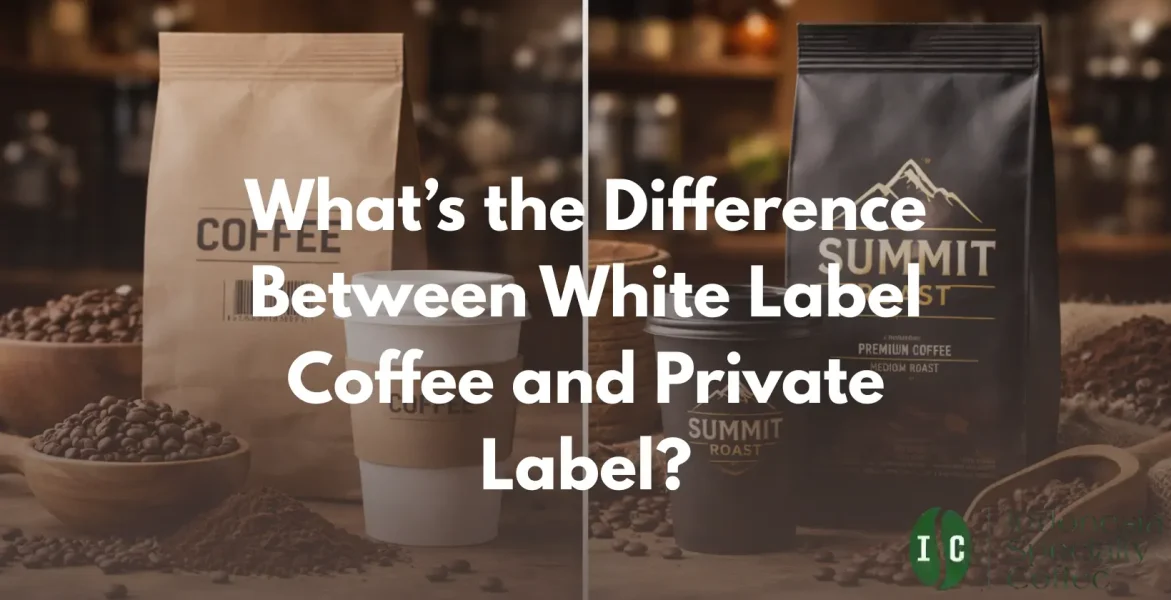
White label coffee and private label coffee are often grouped together because both involve coffee produced by a supplier and sold under another brand. However, they serve different commercial purposes. Understanding how each model works helps coffee businesses choose the right strategy based on speed, control, and market positioning.
While both approaches allow brands to enter the coffee market without owning roasting facilities, the level of customisation and exclusivity varies significantly. For specialty-focused businesses, knowing these differences is essential when building brand value, managing costs, and meeting customer expectations in a competitive coffee landscape.
What Is White Label?
The term white label originated in the music industry, where unreleased records were distributed with plain labels to DJs and radio stations. This prevented public identification of the artist while allowing wide distribution. The concept focused on anonymity, scale, and rapid market exposure without revealing the original source.
In modern business, white labelling follows the same principle. A producer creates a product that multiple companies can sell under their own branding. The manufacturer remains behind the scenes, while resellers focus on marketing, sales, and customer relationships rather than product development.
What Is White Label Coffee?
White label coffee is produced by a coffee supplier as a standardised product intended for distribution to multiple retailers. Each retailer applies its own brand identity, packaging, and messaging, while the coffee itself remains unchanged across all sellers using the same product.
To the end consumer, white label appears as a unique offering from the retailer. There is typically no visible reference to the original supplier, allowing brands to build recognition quickly without investing in sourcing, roasting, or quality control infrastructure.
What Is Private Label Coffee?
Private label coffee is produced by a coffee supplier exclusively for one brand or retailer. Unlike white label coffee, this product is not shared with other sellers, giving the brand ownership over its identity and market positioning while still relying on professional production expertise.
This model allows businesses to offer coffee that aligns closely with their brand story, customer preferences, and pricing strategy. Private label coffee is especially popular among specialty brands seeking differentiation without managing the full complexity of coffee production.
What Are the Differences Between White Label and Private Label Coffee?
The primary difference between white label and private label coffee is product flexibility. White label cannot be altered. While branding and packaging can change, the coffee’s origin, roast profile, and flavour remain identical regardless of which brand sells it.
Private label coffee offers a more customised approach. Brands can collaborate with suppliers to define flavour profiles, roasting methods, or blend compositions. Once finalised, the coffee is sold exclusively under that brand, creating differentiation and reducing direct competition with identical products.
Another key difference relates to responsibility and positioning. White label often includes discreet supplier attribution in small print for legal reasons. Private label coffee typically places full responsibility on the brand, reinforcing ownership, accountability, and perceived authenticity in the eyes of consumers.
Advantages of White Label
White label provides a fast and efficient way to launch a coffee brand. The supplier manages sourcing, roasting, and consistency, allowing retailers to focus on branding, distribution, and customer acquisition without operational complexity or high upfront investment.
Quality is not necessarily compromised. Many white label offerings meet specialty-grade standards and can compete with established brands in terms of taste and reliability. Additionally, white label often delivers strong margins compared to nationally recognised brands.
Disadvantages of White Label Coffee
One drawback of white label coffee is limited differentiation. Because the same product is sold to multiple retailers, brands may struggle to stand out beyond packaging and marketing, particularly in competitive specialty coffee markets.
White label can also suffer from perception issues. If branding is minimal or generic, consumers may associate the product with lower quality or mass-market positioning, even when the coffee itself meets high standards.
Advantages of Private Label Coffee
Private label coffee allows brands to stand apart from large commercial coffee names by offering something distinctive. This is especially valuable in markets with educated consumers who value flavour clarity, origin transparency, and thoughtful roasting approaches.
Pricing flexibility is another advantage. Private label coffee often allows better control over cost structures while maintaining premium positioning. Exclusivity strengthens brand identity and enables businesses to target specific customer segments with greater precision.
Disadvantages of Private Label Coffee
Private label coffee involves higher risk than white label coffee. Greater customisation means higher development costs and the possibility that the final product may not meet customer expectations or market demand.
If flavour profiles, branding, or pricing are misaligned, businesses may struggle to move inventory. Unlike white label coffee, private label products cannot easily be repurposed or resold under another identity, increasing commercial risk.
Choosing the Right Model for Your Coffee Business
Choosing between white label and private label coffee solutions depends on your business goals, resources, and desired level of control. White label coffee supports faster market entry, lower operational risk, and scalable growth, making it ideal for brands exploring coffee branding services or expanding retail offerings efficiently.
If you are looking to launch or scale with white label coffee from a specialty coffee supplier, Specialtycoffee.id provides end-to-end support, from coffee sourcing and roasting to custom packaging and wholesale distribution. Contact Specialtycoffee.id today to start your white label coffee partnership and build a coffee brand positioned for long-term success.