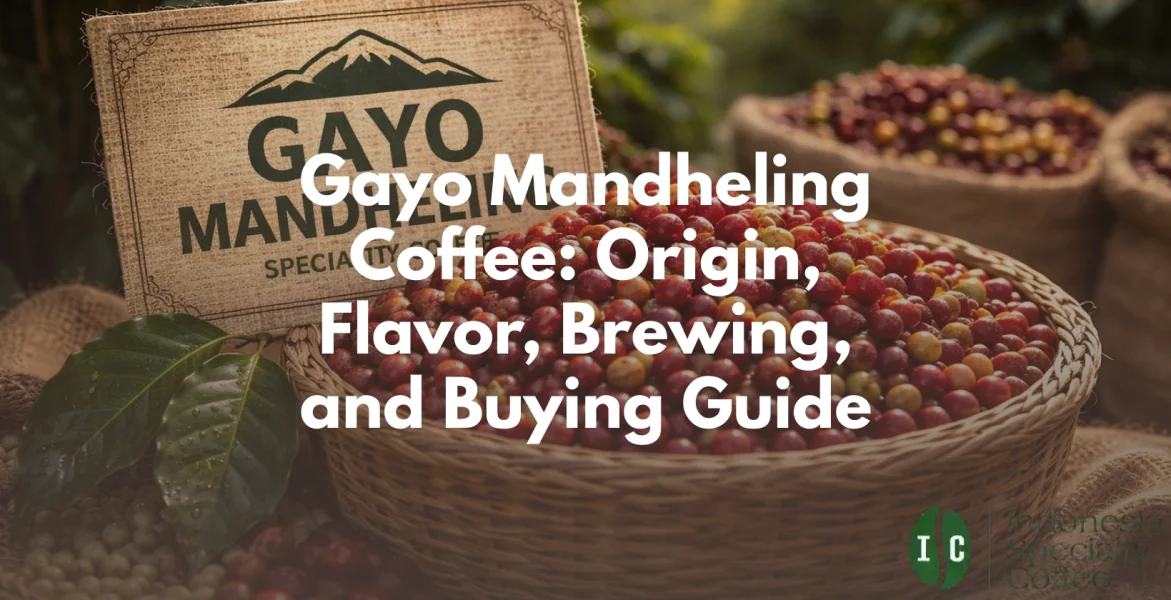
Gayo Mandheling coffee is a market term that can confuse even regular buyers. It usually refers to beans from Aceh’s Gayo Highlands sold with a Mandheling-style identity, a label associated with Sumatra’s deep body and earthy sweetness. The most useful questions are where it was grown, how it was processed, and whether the cup is clean.
Key Takeaways
- The label often combines Aceh origin with a familiar Mandheling-style cup profile.
- Expect low acidity, full body, and notes of herbs, cocoa, spice, and wood.
- Wet-hulling, or giling basah, helps create a broad, savory cup.
- Fresh roast dates and traceability matter more than branding.
- Medium to medium-dark roasts usually fit the profile best.
What Makes Gayo Mandheling coffee Distinct
Gayo Mandheling coffee is not a single variety. It is a commercial label used for Sumatran coffee that fits buyer expectations for a heavy, low-acid cup. In many cases, the beans come from Gayo-growing areas in Aceh, while the Mandheling part signals a style many buyers already recognize.
Specialty buyers look past the label. They check for a clean cup, low defects, even drying, and clear origin details such as district, altitude, process, and producer group.
Quick Market Context
- Gayo usually refers to highland coffee from Central Aceh and Bener Meriah.
- Mandheling is a famous market name linked with North Sumatra trade history.
- Combined labeling often communicates flavor style more than strict geography.
Flavor Profile of Gayo Mandheling coffee
In the cup, Gayo Mandheling coffee usually shows syrupy body, low acidity, and notes of earth, herbs, dark chocolate, cedar, and spice. Better lots may add brown sugar, tobacco, or dried-fruit depth. The finish is usually long, mellow, and savory rather than bright.
When producers sort and dry the lot carefully, the profile tastes cleaner than many other Sumatran coffees. Good examples feel dense and rustic, but not muddy.
Table 1 — Quick Profile
| Attribute | Typical Range/Answer | What It Means for Taste |
|---|---|---|
| Origin | Aceh, especially Gayo Highlands | Classic Sumatra depth with regional nuance |
| Altitude | About 1,100–1,600 meters | Higher density can support sweetness |
| Varietals | Common local and Typica-derived selections | Cup style varies, but body stays familiar |
| Process | Mostly wet-hulled; some washed or natural | Shapes body, earthiness, and clarity |
| Roast Range | Medium to medium-dark | Builds chocolate and spice without flattening the cup |
| Acidity | Low to medium-low | Keeps the profile mellow, not sharp |
| Body | Medium-heavy to syrupy | Creates the plush mouthfeel buyers expect |
| Flavor Notes | Earthy, herbal, chocolatey, spicy | Delivers savory depth and warmth |
Growing Regions Behind Gayo Mandheling coffee
The geography becomes clearer when the names are separated. The Gayo Highlands are in Aceh, northern Sumatra, and are known for high elevations and smallholder production. The Mandheling name is more closely tied to North Sumatra trade language and a classic regional cup identity.
For buyers, this label usually means a Gayo-origin coffee sold in a style associated with Mandheling expectations. The safest way to read it is to look for district, altitude, harvest timing, producer group, and process.
Table 2 — Gayo vs. Mandheling vs. Other Sumatra
| Coffee Type | Region | Body | Acidity | Signature Notes | Best Brewing Methods |
|---|---|---|---|---|---|
| Gayo | Aceh Highlands | Medium-heavy | Low to medium-low | Herbs, cocoa, cedar, spice | Pour over, French press |
| Mandheling | North Sumatra trade style | Heavy | Low | Earth, dark chocolate, tobacco | French press, espresso |
| Lintong | Lake Toba area | Medium to heavy | Medium-low | Sweet herbs, light citrus, cocoa | Pour over, espresso |
| Other Sumatra wet-hulled lots | Various | Medium-heavy to heavy | Low | Woody, savory, dark sugar | French press, cold brew |
Processing Methods and Taste
Wet-hulling, known locally as giling basah, is central to many Sumatran flavor profiles. Farmers remove the fruit, partially dry the parchment, hull it at relatively high moisture, and then finish drying the green coffee. That sequence can build body, soften acidity, and create earthy depth.
Careful drying and sorting reveal cocoa, spice, and sweetness. Weak handling can produce mustiness, rough herbal notes, or uneven roasting. That is why specialty buyers ask for defect counts, moisture stability, and cupping consistency.
How to Buy Gayo Mandheling coffee with Confidence
When buying Gayo Mandheling coffee, freshness and traceability are the best filters. A roast date is more useful than a vague best-before label. Whole bean is usually the stronger choice because aroma lasts longer and grind size can be matched to the brew method.
Quality signs worth checking include:
- Recent roast date
- Whole bean format
- Named origin or cooperative
- Clear process details
- Specific tasting notes
- Protective packaging
Storage should be simple: an airtight, opaque container in a cool, dry cupboard. Refrigerators add moisture and odor risks. Grinding only what is needed for each brew keeps flavor more stable.
How to Choose the Right Roast
Roast level changes how much spice, cocoa, sweetness, and earthiness appear in the cup. Most roasters prefer medium to medium-dark because that range preserves body while keeping the finish smooth.
- Light-medium highlights herbs and origin detail, but can taste drier if the lot is less clean.
- Medium often gives the best balance of syrupy body, cocoa sweetness, and spice.
- Medium-dark pushes chocolate and roast depth, making it a strong fit for espresso and French press.
- Very dark roast can work for bold drinkers, but often hides nuance.
Brewing Examples for Gayo Mandheling coffee
Gayo Mandheling coffee works well across several brew styles because its body holds up in immersion, pressure, and slow-filter brewing. The method changes whether the cup feels cleaner, heavier, sweeter, or more intense.
Table 3 — Brewing Examples
| Method | Dose | Water | Grind | Time | What to Expect in the Cup |
|---|---|---|---|---|---|
| Pour Over | 18 g | 300 g | Medium | 2:45–3:15 | Cleaner herbs, cocoa, cedar |
| French Press | 30 g | 500 g | Coarse | 4:00 | Fuller body, spice, earthy sweetness |
| Espresso | 18 g in / 36 g out | N/A | Fine | 25–32 sec | Dense texture, dark chocolate, syrupy spice |
| Cold Brew | 80 g | 1,000 g | Coarse | 12–16 hr | Smooth body, muted acidity, chocolate and wood |
Common Misconceptions
- The name does not describe a single botanical variety.
- A traditional-sounding label does not guarantee higher quality.
- Pleasant earthiness can be stylistic; mustiness is not.
- Darker roast is not automatically better.
FAQ
Why is Gayo Mandheling coffee used as a name?
Buyers often use the term because they already recognize Mandheling as shorthand for a rich Sumatran cup. Some sellers combine the names to signal the flavor style quickly, even when farmers grow the coffee in Aceh.
Is this coffee always earthy?
Not always. Better lots are earthy in a controlled way, with sweetness and spice supporting the cup. Dusty or musty flavors usually point to preparation or storage problems.
Which brew method suits it best?
French press and espresso show body and chocolate especially well. Pour over works nicely for cleaner lots, while cold brew makes the profile softer and smoother.
What do specialty buyers look for?
They look for a clean cup, low defects, stable moisture, roast compatibility, and lot consistency. Traceability also matters because it supports repeatability and trust.
Conclusion
Choosing this Sumatran style well comes down to understanding origin terms, processing, roast development, and freshness. When labels are supported by traceable sourcing and a clean, consistent cup, buyers can expect depth, syrupy body, spice, and chocolate. That combination is why Gayo Mandheling coffee continues to hold strong appeal among roasters and everyday brewers today.
For readers ready to explore a fuller, low-acid Sumatra profile, specialtycoffee.id is a practical place to start. A specialty-focused seller can provide roast details, sourcing information, and brewing guidance that make selection easier. Buying from SpecialtyCoffee.id helps turn curiosity into a more informed, satisfying cup at home or in cafes, for gifts and daily brewing.