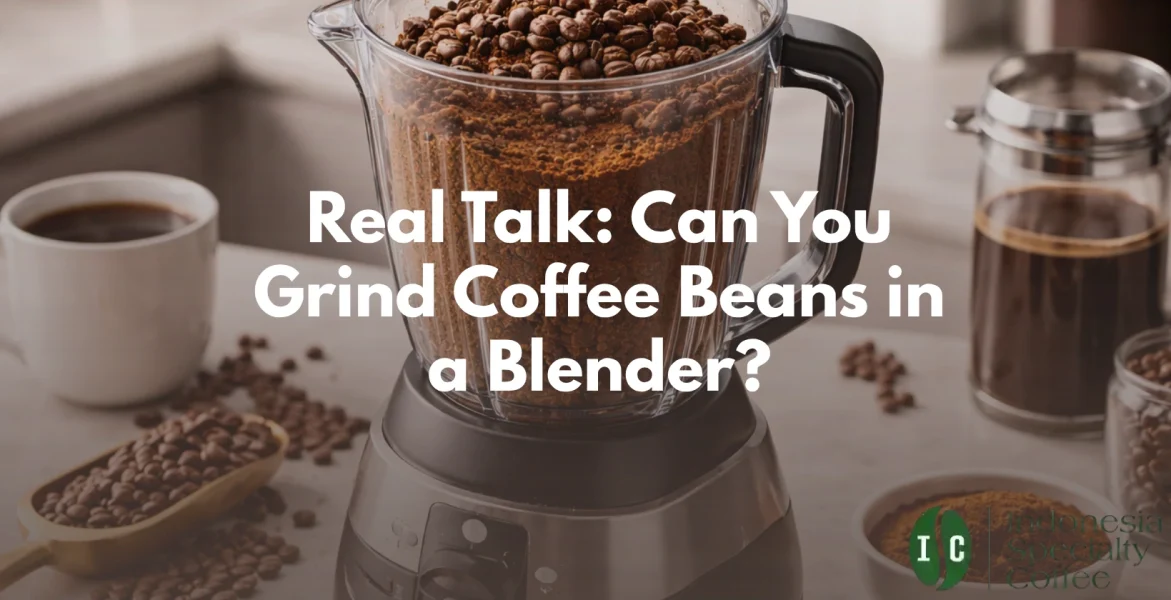
If you’re standing in your kitchen without a dedicated coffee grinder, you’ve probably wondered: can you grind coffee beans in a blender? The short answer is yes, but there’s much more to consider before you press that blend button. This comprehensive guide walks coffee lovers through everything they need to know about using a blender as an alternative grinding solution.
Understanding Your Blender’s Capability
Can you grind coffee beans in a blender? Most home blenders can absolutely do this job, though not all are equally suited for the task. The key difference lies in motor power and blade design. A standard kitchen blender with at least 500 watts of power can handle coffee beans effectively, breaking them down into usable grounds within seconds.
The mechanism matters significantly. Blenders work through high-speed blade rotation, creating friction and impact that pulverizes beans. This differs from burr grinders, which use crushing or cutting mechanisms. When you ask “can you grind coffee beans in a blender,” you’re essentially asking whether this friction method produces acceptable results and for many brewing methods, it absolutely does.
Why Coffee Drinkers Consider This Option
Several reasons drive people to explore whether can you grind coffee beans in a blender works for their needs:
- Convenience: Blenders are already in the kitchen, eliminating the need for another appliance
- Cost-effectiveness: No additional equipment investment required
- Space-saving: Ideal for apartments or compact kitchens with limited counter space
- Multi-functionality: The same appliance handles grinding and other tasks
How Blending Actually Grinds Coffee: The Technical Side
When asking “can you grind coffee beans in a blender,” understanding the process helps set realistic expectations. Blender blades move at approximately 8,000-30,000 RPM, depending on the model. This rapid movement creates multiple grinding actions simultaneously.
The beans experience both:
- Impact grinding: Blades strike beans directly, breaking them apart
- Friction grinding: Bean fragments rub against each other and the container walls
- Air circulation: The vortex effect moves unground beans back toward the blades
This combination works surprisingly well, though the results differ from dedicated grinders.
Comparing Grinding Methods: A Practical Breakdown
| Grinding Method | Consistency | Heat Generation | Time Required | Best For |
|---|---|---|---|---|
| Burr Grinder | Uniform, precise | Minimal | 20-40 seconds | Espresso, pour-over |
| Blade Grinder | Inconsistent | Moderate | 10-15 seconds | Drip coffee, French press |
| High-Power Blender | Moderately consistent | Moderate to high | 5-10 seconds | Drip coffee, cold brew |
| Standard Blender | Very inconsistent | High | 10-20 seconds | Coarse French press only |
The Real Answer: Can You Grind Coffee Beans in a Blender?
Can you grind coffee beans in a blender? Yes, you absolutely can. Even though success depends heavily on your specific blender model and brewing method requirements.
A high-powered blender (600+ watts) produces surprisingly acceptable grounds for French press or drip coffee. The speed allows for quick processing, minimizing heat exposure that might damage delicate coffee flavors. Most users find that grinding for 5-10 seconds achieves a medium consistency suitable for common brewing techniques.
However, can you grind coffee beans in a blender successfully for espresso? This proves more challenging. Espresso demands consistently fine, uniform particle size, a precision where blenders typically fall short. The inconsistent grounds lead to uneven extraction, resulting in poor espresso quality.
Practical Steps: Making It Work
When attempting to grind beans in a blender, technique matters as much as equipment. Here’s what actually works:
1: Use the Right Quantity
- Fill the blender one-third full with beans
- Avoid overstuffing, which prevents proper blade contact
- Process in batches if needed for larger quantities
2: Choose Your Pulse Setting
- Start with pulse mode rather than continuous blending
- Use short 2-3 second bursts
- Check consistency between pulses
- This method gives better control than full-speed grinding
3: Monitor Temperature
- Stop occasionally to let the blender cool
- Heat damages coffee’s complex flavor compounds
- Most beans heat noticeably after 15-20 seconds of continuous blending
4: Verify Your Grind Size
- Medium grind: About 10-15 seconds pulsing (drip, French press)
- Fine grind: 20-30 seconds pulsing (pour-over, Aeropress)
- Coarse grind: 5-10 seconds pulsing (cold brew, Turkish methods)
When Blender Grinding Makes Sense
Can you grind coffee beans in a blender? The better question is: should you? The answer depends on your situation.
Blender grinding works well for:
- Emergency situations when your grinder breaks
- Occasional coffee drinkers without regular grinding needs
- French press enthusiasts (most forgiving brewing method)
- Cold brew preparation (coarser consistency acceptable)
- Bulk grinding for large quantities
- Budget-conscious beginners testing coffee interests
Blender grinding doesn’t work well for:
- Espresso or Turkish coffee (require ultra-fine precision)
- Daily consumption (quality inconsistency becomes frustrating)
- Third-wave specialty coffee (demands precision grinders)
- Pour-over enthusiasts seeking optimal extraction
- Those prioritizing flavor preservation
The Heat Factor: A Critical Consideration
One significant concern when exploring “can you grind coffee beans in a blender” involves heat generation. Blender friction creates warmth that affects beans differently than burr grinding.
Specialty coffee professionals worry about this for good reason. Heat can:
- Damage aromatic compounds that define coffee’s flavor profile
- Accelerate oxidation of freshly ground beans
- Affect extraction rates during brewing
- Reduce shelf life of ground coffee
A high-quality blender minimizes this risk through rapid processing. Grinding for just 5-10 seconds keeps temperature rise minimal. Conversely, grinding for 30+ seconds noticeably heats the beans and container.
Realistic Expectations and Results
Asking “can you grind coffee beans in a blender” and actually using one reveals important differences. Users report that blender-ground coffee produces acceptable results for casual brewing, but dedicated coffee enthusiasts notice the difference.
The inconsistent particle size creates mixed results during brewing. Smaller fragments over-extract while larger pieces under-extract, leading to muddy or sour flavor notes. Professional coffee professionals would never choose blender grinding for quality-focused applications.
For someone who drinks one cup weekly, however, the difference barely registers. The convenience often outweighs minor flavor compromises.
Making Your Decision: Is Blender Grinding Right for You?
Can you grind coffee beans in a blender? You can, but whether you should depends on these factors:
- Your blender’s wattage: 600+ watts yields better results
- Brewing method: French press tolerates inconsistency; espresso doesn’t
- Frequency: Daily drinkers notice quality differences; occasional users don’t
- Coffee quality: Premium beans deserve better grinding methods
- Budget constraints: Consider a quality burr grinder investment
Most coffee professionals agree that a basic burr grinder costing $25-50 delivers dramatically better results than even premium blenders. The difference becomes immediately apparent during brewing.
Conclusion: Your Path Forward
Can you grind coffee beans in a blender? Absolutely, high-powered blenders handle this task adequately, producing grounds suitable for French press and drip coffee without major issues. The process requires attention to technique, temperature management, and realistic expectations about consistency. For casual coffee drinkers facing an emergency or testing their coffee interests, blender grinding offers a legitimate short-term solution that actually works.
For anyone serious about coffee quality and flavor exploration, investing in even an entry-level burr grinder transforms the experience dramatically. The difference between blender-ground and properly ground beans becomes immediately apparent in your cup, revealing flavor nuances and complexity that casual grinding masks. Consider your coffee habits, budget, and quality priorities when deciding whether blender grinding suits your lifestyle.
Ready to elevate your coffee experience? Discover exceptional specialty coffee beans at SpecialtyCoffee.id, carefully sourced from Indonesia’s finest regions and perfectly ground for your preferred brewing method. Our premium selections deserve premium grinding, and our expert team helps you choose beans that match your brewing preferences perfectly. Explore our collection today and transform your daily coffee ritual into something truly extraordinary.