
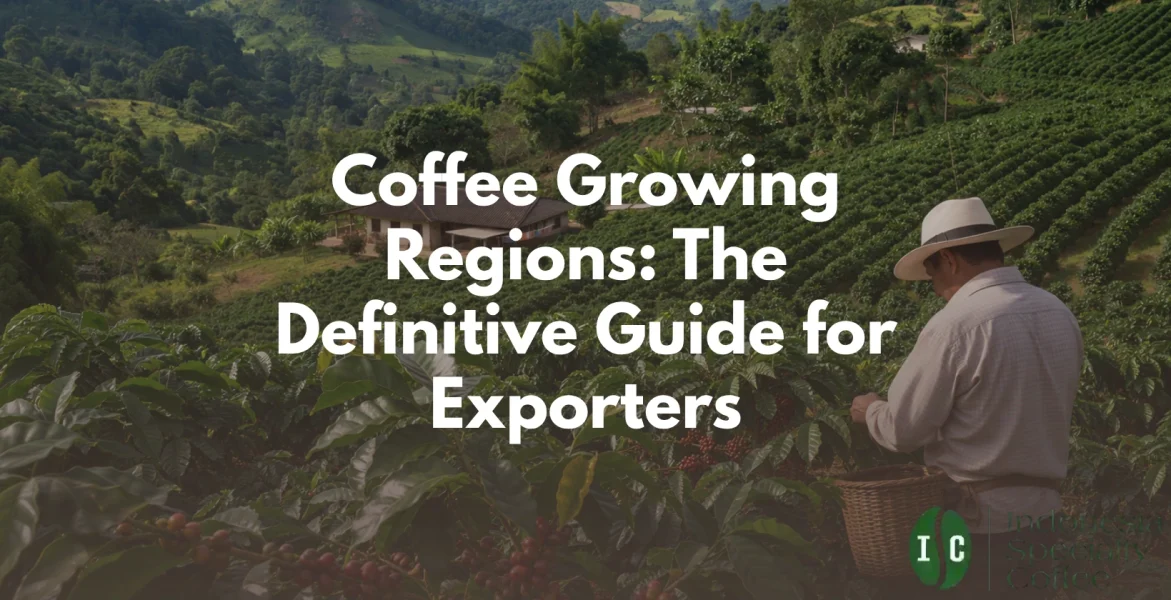
If you’re a coffee exporter trying to decide which beans to source and sell, the first thing you need to get right is geography. Not every cup tastes the same and that’s entirely by design. The world’s best coffee growing regions each carry a distinct fingerprint: different soils, different altitudes, different processing methods, and wildly different flavor profiles. Understanding those differences isn’t just interesting, it directly determines which buyers you can serve, which premiums you can charge, and how your product story resonates in competitive markets.
This guide walks through every major region worth knowing, what makes each one special, and the practical insights you need as an exporter. Think of it as a conversation with someone who has spent years moving specialty coffee from farm to the global cup because the detail here comes from exactly that kind of experience.
Last updated: 31 August 2026
Quick Overview: Coffee Growing Regions at a Glance
Before diving deeper, here is a snapshot of the world’s most commercially significant coffee growing regions. This table gives you a fast reference point for altitude, dominant varieties, and typical flavor characteristics:
| Region | Country | Altitude (masl) | Variety | Flavor Profile |
| East Africa | Ethiopia / Kenya | 1,500–2,200 | Heirloom, SL28 | Floral, bright citrus, berry |
| Central America | Guatemala / Honduras | 1,200–1,800 | Bourbon, Caturra | Chocolate, caramel, mild fruit |
| South America | Colombia / Brazil | 800–2,000 | Castillo, Catuai | Nutty, full body, sweet |
| Southeast Asia | Indonesia / Vietnam | 700–1,500 | Robusta, Typica | Earthy, herbal, bold body |
| Middle America | Mexico / Costa Rica | 1,000–1,700 | Bourbon, Mundo Novo | Bright acidity, light body |
Why Coffee Growing Regions Matter to Every Exporter
Simply put, origin is your sales pitch. When a specialty roaster in Amsterdam or a third-wave cafe in Tokyo asks about your beans, the first question is always: “Where is it from?” That question carries real weight because buyers already have flavour expectations tied to specific coffee growing regions. An Ethiopian single-origin should taste unmistakably Ethiopian. A Sumatra wet-hulled natural should carry that deep, syrupy body buyers know and pay for.
East Africa: The Crown Jewel of Coffee Growing Regions
Ethiopia: Where It All Began
Ethiopia is not just a coffee growing region, it is the genetic cradle of Arabica coffee. Wild heirloom varieties still grow in forests in Jimma, Yirgacheffe, and Sidama, producing flavors that no other place on earth replicates. Yirgacheffe naturals, for instance, consistently score above 87 on the SCA scale and fetch premium prices at auction.
Kenya: Precision and Brightness
Kenya operates a unique grading system AA, AB, PB (peaberry) that exporters must understand before presenting to buyers. The country’s double fermentation washing process produces a sharp, wine-like acidity that specialty buyers describe as
“Complex” and “demanding.” SL28 and SL34 varieties grown on red volcanic soil in Nyeri and Kirinyaga are the benchmarks. Auction prices for top Kenya AA lots regularly exceed $10 per kilogram green.
The Americas: Volume, Consistency, and Character
Colombia: Year-Round Supply Advantage
Colombia’s geography is one of its most commercially valuable traits. Because the Andes run north-south across the country, Colombia has multiple micro-harvest seasons throughout the year, meaning exporters can maintain year-round supply something few other coffee growing regions offer. Huila, Narino, and Antioquia produce the bulk of specialty-grade Arabica, with clean, bright cups that work beautifully across both filter and espresso applications.
Brazil: The Volume Powerhouse
Brazil accounts for roughly 35–40% of global coffee output, making it the single largest contributor among all coffee growing regions combined. What Brazil lacks in extreme altitude complexity, it makes up for in consistency and scale. Cerrado Mineiro and Sul de Minas produce reliable, nutty, low-acidity naturals that form the backbone of countless commercial blends globally.
Here is how the two leading South American coffee growing regions compare for export decision-making:
| Factor | Colombia | Brazil |
| Annual Output | ~14M bags | ~65M bags |
| Harvest Season | Multiple (bi-annual) | April – September |
| Specialty Suitability | High (single-origin) | Medium–High (blend base) |
| Avg. Price Range | $4–$9/kg green | $2.50–$5/kg green |
| Best Market Fit | Specialty, third-wave | Commercial, blends |
Southeast Asia: Underrated Coffee Growing Regions With Global Reach
Indonesia: Complexity From the Archipelago
Indonesia produces some of the world’s most distinctive coffees. The wet-hulled (giling basah) process used in Sumatra creates a heavy body and low acidity profile unlike anything else in the coffee growing regions map. Aceh Gayo, Mandheling, and Toraja each carry terroir signatures that command loyalty from buyers who know them. Additionally, Indonesian Robusta from Lampung represents strong value for commercial espresso blends that need body and crema.
The top Indonesian origins for export consideration:
- Aceh Gayo (Sumatra): Earthy, full body, long finish, excellent for dark roast lovers
- Flores Bajawa: Clean, sweet, medium body, gaining traction in European specialty markets
- Java Preanger: Bright acidity, chocolate notes, historically the origin that named the word ‘Java’
- Toraja (Sulawesi): Herbal, spiced, dark fruit undertones, niche but highly loyal buyers
Vietnam: Rising in Robusta
Vietnam doesn’t always appear on specialty radar, but for exporters targeting blended commercial markets, it is essential. Moreover, Vietnam is the world’s second-largest producer and almost exclusively grows Robusta. Dak Lak province leads output, and quality has improved meaningfully in recent years as more producers adopt washed processing for smoother cups.
Central America: Consistent Quality Across Coffee Growing Regions
Central American coffee growing regions are a reliable workhorse for specialty exporters. Guatemala’s Antigua, Huehuetenango, and Atitlan regions produce Bourbon and Caturra lots with chocolate and mild fruit notes that are highly approachable for a wide range of buyers. Honduras, now the largest Central American producer, offers value-for-quality in the specialty range, especially from Copan and Marcala.
Costa Rica deserves a special mention for its honey and natural processing innovation. The Tarrazu region consistently produces clean, sweet lots that attract premium micro-roasters. Meanwhile, Panama, a smaller producer is famous for Geisha coffee from Boquete, which regularly breaks auction records at $100+ per pound.
How Exporters Should Choose Between Coffee Growing Regions
Selecting the right origin to export is not just about flavor, it’s a strategic business decision. The following numbered checklist helps exporters work through the key variables:
- Define your target buyer segment: specialty third-wave, commercial blend, or foodservice
- Match volume requirements: Brazil and Vietnam suit large contracts; Ethiopia and Panama suit micro-lot buyers
- Assess harvest timing: align purchase windows with harvest calendars to ensure green freshness at delivery
- Understand certification demand: your buyer may require organic, Rainforest Alliance, or Fair Trade certification, which narrows eligible origins
- Calculate landed cost realistically: altitude-grown specialty lots command higher prices, but also attract better margins if positioned correctly
- Diversify origins to reduce risk: single-origin dependency exposes you to crop failures and price shocks
Processing Methods Across Coffee Growing Regions: What Exporters Must Know
Processing method is just as important as geography. The same coffee plant treated differently can produce radically different cup profiles. Here’s a quick breakdown:
| Process | Common In | Cup Profile | Buyer Preference |
| Washed | Ethiopia, Kenya, Colombia | Clean, bright, complex | Specialty, filter roasters |
| Natural | Ethiopia, Brazil | Fruity, sweet, full body | Espresso, third-wave |
| Honey | Costa Rica, El Salvador | Balanced, mild sweetness | Specialty, mid-range cafe |
| Wet-Hulled | Indonesia (Sumatra) | Earthy, low acid, heavy | Dark roast, blends |
Conclusion
The world’s coffee growing regions are diverse, dynamic, and full of commercial opportunity for exporters who take the time to understand what each one offers. From the floral complexity of Ethiopian Yirgacheffe to the heavy body of Sumatran Gayo, from the clean consistency of Colombian Huila to the volume reliability of Brazilian Cerrado, each region tells a story that buyers in every market are willing to pay for. The exporters who succeed long-term are the ones who speak that story fluently, source ethically, and match origin to buyer intent with precision.
Ready to source from the best coffee growing regions in the world? SpecialtyCoffee.id connects exporters directly with traceable, SCA-scored lots from Indonesia. Browse available green coffee inventory, request samples, and speak with origin specialists who know these coffee growing regions inside out. Start sourcing smarter, visit SpecialtyCoffee.id today!