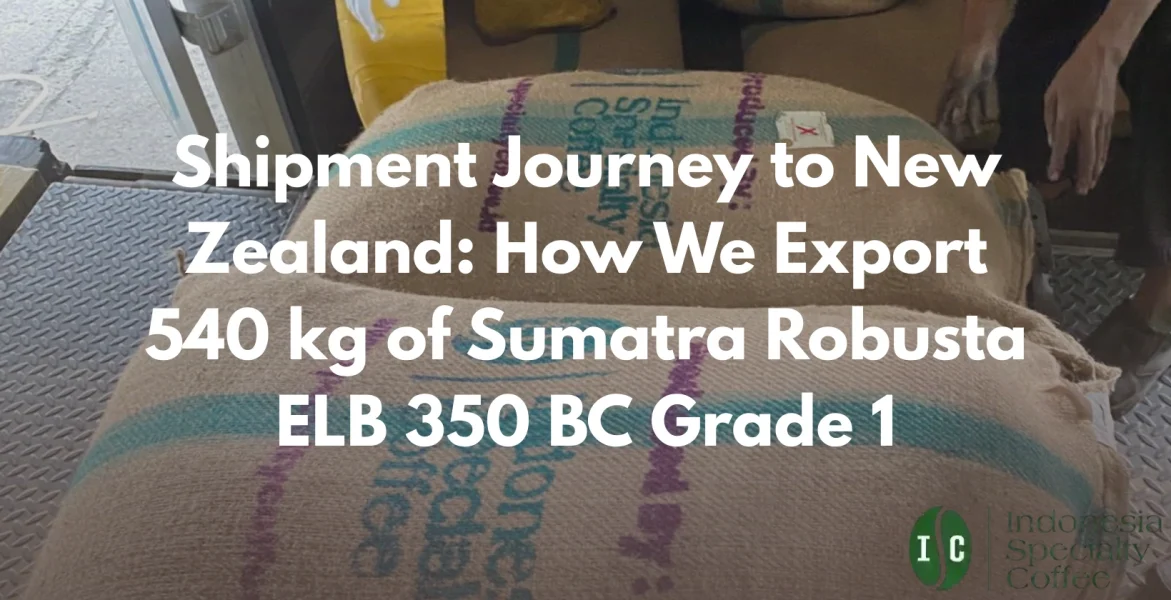
At SpecialtyCoffee.id, every export shipment starts with one goal: deliver Indonesian coffee in a condition that protects its value; cup quality, consistency, and commercial reliability. We operate as Indonesia Specialty Coffee, founded in Medan and focused on supplying Indonesian green coffee to roasters and distributors globally.
This article tells the real journey of one B2B export program: Sumatra Robusta ELB 350 BC Grade 1, Washed Process, Screen 18/19, shipped to New Zealand at 540 kg total (9 bags × 60 kg). It is written for buyers who want clarity on how shipment works, what to expect, and how to plan lead times without surprises.
What Shipment Means on SpecialtyCoffee.id
For us, “shipment” is not only moving bags from one country to another. Shipment is the full operational chain that begins when a buyer confirms product specs and ends when the cargo reaches the buyer’s warehouse ready to be stored, roasted, or redistributed.
We work with both roasted and green coffee orders, but wholesale exports are typically green coffee programs. Our shipping approach follows clear milestones: order confirmed → packed → dispatched → delivered. These stages help buyers align procurement and production schedules with measurable progress.
Shipment matters for coffee because logistics affects business outcomes. Stable packing prevents damage and moisture risk. Predictable timelines protect inventory planning and roasting schedules. Reliable shipping reduces operational stress for distributors who must serve their own customers on time.
The Coffee We Shipped: Sumatra Robusta ELB 350 BC Grade 1, Washed, Screen 18/19
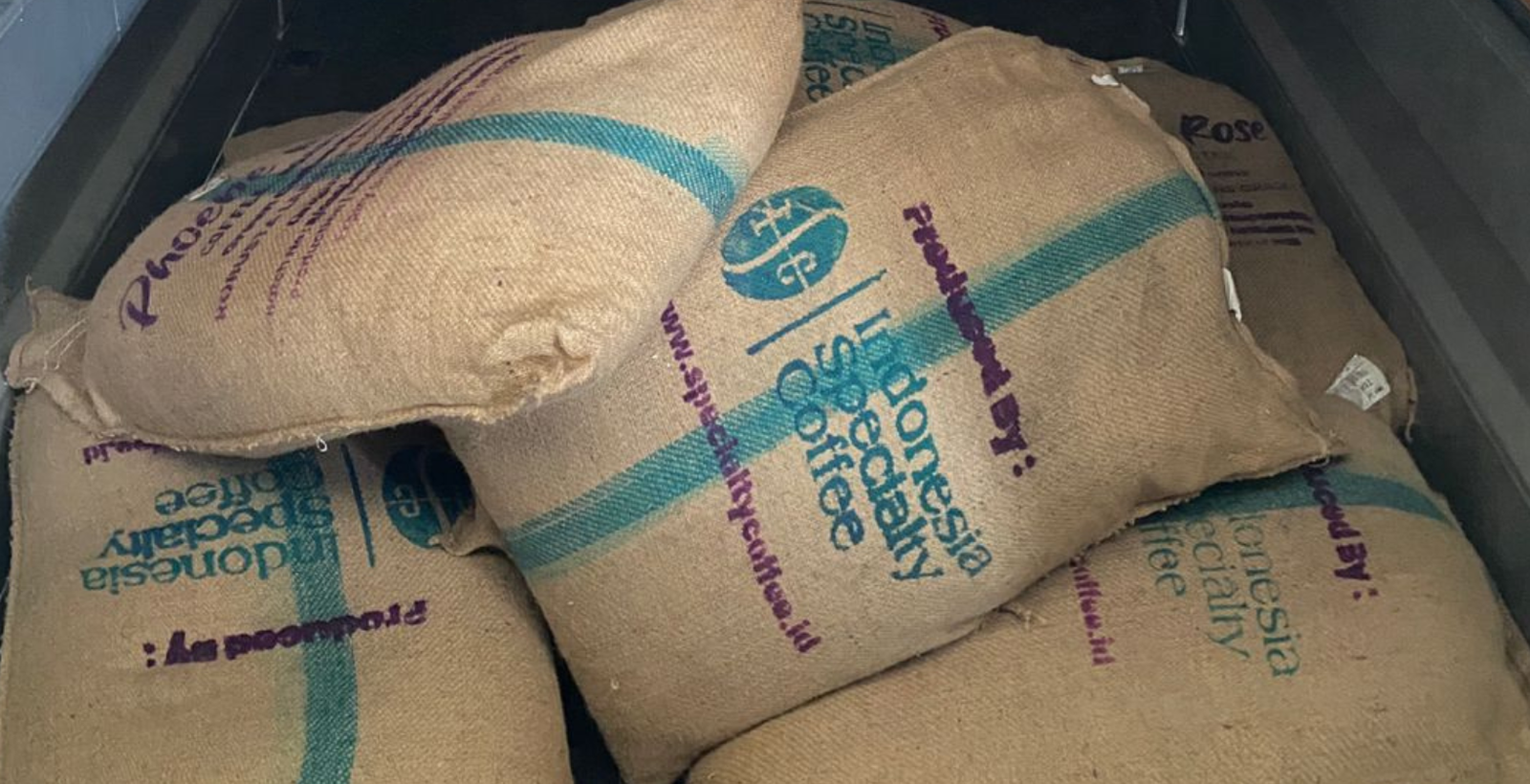
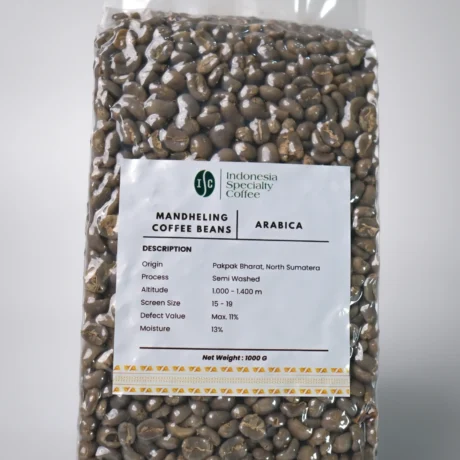
This shipment uses a specific spec that matters in B2B trade: ELB 350 BC Grade 1, washed process, screen 18/19, and a bulk total of 540 kg. Those details signal why this coffee is purchased: it is built for repeatable commercial performance, not one-time novelty.
On our product listings, Sumatra Robusta includes variants such as Sumatra Robusta ELB 350 BC – Grade 1, which buyers select when they need consistent sizing and dependable roasting behavior at scale.
For buyers in New Zealand, this coffee often fits espresso blends, commercial roasting programs, and distribution lines that prioritize body and strength. When specs include screen size and grade, the goal is tighter consistency, helping roasters reduce variability batch to batch.
From Contract to Packing: How 9 Bags Become a Shipment Unit
Bulk export begins with alignment: product spec, total volume, and shipping method planning. Once confirmed, we prepare the shipment around industry-standard bag sizes, here, 9 bags of 60 kg. That format supports handling efficiency and documentation clarity for B2B logistics.
Packing is where we focus on shipment integrity. We treat bulk bags as inventory assets, not simple sacks. Each bag must remain stable through multiple handovers: warehouse staging, transport to port, container loading, and unloading on arrival. That’s why we emphasize clean labeling, consistent weights, and shipment files that match what is physically loaded.
We also prepare a “paper trail” because export shipments are documentation-driven. SpecialtyCoffee.id describes that export programs involve shipping coordination and lead time planning, which means shipment readiness is operational and administrative at the same time.
International Shipping Methods: Sea Freight vs Air Freight for Wholesale
For wholesale exports, we primarily ship by sea freight, with air freight available on request, especially for smaller quantities. We support both FCL (Full Container Load) and LCL (Less than Container Load) options, depending on volume and buyer consolidation strategy.
How we choose the method for a buyer like New Zealand depends on what the buyer optimizes:
- Sea freight fits bulk volume shipments and cost-focused programs. It is the typical lane for distribution supply because it scales and keeps landed cost more efficient.
- Air freight fits urgency, smaller lots, or launch timelines where speed matters more than cost. SpecialtyCoffee.id positions air freight as an option for specialty or micro-lots and faster delivery needs.
For a 540 kg shipment, sea freight is often the natural fit because it aligns with wholesale economics and stable replenishment planning. Buyers can still request air freight, but the decision usually comes down to urgency versus cost.
Lead Time Planning: Production, Packing, Export, and Destination Timing
B2B buyers often ask one question first: “How long will this take?” On SpecialtyCoffee.id, lead time is presented in two complementary ways depending on context:
- The FAQ states an average lead time of 2–3 weeks after the contract is signed and advance payment is received.
- The Distributor page describes lead time as 2–4 weeks depending on destination and highlights shipping options as part of wholesale planning.
That difference is normal in export logistics. The earlier window reflects average operational readiness; the broader window reflects real destination variability, carrier schedules, and routing complexity.
In practice, lead time planning works best when buyers separate timelines into stages:
- Production readiness (availability and preparation).
- Packing and shipment file preparation.
- Carrier booking and dispatch.
- Transit and destination processing.
When buyers build buffer time into their purchasing cycle, they reduce the risk of stockouts and avoid paying premium costs for emergency freight later.
Incoterms and Risk Transfer: FOB, CFR, CIF in Plain English
Incoterms matter because they define who pays for what, and where risk transfers from seller to buyer. SpecialtyCoffee.id publishes an Incoterms guide specifically for coffee trade, explaining how these terms reduce uncertainty by clearly setting the point of responsibility and risk transfer.
A practical overview for wholesale buyers:
- FOB (Free On Board): the seller delivers goods onto the vessel; risk transfers once the cargo is onboard. Buyers choose FOB when they want control over shipping arrangements.
- CFR (Cost and Freight): the seller pays freight to the destination port, but risk transfers earlier (typically once shipped).
- CIF (Cost, Insurance, and Freight): similar to CFR but includes insurance arranged by the seller, which can reduce risk concerns for certain buyers.
Incoterms also connect directly to documentation. SpecialtyCoffee.id highlights export documentation needs for coffee, including items like commercial invoice, packing list, bill of lading, certificate of origin, phytosanitary certificate, and export declaration, often structured around the Incoterm agreed in the contract.
For a New Zealand-bound wholesale program, the best term depends on who wants control: the buyer who has preferred forwarders often chooses FOB; the buyer who wants simpler coordination may prefer CIF.
Arrival in New Zealand: What Successful Delivery Looks Like for B2B Buyers
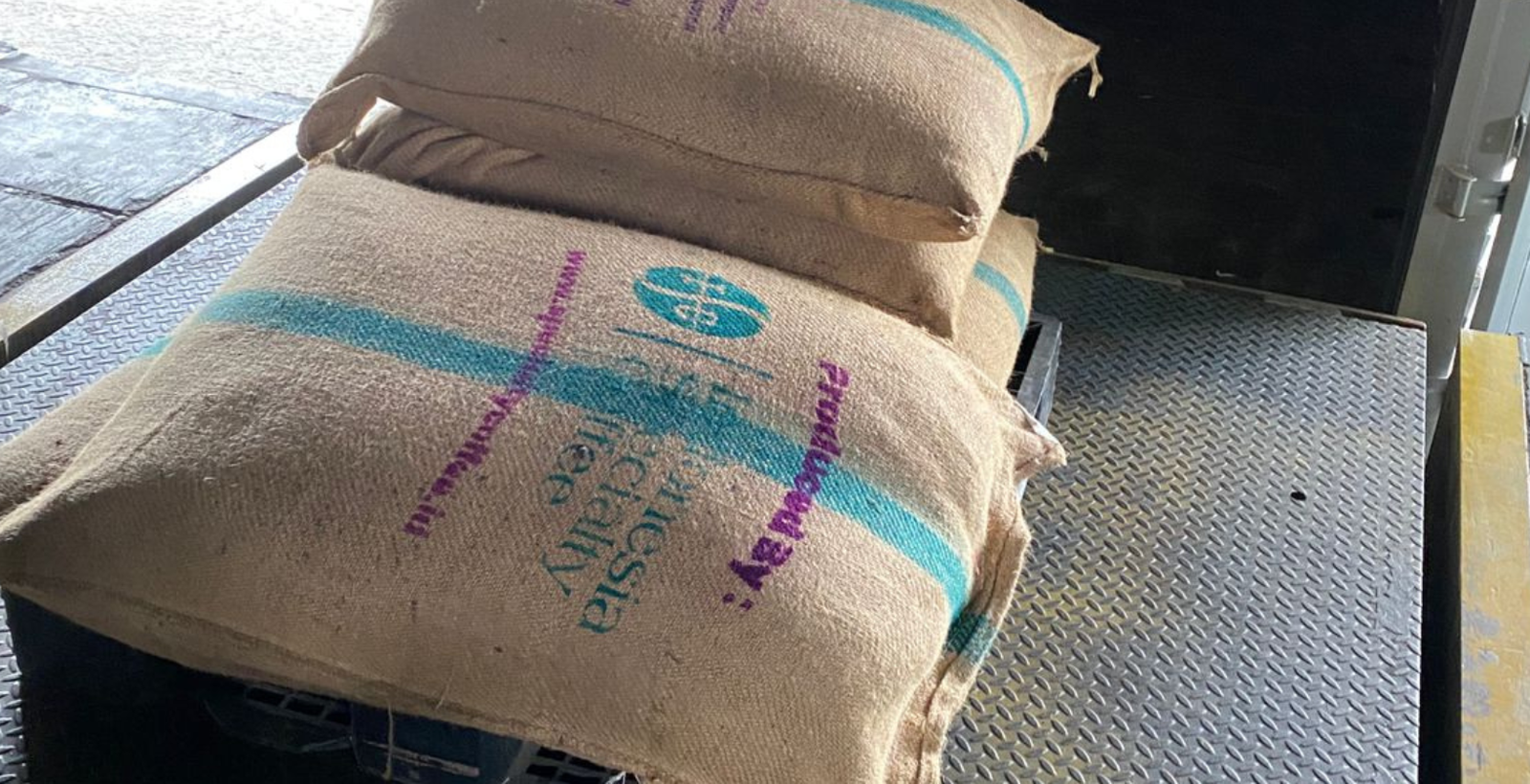
A shipment is not “done” when it leaves Indonesia. It’s done when the buyer receives cargo that matches the agreed spec and arrives in acceptable condition for storage and roasting.
For bulk green coffee, successful delivery usually means:
- Bag counts match the packing list (9 bags).
- Total weight matches the contract (540 kg).
- Outer packaging shows no abnormal damage.
- Documentation matches what customs and receiving teams expect.
- Inventory can be stored immediately and scheduled for roasting.
From our viewpoint, the best shipments feel quiet: no confusion, no missing files, no avoidable delays. That quiet outcome is built earlier through clear shipping method choice, realistic lead time planning, and an Incoterm that matches the buyer’s operational strengths.
Conclusion
This New Zealand shipment shows how SpecialtyCoffee.id manages exports with milestones. We prepared 540 kilograms of Sumatra Robusta ELB 350 Grade 1. Nine 60-kilogram bags were packed for stability, traceability, and documentation. We matched freight choices and Incoterms to reduce risk during transit. Buyers receive consistent coffee, ready for roasting, and inventory planning is simpler.
Ready to import Indonesia green coffee with confidence? Buy our coffee in wholesale volumes today. We support sea freight and air freight, based on your timeline. Align FOB, CFR, or CIF terms to match your logistics control. Start your shipment by ordering through SpecialtyCoffee.id and messaging our team!