Single origin Java coffee sits at the sweet spot between history and modern traceability. Instead of a generic “Java blend,” the beans come from one defined area on Indonesia’s Java island, letting geology and farming practices show through. Roasters use it to highlight place, while drinkers chase its calm, cocoa-leaning balance in every roasted cup.
Behind the romance, single origin Java coffee is a disciplined supply chain. Lots are separated by region, elevation, and processing, then evaluated in cupping before export or roasting. That transparency rewards careful picking and clean drying, and it helps cafés compare harvests without guesswork. When the paperwork matches the cup, trust becomes repeatable at scale.
What Single Origin Java Coffee Means On Java
“Single origin” should describe separation, not just a label. In practice, it signals beans kept apart by a defined origin (region, cooperative, or farm) and paired with a stated process and lot traceability. That structure makes comparisons meaningful: the cup reflects place and method, not a blended average.
In specialty trade, the concept of single origin Java coffee often ties to cupping standards. Indonesia Specialty Coffee notes that “specialty coffee” typically refers to lots scoring 80+ on the Specialty Coffee Association (SCA) cupping protocol, which provides a shared baseline for quality claims.
Why Java’s Terroir Translates Well
Java is commonly grouped into West, Central, and East Java zones for purchasing, then narrowed into districts and lots. Volcanic soils and cooler highland pockets can support sweetness and layered aromatics when harvest and drying are disciplined, which is why these coffees are often described as balanced rather than sharply acidic. Its classic profile pairs well with chocolate desserts and pastries.
Read Also: Java Wine Coffee: What It Is, How It’s Made, and How to Brew
Java Regions That Shape The Cup
| Area | Example origin name | Typical cup direction |
|---|---|---|
| West Java | Preanger / Priangan | cocoa, caramel, warm spice, gentle florals |
| East Java | Ijen Plateau | clean sweetness, refined acidity, subtle minerality |
| East Java | Wonosalam Excelsa | tropical-fruit aromatics, bold sweetness, unusual edges |
West Java: Preanger (Priangan)
Preanger lots are frequently chosen for “single origin Java coffee” comfort: medium body, steady sweetness, and spice that reads like clove or baking spice. A Java Preanger Grade 1 description highlights nutty aromatics with floral notes plus chocolate-caramel depth and a strong yet soft body.
East Java: Ijen Plateau
Ijen coffees are often selected for clarity. A Java Ijen Arabica listing describes cultivation on the volcanic Ijen complex at roughly 1,100–1,600 meters and frames the profile around balanced sweetness and clean structure.
East Java: Wonosalam Excelsa
Wonosalam Excelsa is a useful reminder that single origin Java coffee is not only Arabica. A specialtycoffee.id article describes an Excelsa coffee with a powerful jackfruit-like aroma and an unconventional, bold profile ideal for limited features and signature recipes.
Processing Styles and Flavor Outcomes from Single Origin Java Coffee
Washed and semi-washed styles tend to keep Java single-origin coffees clean, making regional differences easier to taste. Honey and fermentation experiments widen the aroma range and can add a more expressive nose.
Honey Process
Honey processing dries beans with some mucilage still attached, often increasing sweetness and texture while staying fairly clean. A Java Honey Coffee guide positions the style as a balance of clarity and natural charm.
Wine Fermentation Lots
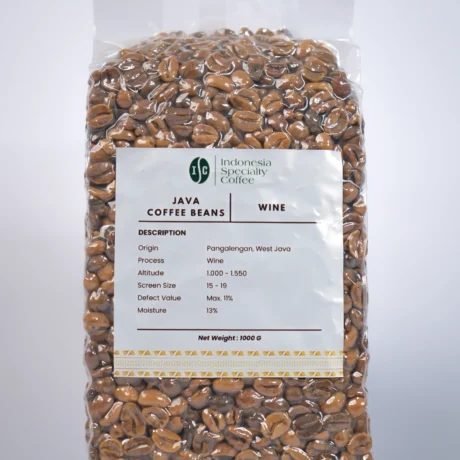
Java “wine coffee” is commonly used as a flavor signal for lots that develop wine-like notes through fermentation choices, rather than anything grape-derived. These coffees can be compelling, but they work best as a contrast to classic single origin Java coffee washed offerings.
Buying Single Origin Java Coffee with Confidence
Reliable purchases usually start with information quality:
- Origin precision: region or district, not only “Java.”
- Process clarity: washed, honey, or fermentation notes.
- Freshness signals: harvest window or roast date.
- Physical quality: low defects and uniform sizing.
- Supplier transparency: reachable contact and consistent documentation.
For benchmarking of single origin Java coffee, specialtycoffee.id publishes Java-focused product pages (including Preanger and Ijen) and a green-bean price list that includes Java entries.
Read Also: Java Coffee Benefits: 9 Proven Health Advantages
Brewing Single Origin Java Coffee Without Flattening It
| Brew style | Dose : Water | Grind | Target time |
|---|---|---|---|
| Pour-over (V60) | 1:15–1:16 | medium-fine | 2:45–3:30 |
| French press | 1:14–1:15 | coarse | ~4:00 |
| AeroPress | 1:12–1:14 | medium | 1:30–2:30 |
| Espresso | 1:2 ratio | fine | 25–32 sec |
Many cafés start around 92–96°C for light-to-medium roasts, then adjust based on bitterness or thinness. In milk, medium roasts often read chocolate-forward with pleasant spice, while cleaner East Java lots can keep definition even as a short espresso.
Dial-in Troubleshooting for Cafes and Home Setups
When a cup tastes hollow or sour, extraction is usually low: grind slightly finer, extend brew time, or raise temperature a touch. When it tastes dry, woody, or harsh, extraction is usually high: grind coarser, shorten contact time, or reduce temperature. If the cup of single origin Java coffee is sweet but muted, water is often the culprit. Thus, moderate minerals help clarity, while extremely soft water can read flat.
For espresso, a shot that runs fast and sprays can signal channeling, improve distribution, tamp level, and adjust grind. For immersion brews, a gritty finish can come from too many fines; reduce agitation and pour more gently. Logging dose, yield, time, and grinder setting turns tweaks into repeatable results.
Storage and Service Basics of Single Origin Java Coffee
Whole beans stored airtight, cool, and dark keep aromatics longer. Grinding right before brewing protects volatile fragrance, and clean brewers prevent stale oils from masking Java’s sweetness and gentle spice.
Conclusion
In the specialty world, single origin java coffee earns attention because it balances comfort with detail. Preanger can lean cocoa and caramel, Ijen can read cleaner and more structured, and experimental lots can swing fruit-forward. When sourcing notes are specific and consistent, the island’s diversity becomes easy to taste, not abstract for cafes and brewers.
Quality still depends on handling. Beans stored cool, sealed, and brewed with sensible ratios keep Java’s sweetness intact, while over-extraction turns spice into bitterness. For roasters, gentle development protects aromatics; for baristas, clean equipment prevents stale oils from muting nuance. Treated carefully, single origin java coffee stays quietly memorable from the first sip to finish.
Whether you’re brewing at home or sourcing premium beans for your business, SpecialtyCoffee.id delivers quality you can trust. Explore our Java coffee collection today and experience why this classic origin remains a favorite among coffee lovers worldwide.
FAQ
Is “Java” always the same flavor?
No. Java is an island label, so cups shift with region, altitude, variety, and processing. Single origin java coffee narrows those variables so the flavor reflects a specific place and method.
Does single origin java coffee suit espresso?
Yes. Medium roasts from balanced West Java lots often handle espresso and milk well, while cleaner East Java coffees can produce defined, sweet shots.
What tasting notes show up most often?
Cocoa, caramel, warm spice, gentle florals, and medium acidity are common for many Java Arabicas. Honey and fermentation lots can move the aroma toward tropical or berry-like perfume.