Hand a roaster a cup of washed Arabica Rinjani without telling them where it came from, and most will not guess Indonesia. They will taste orange, a little strawberry, a clean citrus finish that hangs around, and they will start reaching for East Africa. That reflex is the most interesting thing about this coffee.
So here is the direct answer. Arabica Rinjani is a specialty arabica grown in the Sembalun highlands on the slopes of Mount Rinjani, in Lombok, West Nusa Tenggara (NTB). It grows at roughly 1,200 to 1,500 meters on volcanic soil, under shade, mostly from old Dutch-era Typica trees. Unlike the earthy, wet-hulled coffee that Indonesia is known for, Rinjani is usually fully washed, so it cups clean and bright, with citrus and red-fruit notes. This piece covers where it grows, its stop-start history, the variety in the ground, and why it tastes the way it does.
Last updated: August 2026
What is Arabica Rinjani (Lombok)?
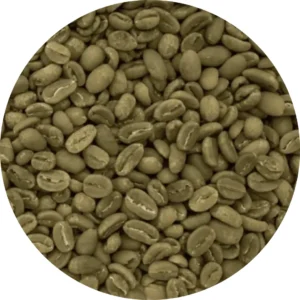
Arabica Rinjani is a single-origin specialty arabica from the Sembalun highlands of Lombok, on the eastern flank of Mount Rinjani in West Nusa Tenggara. It grows at about 1,200 to 1,500 meters on volcanic soil, is shade-grown from mostly heritage Typica, and is usually processed fully washed. The cup is clean and bright, with citrus, red fruit, and a long finish.
Most people meet Indonesian coffee through Sumatra: heavy body, low acidity, earth and cedar. Rinjani is the counter-example. It comes from the same country and the same volcanic-island geology, but a different variety and a different processing choice send it somewhere else entirely. If you have had Bali Kintamani or a washed Flores Bajawa, you already know this brighter side of Indonesia. Rinjani belongs to that family, not to the Sumatran one.
Where it grows: Mount Rinjani and the Sembalun highlands

Arabica Rinjani grows in the Sembalun valley and the surrounding highlands on the slopes of Mount Rinjani, an active volcano in eastern Lombok, mostly between 1,200 and 1,500 meters. The gardens sit on young volcanic soil at the edge of Gunung Rinjani National Park, in cool, forest-clad highlands, with sub-areas including Sembalun Lawang, Sajang, and Sapit.
The setting does the heavy lifting here. Rinjani is one of the tallest volcanoes in Indonesia, and its ash has built deep, mineral-rich soil across the Sembalun basin. The elevation gives cool nights, and cool nights slow the cherry down, which is where a coffee’s sweetness and acid structure come from. This is the same reason the good arabica islands of Indonesia, Bali and Flores included, all sit on volcanic highlands rather than lowland flats.
One detail matters more than the postcard view: this coffee grows under shade. The heritage Typica here is planted beneath taller trees and wants only about half-strength sunlight, so the gardens read as forest with coffee in the understory, not open rows. That slows ripening further and, in practice, it also ties the coffee to the health of the forest around it. Lose the shade canopy and you lose the flowering. It is agroforestry by necessity, not branding.
From Dutch coffee to garlic and back: Rinjani’s history
Coffee is not new to Sembalun. The Dutch planted it on Rinjani’s slopes in the colonial era, from around 1875, and by the mid-twentieth century Lombok coffee was trading through the island’s old port under the name “kopi Ampenan.” Then, for decades, coffee nearly disappeared here, pushed aside as Sembalun became famous for garlic, onion, and vegetables instead.
Here is the arc that makes Rinjani different from an origin like Gayo, which has grown coffee without interruption for a century. Sembalun’s farmers had a cash crop that paid better and faster, so the coffee trees were left to the old gardens and the forest edges while the valley floor went to horticulture. The knowledge thinned out. What survived was the Typica itself, hanging on in shade plots and residential gardens, quietly staying alive through the years nobody was selling it.
The revival is recent and, honestly, still fragile. A farmer cooperative began replanting and processing in earnest from around 2013, and a wave of local coffee interest, helped along by Rinjani’s trekking tourism, has put Sembalun coffee back on menus. That is why, if you visit today, you see century-old shade trees and brand-new washing stations in the same valley. We would argue that is exactly what makes Rinjani worth watching now: it is an old origin being rebuilt with modern specialty processing, which is a rare thing to catch early.
The variety: heritage Typica on Rinjani’s slopes
The signature variety of Arabica Rinjani is Typica, the old Ethiopian-descended arabica the Dutch first spread across Indonesia, and the same lineage grown in Bali and in Manggarai, Flores. Around it you will find some Catimor and a little SL34 and SL28, but Sembalun’s identity, and its price, rests on the heritage Typica still standing on Rinjani’s slopes.
Typica is the variety specialty buyers romanticize, and for once the romance is earned. It tends to give a clean, sweet, well-balanced cup with a long finish, which is a large part of why a good Rinjani lot tastes the way it does. The catch is that Typica is a poor earner for a farmer. It yields low, it is vulnerable to leaf rust, and it needs that shade canopy to fruit well. Those are exactly the traits that got it replaced by hardier hybrids across most of Indonesia.
So the Typica surviving on Rinjani is a bit of an accident of history, kept alive because the valley switched to garlic rather than ripping out coffee to replant Catimor. If you are sourcing Rinjani, this is the thing to pin down first. Ask whether the lot is genuinely the old Typica or a mixed-variety garden, because the two do not cup the same, and the Typica is the reason to be interested in the first place. The volumes involved are small: one well-known Typica pocket around Sapit is roughly thirty farmers on twenty hectares.
Why Rinjani tastes bright: washed processing and the cup
Rinjani tastes bright for two reasons, and processing is the bigger one. Most Sumatran coffee is semi-washed, then wet-hulled (Giling Basah), with the parchment stripped while the bean is still wet at 35 to 40 percent moisture, which builds body and mutes acidity. Rinjani is usually taken the other way: fully washed, the fruit removed and the coffee fermented and rinsed clean, then dried slowly in parchment and dry-hulled at around 12 percent moisture. Clean processing plus the Typica variety is what gives you the citrus and red-fruit cup.
Think of it as a two-step choice, because that is how Indonesian processing actually works. Step one is what you do with the cherry: here, full-washed, which strips the fruit sugars away early and lets the bean’s own acidity show. Step two is how and when you hull: here, dried down and dry-hulled like a washed coffee anywhere in the world, rather than wet-hulled green. Change either step and you change the cup. Wet-hull the same Typica and you would flatten the brightness that makes Rinjani interesting.
What does it actually taste like? On a clean washed lot, expect medium body, a soft but real acidity, and fruit that reads as orange and strawberry with a citrus finish that lingers. Here is a detail worth knowing before you cup it: because this is often a naturally sweet, delicate Typica, an over-fermented or badly dried Rinjani lot falls apart fast, going sour or papery in a way an earthy Sumatra would hide. The upside and the fragility come from the same place. When it is clean, it sings; when the processing slips, there is nowhere for the fault to hide.
Rinjani sits with Indonesia’s brighter, washed island arabicas rather than the wet-hulled Sumatrans. This table places it against two cousins and one classic Sumatra for contrast:
| Origin | Region | Elevation | Process | Cup |
|---|---|---|---|---|
| Rinjani / Sembalun | Lombok, NTB | 1,200-1,500 m | Usually washed | Bright, citrus, red fruit, medium body |
| Bali Kintamani | Bali | 1,000-1,500 m | Usually washed | Citrus, clean, bright acidity |
| Flores Bajawa | Flores, NTT | 1,200-1,600 m | Washed / wet-hulled | Chocolate, floral, fuller body |
| Gayo (Sumatra) | Aceh | 1,400-1,800 m | Wet-hulled | Earthy, dark chocolate, low acid |
The point of the table is the process column. Move down from Rinjani to Gayo and you are really moving from washed brightness to wet-hulled body. Rinjani’s calling card within Indonesia is that it lands firmly on the bright end.
The honest part: a small origin still finding its feet
Here is what a supplier should tell you and often does not. Arabica Rinjani is a lovely coffee and a tiny, uneven supply. All of West Nusa Tenggara grows only about 1,076 hectares of arabica, producing on the order of 978 tons in a year, and the heritage Typica everyone wants is a sliver of that. This is microlot territory, not container territory. A 2016 crop failure in the region is still in living memory, which tells you how exposed a young, small origin is to one bad season.
That scale has a direct consequence for a buyer, so plan around it. If you find a Rinjani lot you love, there may not be a second one like it this year, let alone next year, and there is very little cushion if the weather turns. Treat it as a seasonal, story-led coffee you feature while you have it, not a house component you build a blend around and expect to reorder for a decade.
And the cup itself asks an honest question. Because Rinjani is washed and bright, it competes with washed coffees from origins that make brightness their whole business, including East Africa and Central America. On pure clean-cup points a top washed Kenyan may still edge it. What Rinjani offers instead is a genuinely distinctive washed profile from an unexpected place, with a real story behind every bag. If your customers value that, it more than earns its spot. If they only chase the highest score on the sheet, it is an honest coin toss.
What this means for roasters and buyers
For a roaster, Arabica Rinjani rewards a lighter hand than a Sumatra ever would. Take it to a light or light-medium roast to protect the citrus and red-fruit acidity, the way you would treat a washed African or a Bali. Push it dark and you throw away the exact thing you paid for. It suits filter and pour-over, and it makes a bright, fruit-forward single-origin espresso for bars that want to surprise people with an Indonesian coffee that does not taste “Indonesian.”
If you are buying green, two questions settle most of it. First, variety: is this the heritage Typica or a mixed garden, since that is where the character lives. Second, processing and drying: confirm it was cleanly washed and properly dried, and cup a current-crop sample yourself, because a delicate washed lot shows every processing fault and you want to catch that before you commit. Ask about the crop year too, since small-lot island coffee moves in limited quantities and freshness matters more when acidity is the selling point.
One planning note, again because of scale. Volumes are small and seasonal, so if a Rinjani sample lands well, move on it early in the season rather than assuming it will still be available when you are ready to roast it in month eight.
Frequently asked questions
What is Arabica Rinjani coffee?
Arabica Rinjani is a specialty arabica from the Sembalun highlands on Mount Rinjani in Lombok, West Nusa Tenggara. It grows at roughly 1,200 to 1,500 meters on volcanic soil, mostly from heritage Typica, and is usually fully washed, giving a clean, bright cup with citrus and red-fruit notes rather than the earthy body of Sumatran coffee.
Where does Rinjani coffee come from?
Rinjani coffee comes from Lombok island in West Nusa Tenggara (NTB), Indonesia, specifically the Sembalun highlands and nearby areas such as Sembalun Lawang, Sajang, and Sapit, on the slopes of Mount Rinjani. It is shade-grown at around 1,200 to 1,500 meters at the edge of Gunung Rinjani National Park.
What does Lombok Rinjani coffee taste like?
A clean washed Rinjani cups bright and fruit-forward, with orange and strawberry notes, a soft but real acidity, medium body, and a lingering citrus finish. It sits closer to a washed Bali or East African coffee than to an earthy, wet-hulled Sumatran arabica, which is unusual for Indonesian coffee.
What coffee variety is grown on Mount Rinjani?
The signature variety is Typica, the old Dutch-introduced arabica also grown in Bali and Flores, prized for a clean, sweet, balanced cup. Sembalun also grows some Catimor, SL34, and SL28, but the heritage Typica is what gives Rinjani its reputation and its higher price.
Is Rinjani coffee wet-hulled like other Indonesian coffee?
Usually not. Where most Sumatran coffee is wet-hulled (Giling Basah), Rinjani is typically fully washed and dried in parchment, then dry-hulled at around 12 percent moisture. That cleaner processing is a big part of why it tastes brighter and more acidic than a classic Indonesian coffee.
Is Lombok Sembalun coffee rare?
Yes, in practical terms. All of West Nusa Tenggara grows only about 1,076 hectares of arabica, and the heritage Typica everyone wants is a small fraction of that, farmed by cooperatives in limited quantities. It is best treated as a seasonal microlot rather than a large, year-round supply.
Sourcing Lombok Rinjani green coffee: where to start
Whatever supplier you use, ask for the variety (heritage Typica or mixed garden), the full two-step process (washed, then dried and dry-hulled), the crop year, and a recent cupping score before you commit, and cup a sample yourself, because a delicate washed lot shows its faults where an earthy coffee would hide them. If you want to compare Lombok against Indonesia’s other bright island arabicas, Indonesia Specialty Coffee can send green samples of the washed origins we export, so you can taste Rinjani next to Bali and Flores on your own table and decide where it fits.