Ask around Temanggung, and the coffee is rarely the main character. This is Indonesia’s tobacco heartland, and coffee grows in the gaps: on the higher slopes, along the field edges, in the rotation between tobacco seasons. That neighbor is the reason people talk about a “tobacco note” in Temanggung coffee at all, and the reason most of what they believe about it is wrong.
So here is the direct answer. Arabica Temanggung is a specialty arabica grown on the volcanic slopes of Mount Sindoro and Mount Sumbing in Temanggung, Central Java, mostly between about 1,150 and 1,600 meters. It carries the Java Sindoro-Sumbing Geographic Indication, and when it is cleanly washed, it cups bright and fruity, with cherry, grape, and citrus. This piece covers where it grows, the rust-and-robusta history that shaped it, the varieties in the ground, and where that famous tobacco character actually comes from.
Last updated: September 2026
What is Arabica Temanggung?
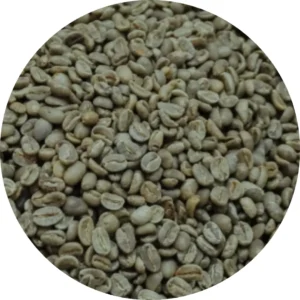
Arabica Temanggung is a single-origin specialty arabica from the Sindoro-Sumbing highlands of Temanggung, Central Java. It grows at roughly 1,150 to 1,600 meters on volcanic soil, mostly from Sigararutang, Typica, and Kartika, and carries the Java Sindoro-Sumbing Geographic Indication granted in 2014. Cleanly washed, it cups bright and fruit-forward, with cherry, grape, and citrus notes.
Temanggung sits in the middle of Java, ringed by three volcanoes: Sindoro, Sumbing, and Prau. Most people who know the name know it for two things: tobacco and robusta, which is exactly why the arabica is worth a closer look. The high-grown arabica here is a different animal from the heavy robusta the district trades in bulk, and it belongs with Indonesia’s brighter Java arabicas rather than with the earthy, wet-hulled coffee of Sumatra.
Where it grows: Sindoro, Sumbing, and the Temanggung highlands

Arabica Temanggung grows on the upper slopes of Mount Sindoro and Mount Sumbing, twin volcanoes that frame the Temanggung and neighboring Wonosobo highlands in Central Java. Arabica sits high, roughly 1,150 to 1,600 meters and climbing past 2,000 meters in places, on young volcanic soil, in a cool climate with a short, distinct dry season. Sub-areas include Kledung, Bansari, Ngadirejo, Candiroto, and Tretep.
Altitude is doing something specific here, and it splits the whole district in two. Below about 900 meters, the land grows robusta; above roughly 1,150 meters, it grows arabica. This table shows how lopsided that split is:
| Crop | Altitude band | Share of Temanggung coffee area |
|---|---|---|
| Robusta Temanggung | 400-900 m | ~83% (around 12,750 ha) |
| Arabica Temanggung | 900-1,600 m+ | ~17% (around 2,600 ha) |
The soil is the other half of the story. These are volcanic regosol and andisol slopes, young and mineral-rich, the same volcanic-highland recipe behind every serious arabica region in Indonesia. Cool nights at altitude slow the cherry’s ripening, and slow ripening is where sweetness and acidity come from. What separates Temanggung from a Sumatran origin is not the geology; it is what the farmers do with the cherry after picking, and what else is growing in the next field.
Rust, robusta, and a 1922 replanting: Temanggung’s history
Coffee is old in Java, and Temanggung has grown it since the colonial era, but the arabica story here is really a story of collapse and return. The Dutch pushed coffee across these slopes under the forced-cultivation system of the 1800s, and then leaf rust, the disease Hemileia vastatrix, tore through the arabica in the late nineteenth century. The region did what most of Indonesia did to survive: it switched to hardy, rust-tolerant robusta.
That switch is why Temanggung is a robusta country to this day. Arabica did not really come back until the Dutch replanted it in 1922, starting with about 25 hectares at Tlahab village on the flank of Sindoro. Tlahab still matters now, a century later, as one of the origin points for the district’s specialty arabica. The Java Sindoro-Sumbing Geographic Indication that protects the name arrived much more recently, in 2014, backed by a growers’ association formed a few years earlier.
Here is the part worth sitting with. Most of Indonesia’s famous arabica regions have grown the crop more or less continuously; Temanggung lost its arabica to disease and had to rebuild it from almost nothing. We would argue that history still shapes the coffee you buy today. Arabica here is a deliberate, high-altitude specialty project layered on top of a district whose main business is robusta and tobacco, not the default crop it is in Gayo or Toraja. That changes who grows it, how much there is, and how carefully it is handled.
The variety: Sigararutang, Typica, and Kartika on the volcanoes
The Arabica planted across Sindoro and Sumbing is a mix, led by Sigararutang, a productive local selection, alongside old Typica and Kartika, with Andungsari, Ateng, and Lini S also in the ground. A single well-known lot from Tlahab on Sindoro, for example, runs Sigararutang, Typica, and Kartika together, which is typical of how these gardens are planted.
Each of those names tells you something. Sigararutang is the workhorse, early-bearing and productive, which is why smallholders across the region lean on it. Typica is the old Dutch-era heirloom, low-yielding but capable of a clean, sweet, expressive cup, the variety that survives because someone chose to keep it. Kartika and Andungsari are Indonesian-bred selections developed for yield and disease resistance in exactly this kind of highland.
Why does the mix matter to a buyer? Because it shapes both the cup and the consistency. A garden heavy on Typica can give you real delicacy; one built on Sigararutang and Kartika gives you reliability and volume. Neither is wrong, but they do not taste the same, so the variety on the bag is worth asking about before you assume what a Temanggung lot will do on the table. In a region rebuilding its arabica from scratch, the varietal choices are still being made.
Where the “tobacco note” really comes from
Temanggung coffee is famous for a tobacco-like character, and the popular explanation is that the flavor travels up through the roots from the tobacco growing alongside it. That is agronomically false. Roots do not pipe flavor from one plant into the beans of another. The tobacco note is real, but it gets into the cup two other ways, and understanding them tells you a lot about the coffee.
The first is chemistry. Robusta naturally contains pyrazine and phenolic compounds that develop woody, tobacco-like notes during roasting. A lot of the “tobacco” people taste in Temanggung coffee is simply robusta being robusta, which matters because the district is overwhelmingly robusta. The second is storage, and this is the field detail worth knowing: coffee beans are hygroscopic, meaning they readily absorb moisture and aroma from the air around them. Dry and store parchment coffee next to curing tobacco, as happens in a tobacco district, and the beans pick up the smell.
So the tobacco note is partly a variety artifact and partly a storage artifact, not a signature the terroir guarantees. That has a direct consequence for arabica. A clean, high-grown Temanggung arabica, carefully washed and stored away from tobacco, often will not taste of tobacco at all. It tastes of bright fruit. If a smoky, tobacco-forward cup is what you want, you are usually describing the robusta, or a lot that spent its drying season breathing tobacco air.
How it’s processed, and what it tastes like
Processing is where Temanggung arabica decides what it wants to be, and unlike Sumatra it usually skips the wet-hulling. Where most Sumatran coffee is semi-washed then wet-hulled (Giling Basah) with the parchment stripped wet at 35 to 40 percent moisture, Temanggung arabica is more often fully washed, then dried in parchment and dry-hulled at around 12 percent moisture, the way a washed coffee is handled almost everywhere else. That cleaner route is what lets the fruit show.
It helps to think of it as a two-step choice. Step one is the cherry method: full-washed here, which strips the fruit sugars early and puts the bean’s own acidity forward, though naturals, honeys, and a locally popular wine process also turn up for more fruit and ferment character. Step two is the hulling method: dried down and dry-hulled like a standard washed coffee, not wet-hulled green. The region is experimental, so you will see the full spread from clean washed lots to heavy naturals.
On the table, a clean washed Temanggung arabica reads bright and fruit-forward: cherry and purple grape, forest berry, a lemony top note, with honey and chocolate underneath and a medium body. Which camp does your bar want, clean and fruity or heavy and fermented? The answer decides which Temanggung lot you should ask for, because the processing spread here is wider than the origin’s reputation suggests. One honest caution from the cupping table: the fruit-forward natural and wine lots are the ones most likely to arrive over-fermented if the drying was rushed, so they reward tasting the current crop before you commit.
Temanggung arabica sits with Indonesia’s brighter, washed arabicas rather than the wet-hulled Sumatrans. This table places it against a few reference points:
| Origin | Region | Elevation | Process | Cup |
|---|---|---|---|---|
| Temanggung | Central Java | 1,150-1,600 m+ | Usually washed | Bright, cherry, grape, citrus, medium body |
| Java Ijen-Raung | East Java | 1,000-1,550 m | Washed | Clean, nutty, chocolate, mild acidity |
| Bali Kintamani | Bali | 1,000-1,500 m | Washed | Citrus, clean, bright acidity |
| Gayo (Sumatra) | Aceh | 1,400-1,800 m | Wet-hulled | Earthy, dark chocolate, low acid |
The process column is the point again. Temanggung lands on the bright, washed end of Indonesian coffee, closer to a Bali or an East Java than to a Sumatra.
The honest part: an arabica minority in robusta country
Here is what a straight supplier will tell you. Arabica is the minority crop in Temanggung, full stop. Around 83 percent of the district’s coffee is robusta, and arabica is the roughly 2,600-hectare high-altitude slice on top. If you want the celebrated Temanggung “tobacco and body” profile, that is largely a robusta story. The arabica is a different, brighter proposition, and buying it expecting a smoky, heavy Java cup will disappoint you.
The scale has a practical edge too. Because the arabica is a rebuilt, high-slope specialty crop rather than the default, good clean lots are limited and variable, and the region is still standardizing its processing. You will find excellent washed lots and you will find rough naturals under the same district name. That is the reality of an origin that lost its arabica to rust a century ago and is still finding its feet on the specialty side.
And the cup competes on honest terms. A bright, washed Temanggung arabica goes up against other clean, fruity coffees, including Indonesia’s own Bali and East Java, and on pure clarity a top washed lot from a more established origin may edge it. What Temanggung offers is a genuinely good washed Java arabica with an unusually interesting backstory and a widening range of processing to explore. If the tobacco mythology drew you in, the honest reward is the fruit, not the smoke.
What this means for roasters and buyers
For a roaster, Arabica Temanggung wants a lighter touch than a Sumatra. Take a clean washed lot to a light or light-medium roast to keep the cherry-and-grape fruit and the citrus lift, the way you would treat a Bali or an East Java arabica. It works well as a filter coffee and as a fruit-driven single-origin espresso, and the natural and wine lots can push even further into fruit if that is your house style.
If you are buying green, three questions settle most of it. First, arabica or robusta, because the district trades heavily in both and the names blur in the market. Second, the process and the variety, since a washed Typica-forward lot and a heavy natural are completely different coffees under one origin label. Third, the crop year and how it was stored, which matters more here than almost anywhere, both because bright washed coffee shows its faults and because storage near tobacco genuinely changes the cup.
One planning note. Arabica volumes are modest and the quality is uneven while the region standardizes, so when a clean Temanggung sample lands well, treat it as a specific lot to secure, not a generic origin you can reorder on demand.
Frequently asked questions
What is Arabica Temanggung coffee?
Arabica Temanggung is a specialty arabica grown on the Sindoro and Sumbing volcanoes in Temanggung, Central Java, at roughly 1,150 to 1,600 meters. It carries the Java Sindoro-Sumbing Geographic Indication and, when cleanly washed, cups bright and fruity with cherry, grape, and citrus, unlike the heavier robusta the district is better known for.
Where does Temanggung coffee come from?
Temanggung coffee comes from Central Java, on the volcanic slopes of Mount Sindoro, Mount Sumbing, and Mount Prau, spanning the Temanggung and Wonosobo highlands. Arabica grows high, around 1,150 to 1,600 meters and above, in sub-areas such as Kledung, Bansari, Tlahab, Ngadirejo, and Tretep.
Why does Temanggung coffee taste like tobacco?
Not because tobacco flavor travels through the roots, which is a myth. The tobacco note comes from robusta’s natural pyrazine and phenolic compounds during roasting, and from coffee beans absorbing tobacco aromas while drying and stored nearby, since beans are hygroscopic. A clean, well-stored Temanggung arabica often has no tobacco note at all.
What varieties are grown in Temanggung?
Temanggung arabica is mostly Sigararutang, Typica, and Kartika, with Andungsari, Ateng, and Lini S also grown. Sigararutang is the productive workhorse, Typica the old Dutch-era heirloom, and Kartika and Andungsari are Indonesian selections bred for yield and disease resistance in the highlands.
Is Temanggung coffee arabica or robusta?
Both, but mostly robusta. Around 83 percent of Temanggung’s coffee area is robusta grown at 400 to 900 meters, while arabica is roughly 17 percent, grown higher on Sindoro and Sumbing. Both hold Geographic Indications: Arabika Java Sindoro-Sumbing (2014) and Robusta Temanggung (2016).
What does Java Sindoro-Sumbing arabica taste like?
A clean washed Java Sindoro-Sumbing arabica cups bright and fruit-forward, with cherry, purple grape, and forest berry, a lemony top note, and honey and chocolate underneath, with medium body and balanced acidity. Natural and wine-processed lots push further into ferment-driven fruit.
Sourcing Java Temanggung green coffee: where to start
Whatever supplier you use, confirm three things before you commit: that the lot is arabica and not robusta, the variety and full two-step process (washed, then dried and dry-hulled, or a natural or wine lot), and the crop year, and cup a current sample yourself, because Temanggung’s quality is uneven while the region standardizes. If you want to compare Java against Indonesia’s other bright arabicas, Indonesia Specialty Coffee can send green samples of the washed origins we export, so you can taste a Temanggung-style Java next to Bali and Sumatra on your own table and decide where it fits.