Last updated: August 13, 2026
Coffee bean packaging can preserve a roaster’s work or allow aroma and flavor to fade before the customer opens the bag. For most freshly roasted whole-bean coffee, a strong starting point is an opaque, food-contact-compliant, high-barrier pouch with reliable heat seals, a one-way degassing valve, and a reclosure suited to the pack size. However, there is no universal “best coffee bag.”
The right specification depends on whether the product is whole bean or ground, how soon it is packed after roasting, the intended shelf life, climate, distribution route, pack size, filling equipment, and recycling system in the destination market.
This guide explains what packaging actually has to control, how degassing valves work, how seven common formats compare, and what coffee businesses should test before placing a bulk packaging order.
Why Coffee Bean Packaging Matters
Roasting creates hundreds of volatile compounds that contribute to coffee aroma. Once roasting ends, the product continues changing: carbon dioxide leaves the bean, aroma compounds escape, oxygen supports staling reactions, and moisture can move between the coffee and its environment.
Packaging cannot stop time. Its job is to slow unwanted change while managing gas and protecting the coffee through filling, storage, shipping, display, and use after opening.
Packaging Must Control More Than Oxygen
Effective roasted coffee packaging manages several risks at once:
| Risk | Why it matters | Packaging response |
|---|---|---|
| Oxygen | Supports oxidative changes and loss of fresh aroma | Low oxygen transmission, sound seals, low residual oxygen, and suitable headspace management |
| Water vapour | Coffee is hygroscopic; moisture change can affect aroma, texture, grinding, and stability | Low water-vapour transmission and protection from humid storage |
| Light | Can accelerate quality changes in light-sensitive components | Opaque films, metal layers, cartons, labels, or dark rigid containers |
| Carbon dioxide | Freshly roasted coffee releases retained gas and may swell a sealed pack | One-way valve, controlled pre-degassing, or a validated vacuum or modified-atmosphere system |
| Heat | Higher storage temperature can accelerate chemical change and aroma loss | Cool distribution and storage; packaging alone cannot correct heat abuse |
| Physical damage | Punctures, weak seals, crushed valves, and abrasion destroy barrier performance | Appropriate film strength, seal width, secondary packaging, and transport testing |
| Repeated opening | Each opening exchanges the protective atmosphere for room air | Practical zipper, tin tie, screw cap, or portion size that matches consumption |
Research on whole roasted beans after a package is opened confirms that freshness changes are affected by how the coffee is reclosed and stored. The 2022 study on coffee freshness after package opening compared several common storage methods and measured chemical freshness indicators rather than assuming every “airtight” closure performs equally.
For consumer storage after opening, see our separate guide to extending coffee bean life and aroma.
How Does a One-Way Coffee Valve Work?
During roasting, gases form inside coffee’s porous structure. Much of the retained gas is carbon dioxide. It leaves gradually during storage and more rapidly after grinding. A peer-reviewed study of roasted-coffee degassing found that degassing kinetics change with factors including species, roast degree, roast speed, and whether the coffee is whole or ground.
A one-way valve is designed to open when internal pressure reaches its operating threshold, release gas, and close as the pressure falls. This helps prevent a freshly packed bag from swelling excessively.
The crucial distinction is:
- The valve manages pressure and gas release.
- The film, seals, zipper, and closures manage the main oxygen- and moisture-barrier performance.
A valve does not compensate for a porous bag, contaminated seal, pinhole, or poorly closed zipper. It can also have its own leak rate and operating characteristics, so valve performance should be tested with the actual coffee, bag, filling process, and distribution conditions.
Does Every Coffee Bag Need a Valve?
Not necessarily.
A valve is often useful when freshly roasted whole beans are sealed soon after roasting. Ground coffee releases gas more quickly and may be packed using vacuum or nitrogen-flushed systems designed around a different gas-management strategy. Coffee that has been deliberately degassed before packing may not require the same valve configuration, although delaying packing can increase exposure to oxygen if the process is poorly controlled.
Therefore, the correct question is not simply “valve or no valve?” It is:
How will this product’s gas release, oxygen exposure, filling schedule, seal integrity, and target shelf life be controlled as one system?
To understand what happens before packaging, read our guide to the coffee roasting process.
Coffee Packaging Material, Format, and Features Are Different
Many buyers compare “kraft bag,” “flat-bottom bag,” and “valve bag” as though they are equivalent choices. They describe different parts of the specification:
- Material structure determines barrier, sealability, stiffness, printability, and much of the disposal pathway.
- Format describes the shape, such as stand-up, flat-bottom, side-gusset, pillow, can, or jar.
- Features include a valve, zipper, tin tie, tear notch, laser score, handle, window, or nitrogen flushing.
- Artwork and finish include color, ink, varnish, matte or gloss coating, and tactile effects.
A kraft-looking flat-bottom bag may contain paper, plastic, metalized film, an aluminium layer, adhesive, zipper, and valve. Its brown exterior does not reveal its barrier performance or prove it is recyclable, biodegradable, or compostable.
Common Coffee Packaging Materials Compared
| Material or structure | Strengths | Limitations and questions to ask |
| Plain paper | Printable and familiar; useful for very short holding or as an outer sleeve | Weak oxygen, moisture, grease, and aroma barrier when used alone |
| Kraft-paper laminate | Natural appearance with an inner functional layer | “Kraft” describes appearance, not disposal; identify every layer, adhesive, zipper, and valve |
| PET/PE or similar plastic laminate | Good mechanical and sealing performance; widely available | Barrier level varies; mixed-material structures may be difficult to recycle |
| Metalized-film laminate | High light and gas barrier at relatively low weight | Metallization and mixed layers may complicate recycling depending on local systems |
| Aluminium-foil laminate | Very high barrier to light, oxygen, and moisture when intact | Pinholing, cost, weight, and poor recyclability in mixed flexible structures can be concerns |
| Mono-material PE or PP structure | Designed to improve compatibility with a single-polymer recycling stream | “Mono-material” does not guarantee collection or recycling; verify barrier, seal, valve, inks, and local acceptance |
| Certified compostable structure | Potential fit for a specific organics-collection system | Requires evidence, defined conditions, food-contact suitability, and access to the claimed composting pathway |
Recent research shows that lower-impact structures can still achieve useful protection, but performance must be demonstrated rather than assumed. A 2024 study evaluated a recyclable polypropylene multilayer film for coffee and compared its chemical and aroma-protection performance with a conventional structure.
The lesson is not that one material wins every application. It is that sustainability and freshness should be evaluated together using the actual structure, pack design, shelf-life target, and waste system.
7 Types of Coffee Bean Packaging and When to Use Them
1. Stand-Up Pouch or Doypack
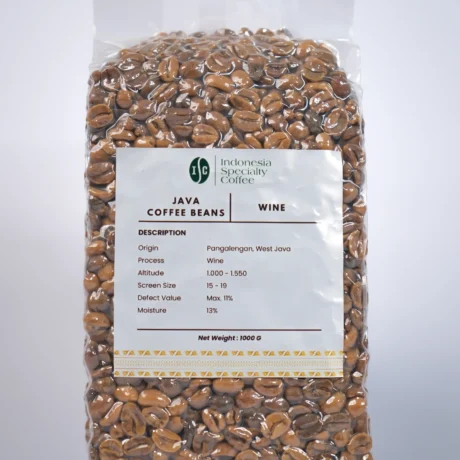
A stand-up pouch uses a bottom gusset so the pack can sit upright. It is common for 100 g to 500 g retail coffee and can be made from basic or high-barrier structures.
Best suited to: specialty retail, e-commerce, subscription coffee, cafés, and smaller private-label runs.
Useful features:
- One-way valve for freshly roasted beans;
- Zipper for reclosure;
- Tear notch or laser score;
- Opaque barrier layer; and
- Enough headspace for reliable filling and sealing without excessive trapped air.
Watch for: a zipper positioned too close to the seal area, coffee oil or grounds contaminating the seal, instability on shelf, and weak bottom-gusset seals.
2. Flat-Bottom or Box-Bottom Bag
A flat-bottom bag has a broad base and defined side panels. It offers a premium shelf presence and several printable faces while using space efficiently.
Best suited to: premium single origins, gift lines, larger retail packs, and brands that need strong visual impact.
Advantages: stable display, good volume efficiency, and room for structured product information.
Watch for: higher unit cost, more complex converting, corner stress, and whether the chosen structure runs reliably on the filling line.
Packaging aesthetics can support a premium position, but the label must still communicate useful information. Our guide to reading a coffee bag label explains the details customers commonly look for.
3. Side-Gusset or Quad-Seal Bag
Side-gusseted bags expand at the sides and are widely used for medium and large volumes. Quad-seal versions reinforce the four vertical corners, producing a more structured pack.
Best suited to: wholesale roasted coffee, food-service packs, supermarket formats, and high-throughput packing lines.
Advantages: efficient use of space, scalable filling, and good strength when properly specified.
Watch for: reclosure options, panel distortion, valve placement, seal strength under load, and whether consumers will finish the pack quickly enough after opening.
4. Pillow Pack or Fractional Pack
Pillow packs are formed from rollstock and sealed at the back and ends. Small fractional packs are often used for hotel, office, restaurant, sample, and pre-portioned ground-coffee programs.
Best suited to: single-use or short-use portions, automated high-speed production, samples, and food service.
Advantages: low packaging weight, efficient automation, and tight portion control.
Watch for: absence of reclosure, seal contamination, excessive headspace oxygen, and barrier selection for ground coffee. A small pack is not automatically fresh; its surface-area-to-product ratio and seal quality still matter.
5. Vacuum or Brick Pack
Vacuum systems remove much of the gas before sealing and can form a compact brick. They are common for ground coffee and some mature, degassed whole-bean products.
Best suited to: products and production lines specifically validated for vacuum packing, compact retail distribution, and low-headspace applications.
Advantages: reduced headspace oxygen, compact shipping, and strong shelf efficiency.
Watch for: residual carbon dioxide, seal stress, damage to brittle products, loss of pack vacuum, and the idea that vacuum automatically creates a fixed shelf life. Fresh beans that continue releasing substantial gas can deform a non-vented vacuum pack.
6. Metal or Composite Can
Metal cans and composite canisters offer strong physical protection and can provide excellent light and gas barriers when the closure and seam perform well. Some use an inner flexible membrane before first opening and a reusable lid afterward.
Best suited to: premium gifting, long distribution chains, large household formats, and products needing crush resistance.
Advantages: rigid protection, strong shelf presence, and potential reuse.
Watch for: cost, empty-container shipping, seam integrity, coating and food-contact compliance, consumer reclosure, and the actual recycling pathway for composite constructions.
For after-opening use, compare rigid containers in our article on why a coffee canister matters.
7. Glass Jar or Reusable Rigid Container
Glass is a strong oxygen and moisture barrier, but the complete system is only as effective as its lid, liner, headspace, and handling. Clear glass also exposes coffee to light.
Best suited to: refill programs, local retail, home storage, gifts, and short distribution routes where weight and breakage can be managed.
Advantages: reusable, inert, easy to clean, and visually premium.
Watch for: light exposure, breakage, shipping weight, closure leakage, large headspace as coffee is consumed, and the emissions and logistics of return or reuse systems.
Reusable packaging is most defensible when it is actually reused enough times and supported by a practical return, cleaning, or refill model—not simply because the container feels durable.
What Is the Best Coffee Bean Packaging?
For many specialty roasters selling freshly roasted whole beans, the most practical starting specification is:
- Opaque high-barrier flexible pouch;
- One-way degassing valve matched to the product and pack;
- Reliable zipper for multi-use packs;
- Heat-seal layer compatible with the equipment;
- Verified food-contact materials;
- Low oxygen and water-vapour transmission appropriate to the shelf-life target;
- Pack size matched to customer consumption; and
- Secondary packaging strong enough for the shipping route.
That is a starting point, not a universal answer. Use the following matrix to narrow the choice.
| Product and route | Practical starting format | Critical checks |
| Fresh whole beans, local or e-commerce | High-barrier stand-up or flat-bottom pouch with valve and zipper | Degassing, seal integrity, light barrier, puncture resistance, after-opening closure |
| Fresh whole beans, long export route | High-barrier valve pouch plus protective carton | OTR, WVTR, residual oxygen, temperature exposure, drop and vibration testing |
| Ground coffee, multi-use | Very high-barrier pouch or rigid pack with strong reclosure; consider validated nitrogen flush | Initial oxygen, repeated opening, grind-related aroma loss, seal contamination |
| Ground coffee, single-use | High-barrier fractional pack or capsule system | Portion seal, headspace oxygen, barrier, compatibility, disposal claim |
| Private-label retail | Format chosen after brand, channel, filling, MOQ, and shelf-life brief | Artwork approval, migration compliance, coding area, line trial, finished-pack test |
| Green coffee export | Jute or woven outer bag with suitable hermetic liner where required | Moisture and water activity, liner seal, condensation risk, puncture, container conditions |
Green Coffee Packaging Is a Different Problem
Roasted-coffee retail bags manage post-roast gas and volatile aroma. Green coffee for export is packaged around moisture stability, physical protection, contamination risk, and long logistics.
Green coffee does not need a retail degassing valve. Common systems include jute or woven outer bags for handling and identity, sometimes combined with a hermetic liner to reduce exchange with the external environment. The best choice depends on initial moisture and water activity, climate, voyage duration, container management, destination, and buyer requirements.
Do not decide green coffee packaging based only on altitude or country of origin. Assess the lot and the route. See our guides to green coffee transport and storing green coffee beans for the separate controls that apply before roasting.
Should Coffee Packaging Be Nitrogen Flushed?
Nitrogen flushing replaces part of the air in the package, reducing initial oxygen before sealing. It can support freshness, especially for ground coffee and products targeting longer unopened distribution.
However, flushing is only useful when the full system works:
- The delivered gas and dosing are controlled;
- Headspace is measured rather than assumed;
- Residual oxygen is checked after packing;
- The material has an appropriate oxygen barrier;
- Seals and valves do not leak beyond the specification; and
- The claimed shelf life is validated with the actual product.
If oxygen enters through the film or seal, a low initial reading will not guarantee good performance months later. Modified atmosphere, valve selection, and film barrier must be designed together.
Is Kraft, Recyclable, or Compostable Packaging More Sustainable?
No single word answers that question.
Kraft Is an Appearance, Not a Disposal Instruction
A brown paper surface may be bonded to plastic or metalized layers. The complete pack may also include adhesives, inks, zipper, and valve. Ask for the exact structure and disposal instructions instead of inferring environmental performance from color or texture.
Recyclable Depends on the Whole Pack and Local System
A mono-material PE or PP pouch may be designed for a compatible recycling stream, yet local collection, sorting, and reprocessing determine whether it is recycled in practice. Valves, labels, coatings, pigments, and product residue may affect acceptance.
Compostable Requires Conditions and Evidence
Industrial compostability and home compostability are not the same. A claim should specify the applicable certification, component coverage, time and conditions, and whether a suitable collection system exists in the destination market.
For businesses selling in the United States, the FTC Green Guides explain how environmental marketing claims should be substantiated and qualified. For the European Union, Regulation (EU) 2025/40 on packaging and packaging waste entered into force in 2025 and generally began applying on August 12, 2026, with requirements phased according to the regulation.
Regulations and infrastructure vary by market. Have qualified regulatory and packaging specialists review the final structure, labels, claims, and destination requirements before production.
What Information Should Go on a Coffee Bag?
The legally required information depends on the destination, product, and sales channel. In addition to mandatory label elements, useful specialty-coffee information may include:
- Product name and whole-bean or ground format;
- Net quantity;
- Roast date and/or required date coding;
- Lot or batch code;
- Origin at the level the brand can substantiate;
- Processing method and variety when verified;
- Roast level or intended brew use;
- Tasting notes presented as sensory descriptions, not guaranteed ingredients;
- Storage instructions;
- Business and contact information;
- Certification marks only when authorized;
- Preparation guidance where helpful; and
- Accurate disposal or recycling instructions for the target market.
Food-contact suitability also needs evidence. The US Food and Drug Administration’s food-packaging overview explains that packaging components such as adhesives and colorants can be food-contact substances. Compliance should cover the complete intended use, not just the base film.
Avoid adding every possible origin detail if it cannot be traced to the coffee in that pack. Accurate, lot-linked information builds more trust than an elaborate but unverifiable story.
How to Validate Coffee Packaging Before a Bulk Order
Do not move directly from a digital mock-up to thousands of printed bags. Follow a staged validation process.
1. Write the Product Brief
Define:
- Whole bean or ground;
- Roast range and likely degassing behavior;
- Fill weight and bag dimensions;
- Target unopened and after-opening quality period;
- Expected packing time after roasting;
- Filling and sealing equipment;
- Nitrogen flushing or vacuum requirements;
- Sales channel and destination climate;
- Shipping route and secondary carton; and
- Regulatory and environmental claims.
2. Request the Technical Specification
Ask the converter or packer for:
- Full material structure and thickness;
- Oxygen transmission rate (OTR) and test conditions;
- Water-vapour transmission rate (WVTR) and test conditions;
- Seal initiation range and seal-strength data;
- Valve specification and installation method;
- Zipper or closure specification;
- Food-contact declarations for intended markets;
- Migration or compliance documentation where required;
- Print, ink, coating, and adhesive information; and
- Recyclability or compostability evidence for the complete pack.
Do not compare OTR or WVTR numbers without checking test temperature, humidity, units, and method. Results measured under different conditions are not directly comparable.
3. Run a Filling-Line Trial
Test the actual product on the actual equipment. Check filling accuracy, static, zipper contamination, seal wrinkles, valve placement, coding, line speed, and operator handling.
4. Test the Finished Pack
Useful checks may include:
- Seal and leak testing;
- Residual oxygen;
- Valve function;
- Drop, compression, vibration, and puncture resistance;
- Dimensional stability;
- Odor or taint assessment;
- Print rub and scuff resistance; and
- Storage under realistic and challenging distribution conditions.
5. Validate Shelf Life and Sensory Quality
Shelf life is not a number supplied by the film brochure. It is a property of the coffee, package, process, and distribution system together.
Use retained samples and a predefined schedule. Track packaging integrity, headspace oxygen where relevant, moisture, aroma or chemical freshness indicators, and blind sensory results. Include after-opening use if the product is resealable. Accelerated testing can help compare options, but real-time validation is important before making a long shelf-life claim.
6. Approve a Golden Sample and Control Future Runs
Keep an approved finished package, technical specification, artwork version, color standard, and quality limits. When material, valve, ink, adhesive, machine, coffee, pack size, or supplier changes, assess whether revalidation is needed.
Common Coffee Packaging Mistakes
Choosing by Appearance Alone
A beautiful pack can still have poor barrier performance or weak seals. Design should follow the product and distribution brief.
Assuming Dark Roast Needs Less Protection
Dark-roasted coffee is not immune to staling. Roast degree affects structure and degassing, but all roasted coffee benefits from controlled oxygen, moisture, heat, and repeated opening.
Treating the Valve as the Entire Freshness System
The valve manages gas; it does not repair a weak laminate or failed seal.
Calling Kraft Automatically Eco-Friendly
Kraft-laminated packs may contain several inseparable materials. Use substantiated, qualified claims.
Copying a Competitor’s Shelf Life
Another brand may use a different coffee, grind, residual oxygen level, film, valve, sealing process, climate, or test standard. Validate your own product.
Using One Specification for Whole Bean and Ground Coffee
Grinding changes gas release, surface area, and aroma-loss behavior. Test each product format separately.
Ignoring Consumer Use After Opening
A 1 kg bag may perform well unopened yet lose quality rapidly in a household that opens it daily for a month. Match pack size and closure to consumption.
Coffee Bean Packaging for Private-Label Brands
Private-label buyers need to decide more than color and logo. Before approving custom coffee packaging, align the coffee, roast, grind, pack size, barrier, valve, closure, label content, MOQ, shelf-life evidence, and destination requirements.
Indonesia Specialty Coffee supports businesses through its private-label coffee service, including coffee selection, roasting, grinding, packaging, branding, and international delivery. Review the difference between white-label and private-label coffee before choosing how much product and packaging customization your brand needs.
When requesting a proposal, provide:
- Destination country;
- Whole bean or grind specification;
- Target customer and price position;
- Pack sizes and expected volume;
- Preferred material or environmental objective;
- Required valve, zipper, nitrogen flush, or vacuum system;
- Label language and coding needs;
- Distribution channel and target shelf life; and
- Launch date.
Do not describe a package as recyclable, compostable, organic, Fair Trade, or otherwise certified until the exact claim and authorization have been confirmed for the finished product.
Ready to develop a branded coffee line? Request a private-label coffee consultation and ask for packaging options matched to your coffee, market, volume, and destination.
Frequently Asked Questions About Coffee Bean Packaging
What is the best packaging for freshly roasted coffee beans?
For many retail applications, an opaque high-barrier pouch with strong heat seals, a one-way valve, and a reliable zipper is a practical starting point. The final choice should be validated against the coffee’s degassing, pack size, filling process, distribution route, and target shelf life.
Does a one-way valve keep coffee fresh?
A valve helps release internal gas while limiting reverse flow, but it is only one part of the freshness system. The material barrier, seals, residual oxygen, storage temperature, and handling remain critical.
Should coffee be packaged immediately after roasting?
Fast packing can reduce uncontrolled oxygen exposure, but freshly roasted coffee also releases carbon dioxide. Immediate packing therefore requires a valve or another validated gas-management system. The best timing depends on the product and process.
Is kraft coffee packaging recyclable?
Not automatically. Many kraft coffee bags are laminates containing paper, plastic, metalized film, adhesives, zipper, and valve. Check the complete structure and the destination’s collection and recycling rules.
Is compostable coffee packaging better?
It may be appropriate where the entire pack is certified for a defined composting pathway and customers can access that system. Barrier performance, food-contact safety, contamination, and actual disposal behavior must also be considered.
Is vacuum packaging suitable for whole coffee beans?
It can be suitable for sufficiently degassed beans and a process designed for vacuum packing. Very fresh beans may continue releasing enough gas to deform or stress a non-vented pack, so the system needs testing.
Why does ground coffee need different packaging?
Grinding disrupts the bean structure, increases exposed surface area, accelerates gas release, and makes aroma more vulnerable. Ground coffee often needs tighter oxygen control, smaller portions, and validated vacuum or modified-atmosphere packaging.
Can transparent packaging protect coffee?
A transparent container may provide good gas and moisture barriers, but it exposes coffee to light unless an outer carton, sleeve, label, or dark storage controls that risk. A window also creates a lower-barrier area unless designed otherwise.
How should coffee bags be stored after opening?
Close the package promptly, minimize empty headspace where practical, and keep it cool, dry, and away from sunlight and strong odors. For longer preservation, freezing can work when portions and condensation are managed correctly; see our guide to freezing coffee beans.
What should a coffee brand test before ordering custom bags?
Test the material structure, OTR, WVTR, seals, valve, zipper, food-contact documents, filling-line performance, residual oxygen, transport durability, sensory shelf life, artwork, coding area, and environmental claims on the finished package.
Final Verdict
Good coffee bean packaging is not simply paper versus plastic or valve versus no valve. It is a system that combines the coffee, roast, grind, material barrier, format, seal, gas management, closure, filling process, logistics, consumer behavior, and disposal pathway.
For most specialty whole-bean brands, an opaque high-barrier valve pouch with dependable seals and reclosure is a sensible place to begin. The right final answer comes from testing the actual coffee in the actual pack under the actual route to market.
Choose packaging by evidence, not appearance alone. A validated pack protects aroma, reduces failures, supports honest sustainability claims, and gives the customer a better chance of tasting the coffee as the roaster intended.
Ready to Build a Coffee Brand That Stays Fresh?
Great coffee deserves packaging that protects its aroma, communicates its value, and performs throughout the journey from roastery to customer.
Ready to turn your coffee concept into a market-ready product? Talk to Indonesia Specialty Coffee about private-label coffee and custom packaging