In 2025 a single 20-kilogram lot of washed Geisha from one farm in Panama sold at auction for $30,204 per kilogram. That is not a typo, and it is not normal coffee. It is the sharp end of a truth most origin guides dodge: the world’s best Arabica is not decided by which country you name, it is decided at a cupping table, one lot at a time, by variety and process.
So which regions actually produce the best Arabica coffee? Judged by the two competitions that matter most, the Best of Panama and the Cup of Excellence, the five that keep winning are Panama, Ethiopia, Colombia, Costa Rica, and Indonesia. Below is each region with its signature win: the farm, the year, the variety, the processing, the tasting notes, and the score the jury gave it.
Last updated: August 2026
What “Best” Actually Means in Arabica
The best Arabica regions are the ones whose top lots repeatedly win blind cupping competitions judged by international juries. Two contests set the global standard: the Best of Panama, which built the Geisha legend, and the Cup of Excellence (COE), which runs national competitions where a jury cups every lot at least five times and only coffees scoring above 87 points make the winners’ list.
Here is the part that reframes everything. At this level, country matters less than the combination of variety and process. A washed Geisha and a natural landrace from the same hillside can score twenty places apart. Because of that, the ranking below is really a ranking of which regions have paired the right varieties with obsessive processing and proven it at auction.
The five regions and their headline wins, at a glance:
| Rank | Region | Signature win | Variety and process | Score |
|---|---|---|---|---|
| 1 | Panama | Best of Panama 2025, Hacienda La Esmeralda | Geisha, washed | 98.0 |
| 2 | Ethiopia | COE 2024, Basha Farm, Sidama | 74158 landrace, natural | #1, record $445/lb |
| 3 | Colombia | COE 2021, Finca El Obraje, Nariño | Geisha, washed | 90.61 |
| 4 | Costa Rica | COE 2024, Don Cayito, Tarrazú | Geisha, honey | 93.62 |
| 5 | Indonesia | COE 2021 inaugural, Pantan Musara, Gayo | Ateng, Gayo 1, P88, honey | 89.28 |
One note before the list. This ranking follows competition pedigree and global influence, not a single number. Costa Rica’s 93.62 outscores Colombia’s 90.61, but Colombia’s decades of COE depth put it higher. Read the sections, not just the scoreboard.
1. Panama: The Geisha Record Machine
Panama is the best Arabica region in the world by competition results, and one variety made it so: Geisha (sometimes spelled Gesha). The 2025 Best of Panama crowned a washed Geisha from Hacienda La Esmeralda in Boquete, lot GW-01, that scored 98 out of 100, the highest-scoring washed Geisha in Panama’s history. It sold for $30,204 per kilogram.
That lot was picked on 7 April 2025, then given a 48-hour cold-temperature fermentation followed by climate-controlled drying (a washed process taken to an extreme almost no other origin attempts). The tasting notes read like a perfume counter: orange blossom, white peach, black tea, and lemon zest, elegant and structured. Esmeralda’s natural Geisha the same year, lot GN-01, scored 97 and sold for $23,608 per kilogram, all strawberry, mango, hibiscus, and jasmine over brown sugar.
This is not a one-year fluke. In 2024 the Lamastus Family Estates took top honors with their Elida Geisha Natural, which sold for $10,013 per kilogram. Panama’s volcanic soils around Boquete and Volcán, high altitude, and cool nights suit Geisha better than anywhere else on earth. If you want to taste why the whole industry lost its mind over one variety, this is the origin.
2. Ethiopia: The Birthplace Still Winning
Ethiopia is the genetic home of Arabica, and it still beats most of the world at its own game. The 2024 Ethiopia Cup of Excellence was won by Basha Farm in Sidama, where producer Basha Bekele Butusha grows a naturally processed lot of the local 74158 variety, one of the disease-resistant landraces released from the Jimma research center. The number-one lot sold to a US roaster for $445 per pound, the highest price in Cup of Excellence history at the time.
The cup was classic top-tier Ethiopian natural: floral and fruity up front, with vanilla, caramel, and cacao nibs underneath and a lively, citrusy acidity. Here is the detail that tells you where Ethiopian coffee is right now: at the 2024 COE, every single winning coffee was natural processed. No washed or anaerobic lot scored above 87 points, despite plenty being submitted.
For decades Ethiopia was famous for delicate washed Yirgacheffe. By contrast, the competition table now rewards its sun-dried naturals, the ones bursting with blueberry and strawberry. Ethiopia’s thousands of wild heirloom varieties, grown between roughly 1,800 and 2,200 meters, give it a genetic deck no other origin can shuffle.
3. Colombia: Range Nobody Else Has

Colombia is the most complete Arabica origin in the world, and its Cup of Excellence record proves it. Colombia has run COE since 2005 and channeled more than six million dollars to its farmers through the auctions. The 2021 competition was won by Pablo Andrés Guerrero of Finca El Obraje in Nariño, with a washed Geisha scoring 90.61, one of two lots over 90 that year.
What sets Colombia apart is not a single variety but the range: it wins with washed Geisha, with the perfumed Pink Bourbon, and with carefully processed Caturra and Castillo. Its high-altitude Nariño, Huila, and Cauca farms give bright, structured, fruit-forward cups. Guerrero’s Geisha carried the tropical, floral, tea-like clarity a clean high-grown washed coffee does better than any other style.
For a buyer this range is the real value. Colombia can hand you a competition trophy Geisha or a dependable, sweet, balanced Castillo for a house espresso, from the same country, often the same region. No other origin covers that much ground at this quality.
4. Costa Rica: The Home of Honey Process
Costa Rica invented the modern honey process, and it is still winning with it. The 2024 Costa Rica Cup of Excellence went to Don Cayito farm in Tarrazú, where Ricardo Calderón Madrigal, a grower of more than 40 years, produced a honey-processed Geisha that scored 93.62, the highest score of any origin or category in the entire 2024 COE calendar. The farm sits at 1,950 meters.
Honey processing (Step 1: the cherry skin is removed but some or all of the sticky mucilage is left on the bean to dry, rather than washed off) is the Costa Rican signature, and it adds a rounded sweetness and syrupy body that a fully washed coffee does not have. Costa Ricans grade it by how much mucilage stays on: white, yellow, red, and black honey, in order of increasing sweetness and risk. Don Cayito’s Geisha showed the clarity and vibrancy Tarrazú is known for, lifted by that honey-process depth.
Costa Rica banned low-quality Robusta planting for decades and went all-in on high-grown Arabica and micro-mill processing. As a result, it punches far above its size. If you want to understand what processing alone can do to a cup, cup a washed Costa Rican next to a black honey from the same farm.
5. Indonesia: The Newcomer Already Scoring 89+
Indonesia is the fastest-rising Arabica origin on this list, and it announced itself at the very first Indonesia Cup of Excellence in 2021. The winning lot came from Pantan Musara farm in the Gayo highlands of Aceh, where producer Dilen Ali Gogo submitted a honey-processed blend of Ateng, Gayo 1, and P88 varieties that scored 89.28. For a country’s debut on the COE stage, breaking 89 is a statement.
That result matters because it rewrote what Indonesian Arabica could be. For years Gayo reached the world as semi-washed coffee that was then wet-hulled (Giling Basah) at 35 to 40% moisture, a two-step process that gives the heavy, earthy, low-acid body Sumatra is famous for. The competition lots prove Gayo can also do clean and bright. A washed Gayo from Koperasi Ribang Gayo Musara, using Ateng and P88, cupped with maple syrup, honey, cinnamon, clove, dark chocolate, apricot, mandarin orange, and pecan. That is a different, more delicate face of the same origin.
Gayo grows at 1,400 to 1,800 meters on volcanic soil around Lake Tawar, with harvest running June to August. If you want to read the origin in depth, our guide to Gayo coffee covers the farms and varieties. The headline for a buyer is simple: Indonesia now offers both the traditional earthy profile and competition-grade clean lots, often at a fraction of a Panamanian Geisha’s price.
The Honest Trade-Off
Here is what the auction headlines hide. A $30,204-per-kilogram Panama Geisha is a trophy, not a product. These record lots exist in 20 to 100 kilogram quantities, sell to a handful of roasters and collectors, and will never reach a normal cup. The gap between a Cup of Excellence microlot and the “same origin” coffee on a supermarket shelf is enormous, and the origin name on the bag guarantees you almost nothing about the quality inside.
There is a second problem worth saying out loud. Geisha now wins so consistently that it is starting to flatten the very thing that made these origins interesting. When every farm from Panama to Colombia to Costa Rica chases the same variety and the same competition-friendly processing, cups from different countries start to converge on the same jasmine-and-tropical-fruit profile. Something is gained in points and lost in place.
So do not read this list as a shopping order. Read it as a map of where the ceiling is highest. A brilliant, affordable washed Ethiopian or a clean honey Gayo will give most roasters and drinkers more real pleasure than a four-figure Geisha they will taste once and photograph.
What This Means for Roasters and Buyers
If you are a roaster, separate the trophy from the tool. A competition Geisha earns its place as a rare, expensive filter offering and a story your customers remember. For daily volume, the smarter buys are the origins doing exceptional work below the auction spotlight: washed Ethiopian naturals, Colombian Castillo and Pink Bourbon, honey-process Costa Rican, and clean-lot Gayo from Indonesia. Roast Geisha and top naturals light to protect the florals. Give earthy wet-hulled Sumatra a medium roast instead.
If you are a green buyer, competition results are a scouting report, not a purchase order. Ask any supplier for the crop year, the variety, the full two-step process (cherry method plus how it was dried or hulled), the altitude, and a recent cupping score before you commit. With Arabica, the same farm can send you a 90-point lot and an 84-point lot in the same season. Cup first, every time.
Frequently Asked Questions
Which country produces the best Arabica coffee in the world?
By competition results, Panama produces the best Arabica coffee. Its Geisha variety, grown around Boquete, repeatedly wins the Best of Panama and sets world auction records, including a washed Geisha that scored 98 points and sold for $30,204 per kilogram in 2025. Ethiopia, Colombia, Costa Rica, and Indonesia follow closely.
What is the highest-scoring coffee variety?
Geisha (Gesha) is the highest-scoring Arabica variety in competition. Originally from Ethiopia and made famous in Panama, it regularly scores 94 to 98 points at auction thanks to its intense jasmine, bergamot, and tropical-fruit aromatics. Ethiopian heirloom landraces and Pink Bourbon are other consistent high scorers.
What is the Cup of Excellence?
The Cup of Excellence is the most respected coffee competition in the world. In each participating country, an international jury blind-cups every submitted lot at least five times, and only coffees scoring above 87 points win. The top lots are then sold to global buyers through an online auction, often at record prices.
Has Indonesian coffee ever won a world cupping competition?
Yes. Indonesia joined the Cup of Excellence in 2021, and its inaugural winner, a honey-processed lot of Ateng, Gayo 1, and P88 from Pantan Musara farm in the Gayo highlands of Aceh, scored 89.28. Indonesian Gayo coffee now wins with both traditional and clean washed and honey processing.
Is Geisha coffee worth the price?
For a rare tasting experience, a competition Geisha is unmatched, with aromatics no other coffee delivers. As an everyday coffee, it is not worth it for most people. The record lots sell in tiny quantities at four-figure prices, and an excellent washed Ethiopian or honey-process Gayo gives most drinkers more pleasure per dollar.
Sourcing Competition-Grade Arabica from Indonesia
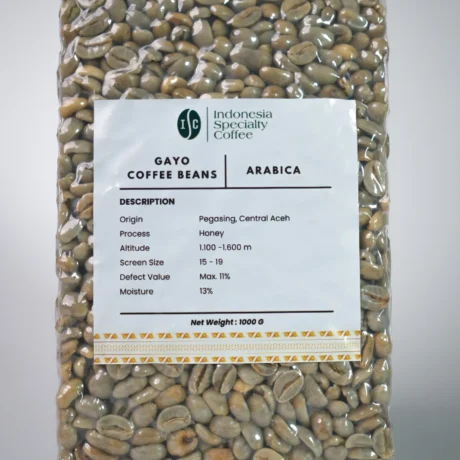
Whichever origin you chase, ask for the current crop year, the variety, the full two-step process description, the altitude, and a recent cupping note before you buy a bag, let alone a pallet. A sample should show you exactly what the score promised. If you want to start with Indonesian Gayo, the origin that broke 89 at its Cup of Excellence debut, Indonesia Specialty Coffee exports Grade 1 Gayo Arabica green beans from Aceh and can send a 1 kg cupping sample: request a sample or see the current pricelist.