Last updated: August 13, 2026
Bali coffee Kintamani is Arabica from the highlands of northeastern Bali, Indonesia. Its recognized profile is notably different from the heavy, low-acidity stereotype often attached to Indonesian coffee: expect a clean cup, medium body, lively acidity, and fruit notes that may recall lemon or tangerine. The origin also has historical importance because Kopi Arabika Kintamani Bali became Indonesia’s first registered Geographical Indication (GI) product in 2008.
Does that make every bag from Kintamani one of the world’s “best” specialty coffees? No origin name can guarantee that. Quality still depends on the farm, cherry selection, processing, storage, roast, and individual lot. What Kintamani offers is a distinctive combination of place, documented production practices, collective organization, and strong cup potential.
This guide explains what makes Bali Kintamani coffee special, what its GI protects, how it commonly tastes, and what roasters or green-coffee buyers should verify before ordering.
What Is Bali Coffee Kintamani?
Bali coffee Kintamani refers to Arabica associated with Bali’s Kintamani highlands. The protected name is Kopi Arabika Kintamani Bali. Indonesia’s official Geographical Indication registry lists it under registration number IG.00.2007.000001.
The original GI production zone is more precise than the general word “Kintamani” suggests. According to the FAO case study based on the GI Book of Requirements, the delimited zone lies above 900 metres in northeastern Bali and historically covered designated villages in Bangli, Badung, and Buleleng. Most Arabica described in that study was grown at about 1,100–1,400 metres, within a wider 900–1,500-metre range.
This distinction matters. A seller should be able to identify the producer, village or processing unit, crop year, and lot—not merely attach “Bali” or “Kintamani” to an anonymous coffee.
Bali Coffee Kintamani at a Glance
| Attribute | Evidence-based summary |
|---|---|
| Protected name | Kopi Arabika Kintamani Bali |
| Species | Arabica (Coffea arabica) |
| GI registration | Indonesia’s first registered GI product; certificate issued December 5, 2008 |
| GI production area | Delimited highland zone above 900 metres in northeastern Bali |
| Elevation in the FAO case study | 900–1,500 metres; most coffee at approximately 1,100–1,400 metres |
| Cultivation context | Smallholder farms, shade trees, intercropping, and Subak Abian farmer organizations |
| Original GI process | Fully washed Arabica, followed by drying and dry hulling |
| Reference cup profile | Medium-to-high acidity, fruit that is often lemony, medium body, low astringency, and a clean cup |
| Grade or cup score | Must be confirmed for each lot; the origin name alone does not establish a score |
| Best use | Depends on the lot and roast; washed lots often suit filter, pour-over, and expressive single-origin programs |
Why Is Bali Coffee Kintamani Considered Special?
The strongest case for Kintamani is not a single marketing claim. It is the interaction of five verifiable factors.
1. It Has a Defined and Protected Origin
Kopi Arabika Kintamani Bali received its GI certificate on December 5, 2008. Both the FAO case study and a World Intellectual Property Organization paper on Indonesia’s GI system identify it as the country’s first GI-protected product.
A GI links a protected name to a delimited place and an agreed production specification. It is not merely a decorative badge or a synonym for “premium.” For buyers, its practical value lies in provenance, rules of use, and traceability. If a lot is marketed as GI-certified, request the documentation that connects the coffee to the protected system.
2. Its Highland Environment Supports Arabica Production
The GI zone sits in a cool, mountainous landscape influenced by volcanic formations. The FAO study describes Entisol and Inceptisol soils with loamy-sand or sandy-loam textures, along with substantial rainfall and a marked dry period.
These conditions can support healthy Arabica production, but “volcanic soil” should not be treated as a flavor ingredient. Soil, elevation, shade, temperature, rainfall, variety, plant nutrition, and farm management interact. None of them independently guarantees citrus notes or a high cup score.
3. The Reference GI Process Emphasizes Ripe Cherries and Fully Washed Coffee
The original GI specification described selective hand-picking with at least 95% red cherries, wet processing, fermentation, full sun-drying of clean parchment, and physical requirements for exportable green coffee. These controls help reduce underripe flavors and obvious defects when they are applied correctly.
Fully washed processing also distinguishes the reference Kintamani profile from much of the classic wet-hulled coffee associated with Sumatra. If you want a clearer explanation of the difference between washed, natural, honey, and wet-hulled coffees, see our guide to five coffee processing methods.
4. Subak Abian Provides a Community Structure
Many highland farmers belong to Subak Abian, a traditional Balinese farmer organization shaped by the Tri Hita Karana philosophy of harmonious relationships with the divine, other people, and the environment.
Historically, Subak Abian groups established internal rules and held regular meetings. Within the GI system, producer records and controls were designed to support compliance and traceability from farms through processing and sales.
That structure can make coordination and shared quality improvement easier. However, membership alone does not guarantee that every cherry ripens at the same time, every fermentation is identical, or every lot tastes the same. Buyers still need current lot-level evidence.
5. Its Reference Sensory Profile Is Distinctive Within Indonesia
The WIPO paper describes Kintamani Bali Arabica as having medium-to-high acidity, good aroma intensity, fruit that is often lemony, medium body, light astringency, and a clean cup. That is a useful reference profile, not a promise that every process, roast, or harvest will taste identical.
For readers exploring the country’s wider range, our overview of single-origin Indonesian coffee shows why “Indonesian coffee” is far too broad to represent one flavor style.
What Does Bali Coffee Kintamani Taste Like?
A well-prepared washed lot may show:
- Lemon, tangerine, or orange-like aromatics;
- Clear sweetness;
- Medium-to-high perceived acidity;
- A medium body;
- Low astringency; and
- A clean finish with few distracting defect notes.
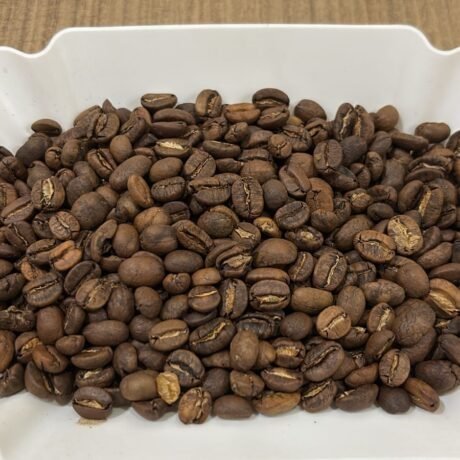
Our current Arabica Bali Kintamani green coffee beans listing describes orange and lemon in the fragrance or aroma, molasses and toast in the flavor, bright acidity, and a medium body. Treat those descriptors as lot-specific tasting information, not a permanent formula for the whole region.
Do Citrus Trees Make Kintamani Coffee Taste Like Citrus?
Coffee in the Kintamani zone is often intercropped with or shaded by citrus, banana, and leguminous trees. That agricultural fact has sometimes become the claim that citrus-tree roots transfer orange or lemon flavors directly into coffee cherries.
There is no good evidence for that literal flavor transfer. Citrus notes are sensory associations formed by volatile and non-volatile compounds in coffee and shaped by genetics, ripeness, fermentation, drying, roasting, water, and brewing. Intercropping can influence farm ecology and household income, but it should not be used as a scientific explanation for lemon flavor.
How Processing Changes the Cup
| Process | What buyers may encounter | What to verify |
| Fully washed | Often the clearest expression of the GI reference profile: lively acidity, citrus-like fruit, medium body, clean finish | Fermentation record, drying method, moisture, water activity, and cup report |
| Natural | May be sweeter, fruitier, heavier, or more fermentation-led than a washed lot | Cherry selection, drying control, water activity, and freedom from over-fermented defects |
| Honey | May sit between washed clarity and natural-process fruit intensity | Mucilage level, drying protocol, lot consistency, and sensory results |
| Experimental fermentation | Can produce intense or unconventional aromatics, but outcomes vary widely | Process definition, fermentation controls, sample approval, and repeatability |
Natural and honey coffees can be legitimate Bali-origin products. However, the original GI specification cited by FAO and WIPO covered fully washed Arabica. Do not assume that every alternative-process coffee is sold under the protected GI specification; ask the supplier for current GI documentation if that claim matters to your market.
Is Bali Coffee Kintamani Always Specialty Grade?
No. Origin, GI status, Indonesian Grade 1, and a sensory score describe different things. They should not be collapsed into a single claim.
- Origin tells you where the coffee is said to come from.
- GI status links an eligible product to a protected geographical name and specification.
- Physical grade assesses characteristics such as defects and other green-bean requirements.
- Sensory evaluation describes and evaluates what is experienced in the cup.
The historical shorthand “80 points or higher equals specialty coffee” remains common in trade, but the Specialty Coffee Association’s current Coffee Value Assessment uses physical, descriptive, affective, and extrinsic assessments to provide a broader picture of coffee value. A number on an old or unspecified cupping form should not be the only basis for a purchase.
Therefore, a claim such as “Kintamani always scores 84–87+” is too broad. A score belongs to a specific sample evaluated under a stated protocol on a stated date. Ask who evaluated it, which form was used, how the sample was roasted, and whether the shipped lot matches the approved sample. Our article on the SCA Coffee Value Assessment explains why buyers should look beyond one headline score.
Indonesia’s green-coffee standard is a separate reference. The National Standardization Agency lists SNI 2907:2008, reconfirmed in 2026, as the current coffee-bean standard. Buyers should request the actual inspection results rather than infer compliance from origin or marketing language.
How Does Kintamani Compare with Other Indonesian Coffees?
The table below describes common market patterns, not rigid regional rules. Processing and lot selection can move any origin away from its stereotype.
| Origin and common style | Typical sensory direction | Useful role in a coffee program |
| Bali Kintamani, fully washed | Citrus-led fruit, lively acidity, clean finish, medium body | Filter menu, light-to-medium single origin, brighter blend component |
| Sumatra, commonly wet-hulled | Lower perceived acidity, fuller or syrupier body, earthy, herbal, spice, or cocoa notes | Espresso, milk beverages, body-building blend component |
| Java, commonly washed | Balanced acidity and body with sweet, nutty, chocolate, herbal, or spice notes depending on lot | Filter or espresso with a familiar, balanced profile |
| Toraja, often wet-hulled but increasingly diverse | Full body with cocoa, spice, herbal, earthy, or dark-fruit tones depending on process | Espresso, blends, and distinctive single-origin releases |
| Aceh Gayo, with several processes available | Can range from classic cocoa and herbal depth to clean fruit and florals | Broad use across espresso, filter, and seasonal micro-lots |
Compare these profiles in more depth through our Indonesian specialty coffee guide, Sumatra origin guide, and Toraja coffee guide.
The best choice depends on the target customer and brewing format. Kintamani is especially useful when a roaster wants an Indonesian story without relying on a heavy, earthy cup profile.
How Should Roasters Approach Bali Kintamani Coffee Beans?
There is no universal “Kintamani roast profile.” A dense, high-elevation washed lot and a lower-density natural lot may respond differently even when they share the same regional name.
Start with the green-coffee data:
- Moisture and water activity;
- Density and screen distribution;
- Process and drying method;
- Crop year and storage history;
- Sample-roast behavior; and
- The sensory target for filter, espresso, or a blend.
A light-to-medium roast may help preserve citrus-like aromatics and perceived acidity in a clean washed lot. A more developed profile can emphasize sweetness, toast, cocoa, or body, but pushing the coffee darker may reduce origin distinction. These are starting hypotheses, not fixed rules.
Record charge conditions, turning point, rate of rise, color change, first crack, development, end temperature as measured by your machine, weight loss, and cupping results. For a full explanation of the variables, use our guide to the process of coffee roasting.
How Should You Brew Kintamani Coffee?
Washed Kintamani often works well as pour-over because paper filtration and controlled percolation can make its acidity, aroma, and finish easy to distinguish. A practical starting point is:
- Coffee: 15 g
- Water: 240–250 g
- Ratio: approximately 1:16 to 1:16.7
- Water temperature: approximately 92–96°C
- Grind: medium, adjusted for the brewer
- Total brew time: use taste and flow as the guide rather than forcing one universal time
If the cup tastes sharp, thin, or underdeveloped, first test a finer grind or more extraction. If it tastes dry, harsh, or hollow, test a coarser grind, gentler agitation, or a shorter contact time. Roast level, water chemistry, grinder, filter, and brewer geometry can change the result.
Use our pour-over brewing-time guide to diagnose flow and extraction instead of changing several variables at once.
Kintamani can also work as espresso. A medium roast or an appropriately developed lighter roast may preserve fruit while building enough sweetness and texture. Dial in the specific roast rather than assuming that regional origin determines the recipe.
What Should Green-Coffee Buyers Verify Before Ordering?
A persuasive origin story is useful, but a purchasing decision needs documents and samples. Before contracting Bali Kintamani coffee beans, request:
- Exact lot identity: producer or Subak Abian, village, processing unit, lot code, and crop year.
- GI evidence where claimed: documentation connecting the lot and seller to the protected name and current requirements.
- Process details: washed, natural, honey, or experimental; fermentation and drying information where available.
- Physical data: grade, defect count, screen distribution, moisture, water activity, and bagging format.
- Sensory report: protocol or form used, roast information, evaluation date, descriptors, and score if a score is quoted.
- Representative sample: confirm that the approval sample comes from the shipment lot, not a separate showcase lot.
- Commercial terms: quantity, Incoterm, port, lead time, document set, claim procedure, and sample-to-shipment tolerance.
- Storage and logistics: warehouse conditions, packaging, loading plan, and protection against moisture during transit.
Our practical guide explains how to request and evaluate a green-coffee sample before committing to volume. International buyers can also review the green-coffee import guide for grading, documents, shipping, and contract checks.
Where Can You Buy Bali Coffee Kintamani Green Beans?
Indonesia Specialty Coffee offers Bali Kintamani green coffee beans for roasters, importers, distributors, and other business buyers. Availability, process, crop year, sensory results, specifications, price, and minimum order can change from one lot to the next.
For that reason, the safest buying sequence is:
- Share the intended market, roast style, volume, destination, and preferred process;
- Request the current lot sheet and commercial offer;
- Evaluate a representative sample;
- Approve the specification and sample in writing; and
- Confirm shipping and claim terms before payment.
For deeper commercial detail, read the Bali Kintamani wholesale buyer’s guide and check the current Bali Kintamani price guide. Use those pages for time-sensitive prices rather than copying a price into this evergreen origin article.
Ready to assess a current lot? Contact Indonesia Specialty Coffee for wholesale sourcing and request the latest specification, sample, price, and shipping options for your destination.
Frequently Asked Questions About Bali Coffee Kintamani
What is Bali coffee Kintamani?
Bali coffee Kintamani is Arabica associated with a delimited highland zone in northeastern Bali. The protected name, Kopi Arabika Kintamani Bali, became Indonesia’s first registered Geographical Indication product in 2008.
What does Kintamani coffee taste like?
The GI reference profile includes medium-to-high acidity, fruit that is often lemony, medium body, low astringency, and a clean cup. Actual notes vary with the lot, variety, ripeness, process, storage, roast, and brew.
Is every Kintamani coffee specialty grade?
No. Kintamani is an origin, while physical grade and sensory evaluation apply to a particular lot or sample. Verify the current defect data, moisture, water activity, cup report, and sample instead of assuming a score from the regional name.
What does Kintamani’s GI status protect?
The GI protects a geographical name linked to a delimited area and production specification. The original documentation covered fully washed Arabica from the Kintamani Bali zone. A GI is evidence of origin and compliance when properly documented; it is not an automatic guarantee that every lot will suit every buyer.
Is Kintamani coffee washed or wet-hulled?
The original GI specification describes fully washed Arabica followed by drying and dry hulling. That differs from giling basah, or wet hulling, where parchment is removed while the bean still has relatively high moisture. Natural and honey lots from Bali are also sold, but their GI status should be confirmed separately if the protected designation is claimed.
Do orange trees give Kintamani coffee its citrus flavor?
Coffee and citrus trees are commonly grown together in the region, but there is no solid evidence that citrus roots transfer orange or lemon flavor directly into coffee cherries. Citrus-like tasting notes arise from coffee chemistry as affected by genetics and production from farm through brewing.
What roast level is best for Kintamani coffee?
There is no single best roast. Light-to-medium profiles often suit clean washed lots when the goal is to preserve fruit and acidity. Denser beans, alternative processes, espresso targets, or customer preferences may require a different approach. Sample roast and cup every lot.
What brewing method suits Kintamani coffee?
Pour-over is a strong starting choice for a washed lot because it can emphasize clarity and aroma. AeroPress, batch filter, immersion, and espresso can also work. Match the recipe to the roast and desired strength rather than treating origin as a fixed brewing instruction.
What should a wholesale buyer request from a supplier?
Ask for the lot identity, crop year, process, GI documentation if claimed, physical specifications, cup report, representative sample, available volume, price basis, Incoterm, export documents, packaging, lead time, and claim terms.
Final Verdict: Is Bali Coffee Kintamani One of the Best Specialty Coffees?
“Best” is subjective, but Bali coffee Kintamani has a credible claim to being one of Indonesia’s most distinctive specialty origins. Its importance rests on more than a romantic Bali story: it has a defined GI history, documented highland production practices, collective farmer organization, and a reference cup profile built around citrus-like fruit, lively acidity, medium body, and cleanliness.
The critical distinction is that an origin creates potential, not certainty. The best Kintamani coffee is the lot that proves its identity, physical condition, sensory quality, and fit for your roast or market. Evaluate the sample, verify the documents, and buy the coffee in front of you, not only the name on the bag.
To compare current options, explore Indonesia Specialty Coffee’s green-coffee selection or request a current Bali Kintamani lot sheet and sample through our wholesale team.