Coffee supply chain issues are the disruptions that stop green coffee moving from farm to roaster at the volume, quality, and price both sides agreed on. Between 2024 and 2026 those disruptions stacked up: a drought-hit Brazilian crop that pushed arabica to its highest price since 1977, renewed fighting in Ethiopia, a 50 percent US tariff on Brazilian coffee, an EU Deforestation Regulation that keeps being delayed, and freight costs tied to conflict in the Middle East.
This guide is written for roasters and importers, not for people reading over a morning cup. We supply green coffee from Medan, North Sumatra, and every one of the coffee supply chain issues below has landed on our desk in some form: a delayed vessel, a buyer whose usual origin dried up, a contract repriced mid-season. It covers what is actually breaking, how far each break travels down the chain, and what you can do about it before your next purchase.
Last updated: 30 September 2026
What Are Coffee Supply Chain Issues?
Coffee supply chain issues are failures at any one of the seven links between a coffee tree and a roasted bag. The chain runs: smallholder farm, wet mill or on-farm processing, dry mill and export warehouse, ocean freight, import warehouse and trade finance, roastery, and finally the café or retail shelf. Most coffee is grown by smallholders, so a problem at link one is spread across millions of farms rather than a handful of estates.
Each link fails in its own way. The farm fails on weather, disease, and labour. The mill fails on water and power. Export fails on roads, ports, and foreign currency. Freight fails on fuel prices and shipping routes. Import fails on regulation, tariffs, and credit. That is why the phrase is plural. There is never one coffee supply chain issue, there are several running at once, and the ones hitting your origin decide what lands in your warehouse.
| Issue | Where it hits the chain | What buyers see | Status, September 2026 |
|---|---|---|---|
| Armed conflict (Ethiopia, DRC, Uganda) | Farm to export | Delayed lots, uneven quality, exporters chasing hard currency | Fresh clashes in Tigray in early 2026, exports continuing |
| Climate (Brazil, Vietnam) | Farm | Record arabica prices in 2025, daily price swings | Brazil 2026/27 crop forecast raised 17.1 percent |
| Plant disease (coffee wilt, leaf rust, berry borer) | Farm | Yield collapse, entire regions leaving the market | Endemic, spreads fastest where conflict breaks quarantine |
| Trade policy (US tariffs) | Import | US imports from Brazil fell 46 percent in August 2025 | Coffee exempted late 2025, terms still shifting |
| Regulation (EUDR) | Export and import | Plot geolocation data, compliance cost, panic buying | Delayed again to the end of 2026 |
| Freight (Red Sea, Strait of Hormuz) | Ocean freight | Longer transit, higher rates, higher insurance | Elevated and tied to oil prices |
How Conflict Creates Coffee Supply Chain Issues in East and Central Africa
Ethiopia shows how conflict works its way through a coffee supply chain without ever showing up as a headline crop failure. Roughly 95 percent of Ethiopian coffee comes from an estimated 15 million smallholder farmers, according to research from Harvard’s Center for African Studies. The Tigray war ran from 2020 to 2022, fighting in the Amhara region began in August 2023, and fresh clashes broke out in Tigray in early 2026.
Here is what that looks like from a buyer’s chair. National production held up: the USDA Foreign Agricultural Service puts the 2025/26 crop at 11.56 million bags. What broke was the export layer. The country has struggled to secure foreign currency since 2020, so coffee became the main route to US dollars, and a wave of new exporters entered the trade for the currency rather than the coffee. In the first quarter of the 2025/26 fiscal year Ethiopia shipped only about three quarters of its planned volume yet earned 47 percent more revenue than a year earlier, because global prices were high. Roasters felt it as late shipments, uneven quality, and contracts repriced after signing. Some, including Pact Coffee in the UK, paused buying Ethiopian coffee altogether during the Tigray war.
Conflict, in other words, rarely deletes an origin outright. It makes the origin unreliable, and unreliable is what a roaster with a single-origin menu cannot absorb. Our guide to Ethiopian coffee covers the regions and profiles that are worth the effort of sourcing carefully.
Coffee Wilt Disease: When Conflict Lets a Pathogen Loose
The second-order effect of conflict is worse than the first. When production systems collapse, plant disease control collapses with them. Coffee wilt disease, caused by the soil fungus Fusarium xylarioides, had been beaten back in the 1950s. It re-emerged in the Democratic Republic of Congo during the political turmoil of the 1970s and 1980s, spread silently through abandoned plantations, and crossed into Uganda in the early 1990s, most likely carried on plant material by farmers looking for markets outside a collapsing economy.
The numbers are stark. Published estimates put the Ugandan damage at 14.5 million robusta trees destroyed, with yield losses of up to 77 percent in some districts, and DRC coffee production was all but wiped out by the late 1990s. North Kivu, once a robusta heartland, effectively left the export map. A 2024 review in Plant Pathology records that a coordinated regional response only began in 2000, a quarter of a century after the disease returned.
Sourcing for a single-origin program and need an origin that is not in the headlines? See our current wholesale pricelist or contact our team for Grade 1 Indonesian lots with FOB Belawan pricing.
Climate Shocks: The Biggest Coffee Supply Chain Issue by Volume
Conflict disrupts specific origins. Of all the coffee supply chain issues covered here, weather is the only one that moves the price of every origin at once, because Brazil grows more than a third of the world’s coffee and sets the baseline for the C market. The 2024 drought in Brazil, combined with a poor robusta crop in Vietnam, is what drove arabica futures to their highest level since February 1977 in early 2025. Every green coffee buyer paid for that, whether they bought Brazilian coffee or not.
The 2026 picture is turning, at least on paper. Brazil’s 2026/27 crop forecast has been raised by 17.1 percent year on year after regular rainfall, according to BeverageDaily. Vietnam shipped roughly 810,000 tonnes in the first four months of 2026, up 15.8 percent, and robusta prices have fallen more than 30 percent year on year, according to StoneX. Prices are still well above where they sat before 2024, global stocks remain thin, and a strong La Niña during Brazil’s September to October flowering would put the whole recovery in doubt. Coffee leaf rust and coffee berry borer both spread faster in warmer, wetter conditions, so climate is a disease story as much as a rainfall story.
Indonesia is not exempt. From our partner farms in the Gayo Highlands of Aceh, the practical climate risk is unseasonal rain during the June to August drying window. Wet weather stretches drying time and pushes parchment moisture above the 12.5 percent ceiling that SNI 01-2907-2008 allows for Grade 1, which means slower turnaround and more rejected lots at the mill. What Indonesia does not have is the single-country concentration that turns a Brazilian frost into a global price event.
Tariffs, EUDR, and Freight: Policy-Driven Coffee Supply Chain Issues
The third category of coffee supply chain issues is made in government offices, and it moved faster than the weather in 2025. In April 2025 the United States imposed broad tariffs on coffee-producing countries, including a 50 percent levy on Brazil that took effect in August. US imports from Brazil fell 46 percent that month alone, according to Perfect Daily Grind. Coffee was exempted later in 2025 and the additional tariff on Brazil was removed, releasing beans that had been sitting in bonded warehouses. Our analysis of the Liberation Day tariffs covers how the original announcement reshaped buying. The lesson for any importer is that tariff status is a variable in your landed cost, not a constant, and it can change between contract and arrival.
The EU Deforestation Regulation is the slower-moving version of the same problem. EUDR requires plot-level geolocation for every coffee lot entering the European Union. Its enforcement was pushed back another year, to the end of 2026 for larger companies, and ING notes that the delay eased European supply concerns for 2026. It did not remove them. European roasters panic-bought ahead of the original deadline in 2025, and the data requirement still lands on every exporter. We wrote about what EUDR means for Indonesian coffee exporters when the regulation was first announced.
Then there is the route the coffee actually travels. Red Sea diversions since late 2023 already added transit days and insurance premiums to Asia-to-Europe lanes. In 2026, the conflict involving Iran and the status of the Strait of Hormuz tied ocean freight even more tightly to oil prices. Inventory may exist, but as BeverageDaily’s April 2026 analysis points out, it is not always in the right place, and getting it there costs more than it did.
How Coffee Supply Chain Issues Reach Roasters, and What to Do
Coffee supply chain issues reach a roastery in four forms: a price you did not budget for, a delivery date that slips, a lot that cups differently from the sample, or an origin that simply cannot be booked this season. The first three you can manage. The fourth forces a menu change, and that is the one to plan against.
Five Ways to Protect Your Roastery from Supply Disruption
These are the measures we recommend to buyers, based on what has protected our own customers through 2025 and 2026:
- Diversify by origin, not just by supplier. Two exporters in the same country share the same weather, the same port, and the same government. A second origin on a different continent is real insurance.
- Buy on harvest calendars, not on C-market dips. The mistake we see every year: a roaster waits for the market to fall, misses the Gayo main harvest window of June to August, and ends up paying the same price for older-crop lots. Fresh-crop allocation goes to buyers who commit early.
- Cup a 1 kg sample before signing. A sample costs little. A container of coffee that does not match the offer sheet costs a season. Our cupping session guide sets out how we evaluate lots against SCA protocol.
- Hold a buffer and store it properly. Two to three months of green stock, kept cool and dry in hermetic liners, covers most shipping delays. Our guides on how long green coffee beans last and green coffee transport give the moisture and temperature targets.
- Collect traceability data now, not at the deadline. Whether or not EUDR enforcement slips again, buyers who already hold farm-level data from their exporters will not be the ones panic-buying. Single-origin specialty coffee with documented provenance is easier to defend to regulators and to customers.
None of this stops a war or a drought. It stops a war or a drought from becoming your problem.
Why Indonesia Is a Stable Origin Amid Coffee Supply Chain Issues
Indonesia is the world’s fourth-largest coffee producer by volume, according to the International Coffee Organization, and its growing regions are not in conflict. Our full ranking of the top coffee-producing countries shows how the volume is distributed. For a buyer whose usual East African or Latin American origin has become unreliable, that combination of scale and stability is the point.
<!– IMAGE: Gayo Arabica parchment drying on raised beds in Aceh Tengah, or a container being loaded at Belawan port | Alt: Indonesian green coffee as an alternative origin during coffee supply chain issues, Gayo Highlands, Aceh –>
Indonesian Supply Facts for the 2026 Season
The supply facts, from our own sourcing:
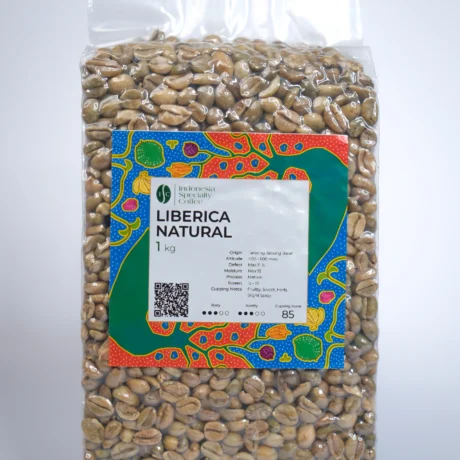
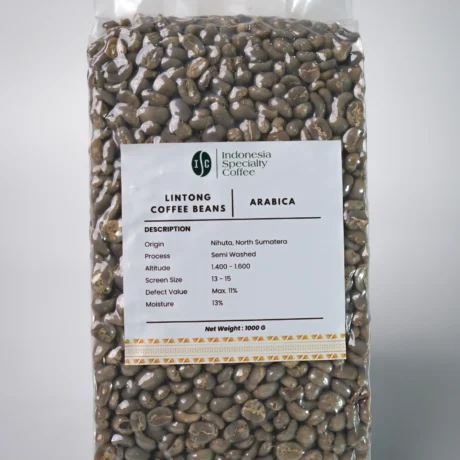
- Origins across five islands. Gayo, Mandheling, Lintong, and Lampung from Sumatra; Java; Bali Kintamani; Toraja from Sulawesi; Flores; plus Liberica and wild-certified Kopi Luwak. A weather event in Aceh does not touch a Bali harvest.
- Altitude and grade. Our Gayo Arabica comes from partner farms at 1,400 to 1,800 metres in Aceh Tengah, Bener Meriah, and Gayo Lues, graded Grade 1 Specialty under SNI 01-2907-2008 with a defect value of 11 or lower and cupping at 82 to 88 SCA points.
- Processing you can specify. Semi-washed, wet-hulled (Giling Basah) at 35 to 40 percent moisture for the classic earthy, low-acid Sumatra profile, or full-washed, dry-hulled at 12 to 13 percent moisture for a cleaner, brighter cup.
- Pricing. Grade 1 semi-washed, wet-hulled Gayo runs $8.00 to $10.00 per kg FOB Belawan; full-washed, dry-hulled lots run $9.50 to $11.00 per kg. From a $9.50 FOB base, CIF Rotterdam lands at roughly $10.35 per kg and CIF Los Angeles at roughly $10.15 per kg. Our Incoterms guide explains what each term includes.
- Documentation. Every lot is Halal certified, with Organic and Rainforest Alliance available on request, and we can supply farm-level sourcing records for EUDR due diligence.
Indonesia carries its own variables: the rupiah, the drying season, and US tariff treatment that changed several times during 2025 [confirm current US tariff status for Indonesian coffee before publishing]. What it does not carry is armed conflict in the growing regions, single-origin concentration risk, or a coffee wilt epidemic. In a year when every other input is moving, that is what stability looks like.
Frequently Asked Questions
What are the main coffee supply chain issues in 2026?
The main coffee supply chain issues in 2026 are climate-driven crop losses in Brazil and Vietnam, armed conflict in Ethiopia and central Africa, plant diseases such as coffee wilt and leaf rust, shifting US tariffs, the delayed EU Deforestation Regulation, and higher ocean freight costs linked to the Red Sea and Strait of Hormuz.
How does conflict affect the coffee supply chain?
Conflict rarely destroys a country’s whole crop. It disrupts transport, delays export licensing, and restricts foreign currency, causing coffee shipments to arrive late, quality to vary, and contracts to be repriced. Ethiopia’s 2025/26 crop held at 11.56 million bags, yet exporters shipped only about three quarters of planned volume in the first quarter.
Why did coffee prices rise so much in 2025?
Arabica prices reached their highest level since February 1977 because a 2024 drought cut Brazil’s crop while Vietnam’s robusta harvest also fell short. US tariffs on Brazil and uncertainty over the EU Deforestation Regulation added speculative buying on top of the physical shortage.
Will coffee prices fall in 2026?
Prices have eased from the 2025 peak as Brazil’s 2026/27 crop forecast rose 17.1 percent and Vietnamese exports recovered, with robusta down more than 30 percent year on year. Analysts still expect prices to stay above pre-2024 levels because global stocks are thin and a La Niña could hurt Brazil’s flowering.
How can roasters protect themselves from coffee supply chain issues?
Diversify across origins on different continents, buy on harvest calendars rather than waiting for market dips, cup a sample before contracting, hold two to three months of properly stored green stock, and collect farm-level traceability data ahead of EUDR enforcement. Indonesian origins offer a stable second source for buyers exposed to Africa or Latin America.
Source Stable Indonesian Green Coffee from Indonesia Specialty Coffee
Indonesia Specialty Coffee supplies Grade 1 Specialty green coffee direct from Indonesian smallholder farms to roasters, importers, and distributors worldwide. We grade every lot against SNI 01-2907-2008, ship only 82 to 88 SCA point coffee, and export FOB Belawan from Medan, North Sumatra, with CIF quoted on request. All lots are Halal certified, with Organic and Rainforest Alliance available on request. Bulk orders ship free worldwide.
Order tiers run 1 kg for a cupping sample, 60 kg for a microlot rate, 350 kg for standard wholesale, and container loads from 9 MT quoted per metric tonne.
If the coffee supply chain issues of 2025 and 2026 have made one of your origins unreliable, start with a 1 kg sample of Gayo, Mandheling, or Toraja and cup it against what you are currently paying for. See our current wholesale pricelist or contact our team for a quote on this season’s lots.