
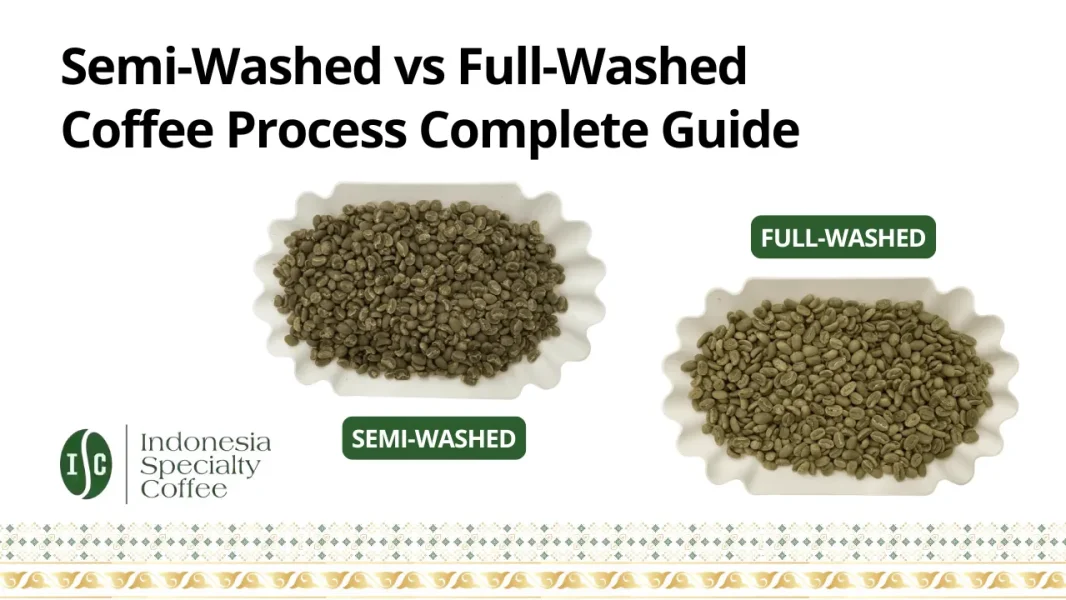
Semi-washed and full-washed coffee are the two primary washed cherry processing methods used in Indonesian specialty coffee production. Both determine how much mucilage is removed from the coffee cherry before drying, and that single difference shapes the body, acidity, and flavor clarity of every lot we ship. This guide explains how each method works, how they differ in cup profile, what they cost at Grade 1 specialty standard, and which Indonesian origins rely on them.
Last updated: April 2026
What Is Washed Coffee Processing?
Washed coffee processing is a cherry processing method where the fruit skin and mucilage are removed from the coffee cherry before the bean is dried. The result is a bean that reaches the drying stage with little to no residual fruit sugars on its surface. In specialty coffee, washed processing is valued for producing a clean, traceable flavor profile: the cup reflects the bean’s intrinsic character rather than fermentation byproducts.
In Indonesia, washed processing covers two distinct methods: semi-washed and full-washed. These are not interchangeable terms. Each involves a different level of mucilage removal, a different target drying moisture, and produces measurably different results in the cup. For a broader look at all five processing methods used across Indonesian origins, see ISC’s guides to 5 types of coffee processing in Indonesia.
Semi-Washed vs Full-Washed: The Key Differences


The table below summarizes what separates the two methods at the cherry processing stage.
| Semi-Washed | Full-Washed | |
|---|---|---|
| Mucilage removal | Partial | Complete |
| Fermentation duration | 12 hours | 12 hours |
| Water Soaking | No | 24 hours |
| Pre-hulling moisture target | 30–35% | 12–13% |
| Typical hulling method (Step 2) | Wet-hulled (Majority) and Dry-hulled | Dry-hulled (Majority) or wet-hulled |
| Cup character | Heavy body, earthy, dark chocolate | Cleaner acidity, higher clarity |
| ISC Grade 1 price (FOB Belawan) | $8.00–$9.00/kg | $9.50–$11.00/kg |
Semi-Washed Process
In the semi-washed process, harvested cherries are pulped to remove the outer skin. The beans then undergo a short fermentation period of 12 hours to begin loosening the mucilage layer. After fermentation, the beans are partially washed, enough to reduce surface contamination but not to strip the mucilage entirely. They dry on raised beds or patios to 30–35% moisture before hulling.
The retained mucilage during drying contributes residual fruit sugars that translate into heavier body, muted acidity, and earthy-chocolate notes in the cup. Semi-washed is the dominant cherry processing route for Gayo Arabica lots from Aceh Tengah, Bener Meriah, and Gayo Lues, as well as for Mandheling and Lintong lots from North Sumatra.
Full-Washed Process
In the full-washed process, the cherry is pulped and fermented for 12 hours and washed, then continues by soaking the beans with water for another 24 hours, typically in channels with running water or in soaking tanks. The mucilage is then completely removed. The clean parchment coffee dries to 12–13% moisture before hulling.
The absence of residual mucilage means the bean dries more uniformly, with lower defect rates and better screen-size consistency across the lot. Full-washed Indonesian Arabica cups with brighter acidity, cleaner sweetness, and more defined flavor clarity than semi-washed from the same origin. Roasters building single-origin filter or espresso programs regularly request full-washed lots from us for exactly this reason.
Step 2: Hulling
Semi-washed and full-washed describe what happens to the cherry in Step 1. They say nothing about how the parchment is removed in Step 2, and in Indonesia, that step matters as much to the final cup as the cherry method.
Wet-hulling (Majority for Semi-Washed), known locally as Giling Basah, removes the parchment while the bean is still at 35–40% moisture, before final drying is complete. It is the hulling method used for the majority of Sumatran, Aceh, Sulawesi, and Flores specialty lots. A semi-washed cherry method followed by Giling Basah produces characteristic low acidity and a thick, heavy body. A full-washed cherry method followed by Giling Basah retains a degree of that body while delivering more cup clarity than semi-washed.
Giling Basah is Step 2, not a standalone processing description. For a full explanation of the wet-hulling process and its flavor implications, see ISC’s dedicated guides: Giling Basah processing guide.
Dry-hulling (Majority for Full-Washed) removes the parchment after the bean has fully dried to 12–13% moisture. This is the global standard for washed coffees and is the hulling method used for Indonesian full-washed lots targeting a cleaner specialty profile.
Flavor Profile Comparison
Semi-washed, wet-hulled (Giling Basah) Grade 1 Gayo lots from our Aceh Tengah and Bener Meriah partner farms cup with:
- Dark chocolate and cedar base
- Heavy, syrupy body
- Low acidity
- Brown sugar or molasses sweetness
- Quiet herbal top note at 1,600 metres and above
Full-washed, dry-hulled Grade 1 Gayo lots cup with:
- Clean sweetness and defined acidity
- Medium-to-full body, lighter than semi-washed
- Floral and stone fruit clarity at higher altitudes
- More uniformity in defect value and screen-size distribution across the lot
One detail roasters often overlook: wet-hulled beans carry higher residual moisture at the point of hulling and behave differently in the drum. First crack arrives faster and the roast curve compresses. Full-washed dry-hulled Indonesian beans are more forgiving for roasters new to Indonesian origins, with roast behavior closer to washed East African lots.
View current semi-washed and full-washed pricing on ISC’s wholesale pricelist or contact us to request samples of both.
Grading and Quality Standards for Washed Indonesian Coffee
All washed Indonesian coffee at Indonesia Specialty Coffee is graded against SNI 01-2907-2008, Indonesia’s national standard for green coffee export quality. Grade 1 Specialty requires:
- Defect value: ≤11
- SCA cupping protocol score: 82–88 points
- Moisture content: ≤12.5%
Full-washed lots consistently show lower defect values than semi-washed lots from the same origin. Cleaner drying conditions and more uniform parchment-on moisture reduce primary defect counts: broken beans, partial beans, and discoloration. This is the main reason full-washed Grade 1 carries a price premium of $1.50–$2.00/kg over semi-washed at equivalent altitude and varietal.
ISC ships only Grade 1 Specialty washed lots as standard. Grade 2 commercial semi-washed wet-hulled lots (defect value ≤25, SCA 79–81 points) are available at $7.00–$8.00/kg FOB Belawan on request for buyers sourcing commercial volumes.
Frequently Asked Questions
What is the difference between semi-washed and full-washed coffee?
Semi-washed coffee retains partial mucilage after pulping and is dried to 30–35% moisture before hulling. Full-washed coffee has all mucilage removed through complete fermentation and washing, then dries to 12–13% moisture in parchment. Semi-washed produces heavier body and earthier notes; full-washed produces cleaner acidity and more defined flavor clarity in the cup.
Is semi-washed coffee the same as Giling Basah?
No. Semi-washed is a cherry processing method (Step 1) that describes how mucilage is removed from the coffee cherry. Giling Basah is a hulling method (Step 2) that describes how the parchment is removed. Most semi-washed Indonesian lots are wet-hulled using Giling Basah, but the two terms describe different stages of processing and should not be used interchangeably.
Which washed method produces better specialty-grade Indonesian coffee?
Both methods produce Grade 1 Specialty lots at 82–88 SCA points. Full-washed lots tend to score at the higher end of that range due to more uniform drying and lower defect rates. Semi-washed lots are preferred by roasters who want Indonesian character: heavy body, low acidity, and earthy-chocolate notes that full-washed processing tones down.
What is the price difference between semi-washed and full-washed Indonesian green beans?
At ISC, Grade 1 semi-washed wet-hulled Gayo Arabica is priced at $8.00–$9.00/kg FOB Belawan. Grade 1 full-washed dry-hulled Gayo Arabica is $9.50–$11.00/kg FOB Belawan. The premium reflects higher processing labor cost and lower defect rates in full-washed lots, which yield a more consistent specialty result.
Where can I buy semi-washed or full-washed Indonesian coffee beans wholesale?
Indonesia Specialty Coffee supplies both methods directly from partner farms in Gayo, Aceh. MOQ starts at 1 kg for cupping samples, 60 kg for microlots, and 350 kg for standard wholesale. Contact ISC at [email protected] or visit specialtycoffee.id/contact-us for a wholesale quote.
Order Washed Indonesian Coffee Beans from Indonesia Specialty Coffee
Indonesia Specialty Coffee is a direct exporter of Grade 1 semi-washed and full-washed Arabica green beans from partner farms in Aceh Tengah and Bener Meriah in the Gayo Highlands, cupping at 82–88 SCA points (FOB Belawan). All lots are Halal certified. Organic and Rainforest Alliance certification are available on request.
We supply specialty roasters and importers worldwide across four order tiers:
- 1 kg (sample/cupping evaluation)
- 60 kg (microlot rate)
- 350 kg (standard wholesale)
- 9 MT+ (container load, custom per-MT quote)
View current pricing on the ISC pricelist or contact our team for a custom wholesale quote. Sample orders are available for new buyers evaluating both methods side by side.