The first time an infused coffee lands on your cupping table, you smell it before you taste it. A sample can throw a strawberry or lychee across the room while it’s still dry, louder than anything the bean’s own genetics would ever give you. That smell is the whole story. Infused coffee is coffee that has been deliberately exposed to outside flavor, usually fruit, spice, or aromatic compounds, so the cup tastes of something the bean did not grow on its own. Producers do it to stand out and to earn more per kilo in a crowded market. The methods range from fermenting cherries with fruit to soaking green beans in flavor after harvest.
This guide covers what infused coffee actually is, how it differs from co-fermented coffee, why producers make it, the real methods behind it, and how to tell when a bag in front of you has been infused.
Last updated: June 2026
What is infused coffee?
Infused coffee is coffee whose flavor has been changed on purpose by adding an outside ingredient during or after processing. The bean is fermented or dried in contact with fruit, spices, yeast cultures, or concentrated aromatic compounds, so the finished cup carries a taste that did not come from the bean’s variety and terroir alone. The added flavor is the point, not an accident of processing.
It helps to clear up one thing early. Infused green coffee is not the same as the flavored coffee on a supermarket shelf, where syrup or flavor oil is sprayed onto roasted beans. Infusion happens upstream, at origin, while the coffee is still a green seed or a fresh cherry. By the time a roaster receives it, the flavor is already inside the bean and survives roasting. That is what makes it interesting, and also what makes it hard to detect.
Because the flavor is baked in at origin, an infused lot behaves like any other green coffee in transit and on the roaster. The difference only shows up in the cup, which is exactly why labeling matters so much. We’ll come back to that.
Infused vs co-fermented: what’s the actual difference?
Co-fermentation adds an ingredient during active fermentation and lets biology create new aromas. Infusion adds an existing flavor and transfers it more directly into the bean, often later in the process. In practice, the two blur together, and many bags use the words interchangeably, but the distinction is real: co-ferments build flavor through microbes, infusions move flavor in from outside.
Here is the cleaner way to hold it. When a producer drops mango or cinnamon into a fermentation tank, and the wild yeast and bacteria work on the sugars alongside the coffee, that is co-fermentation. The microbes are doing something, and the result is a blend of the coffee’s own development and the added fruit. When a producer instead introduces a concentrated flavor compound, or soaks beans in a flavored liquid to drive the aroma in, that is closer to true infusion. Less biology, more direct transfer.
This table is a rough map, not a hard border. Producers mix these approaches constantly.
| Co-fermentation | Infusion | |
|---|---|---|
| What’s added | Whole fruit, pulp, spices, sometimes yeast | Concentrated aromatics, flavor compounds, and flavored liquid |
| When | During active fermentation | During or after fermentation, sometimes post-harvest |
| Flavor source | Microbial activity plus the added ingredient | Mostly direct transfer of an existing aroma |
| Typical result | Complex, layered, fruit plus subtler notes | Intense, direct, sometimes one dominant note |
| Market view | More accepted | More contested |
Why does the line matter to you? Because co-fermented coffees are more widely accepted in specialty circles, while heavily infused coffees draw the “is this even coffee” reaction. If you buy or sell either one, knowing which you’re holding changes how you describe it honestly to the next person down the chain.
Why do producers infuse coffee?
Producers infuse coffee mainly to stand out and to earn more. An infused or co-fermented lot offers a loud, unusual flavor that a clean washed coffee cannot match, and that novelty commands higher prices and faster sales. For a smallholder competing against thousands of other farms, a memorable cup is a business decision before it is a flavor decision.
Break it down, and there are four real drivers. First, differentiation: a strawberry or rosé note gets a buyer’s attention in a way that “balanced, chocolatey, clean” does not. Second, price: experimental lots routinely sell well above commodity and even above standard specialty rates, which matters enormously to farm income. Third, competition: baristas chasing the most striking cup on stage have pulled these coffees into the spotlight, and demand followed. Fourth, consumer appetite for novelty: a slice of the market now actively hunts for the wildest flavors it can find, and producers answer that demand.
None of this is cynical on its own. A farmer who can turn a difficult harvest into a high-value experimental lot has a tool that the old washed-coffee economy never gave them. The trouble starts only when the cup’s origin gets hidden, which is the next section.
How is infused coffee made? The methods
Infused and co-fermented coffees are made by introducing an outside ingredient at one of several stages: into the fermentation tank, through selected yeast cultures, inside a sealed low-oxygen tank, or directly into the green bean after harvest. Each method moves flavor into the seed in a different way, and each leaves a different fingerprint in the cup.
To keep this straight, remember that Indonesian and most washed-origin processing already runs in two steps: the cherry method first (how the fruit is fermented and the seed is freed), then the drying or hulling method. If that framing is new to you, our guide to coffee processing methods walks through it. Infusion is usually an extra move bolted onto that first step.
Co-fermentation with fruit or spices
The producer adds fruit pulp, juice, berries, or spices like cinnamon directly into the fermentation tank with the coffee. Wild yeast and bacteria then work on the combined sugars. The coffee picks up both the added flavor and the new aromas the microbes create. This is the most common method and the one behind most “mango,” “lychee,” or “tropical” lots you see.
Yeast inoculation
Instead of relying on the wild microbes already on the cherry, the producer pitches a chosen yeast strain into the tank. Most coffee ferments only with whatever wild yeast is present, which is unpredictable. Inoculation introduces a selected culture to steer fermentation toward a target flavor and to make the result repeatable batch after batch. On its own, this is a control technique, not an infusion, but producers often combine it with added fruit to push a specific profile. Controlled fermentation styles like aerobic fermentation and double fermentation sit in this same family of flavor engineering.
Carbonic maceration and thermal shock
Borrowed from winemaking, carbonic maceration seals whole cherries in a tank flooded with carbon dioxide. The low-oxygen environment slows fermentation and drives enzymatic reactions inside the fruit, producing juicy, aromatic, silky cups. Thermal shock takes the parchment or beans through a hot wash, often around 40°C, then a cold wash near 12°C, with the idea that swelling and contracting the bean’s pores helps it absorb more of the surrounding flavor compounds. Both methods are sometimes paired with added fruit or aromatics, which tips them from clever fermentation into infusion.
Direct and post-harvest infusion
This is the most contested method, and the one closest to true infusion. Here, a concentrated flavor compound or flavored liquid is introduced into the green bean, sometimes after fermentation or even after drying. The flavor is no longer a byproduct of microbes working on sugar. It is moved in deliberately and directly. Done at the green stage, it survives roasting and shows up clearly in the cup, which is why this method sits at the center of the authenticity argument.
The honest problem: transparency and the specialty debate
The real problem with infused coffee is not the flavor. It is honesty. A well-made infused lot can out-taste a cleaner, higher-scoring washed coffee on first impression, and that is exactly what makes some buyers uneasy. When an added flavor is disclosed, infusion is a technique. When it is hidden and sold as pure terroir, it stops being one.
This is where serious people disagree, and the competition world shows the split clearly. The World Barista Championship updated its rules to say no additives of any kind may be added after the coffee reaches the green stage, which still permits infusions done earlier. Cup of Excellence does not allow any infused or adulterated coffee to be entered at all. The Specialty Coffee Association of Panama excluded infused coffees from its 2024 Best of Panama competition to protect, in its words, the authentic identity of the country’s coffee. Three respected bodies, three different lines in the sand.
Here is our position, and we’ll state it plainly. Infused coffee is not fake coffee, and it is not a betrayal of specialty. A producer who lifts a farm’s income with a striking experimental lot is doing real work. But the moment that lot is sold without saying what went into it, the deal is no longer fair, because the buyer is paying terroir prices for something a tank of mango helped build. The flavor can be honest. The label has to be too.
How to spot an infused coffee
You can usually spot an infused coffee by reading the label and trusting your nose. On the bag, look for processing words like co-fermented, infused, fruit fermentation, or a named additive such as mango or rosé. In the cup, watch for a single loud flavor that smells almost like candy or syrup, sits oddly on top of the coffee rather than woven through it, and stays identical from the dry aroma to the aftertaste.
A few practical tips, the kind you only learn by cupping a lot of these side by side:
- The flavor is too clean and too singular. Natural fruit notes in coffee shift as the cup cools. An infused note often holds dead steady, exactly the same from first sniff to last sip.
- It reads across the room. If you can name the fruit before you’ve slurped, from the dry grounds alone, that intensity rarely comes from terroir.
- The label is vague on purpose. “Special fermentation” or “experimental” with no detail is a hint to ask what, specifically, went into the tank.
If you’re buying, the fix is simple. Ask the supplier directly whether anything was added during or after fermentation, and ask for the full two-step process description. A confident, specific answer is a good sign. A dodge is its own answer.
Indonesia and infused coffee
Indonesian producers have started making infused and co-fermented coffees, adding fruit and selected yeast to fermentation alongside the country’s traditional methods. The leap is smaller than it sounds, because Indonesian coffee is already built on heavy fermentation. That existing base makes the country well-suited to experimental lots, but it also raises the same labeling risk seen everywhere else.
Start with the traditional method, because it explains the rest. Most Indonesian coffee is semi-washed cherry, a.k.a wet-hulled (Giling Basah), with the bean still at 35 to 40 percent moisture. That style exists because the climate is wet and gives coffee no clean drying window, so the bean spends longer in a high-fermentation state. The result is the familiar Indonesian cup: heavy body, earthy, fermented character baked in before anyone adds a thing.
That is why deliberate co-fermentation is a short step here, not a big one. A coffee that already tastes fermented is a natural base for adding fruit or yeast on top, and the country’s wine coffee lots already show how far producers will push bold, fruit-forward fermentation.
We see the experimental lots arrive at the Medan warehouse smelling vivid and tropical. Part of the job is watching which of those notes are still standing after the lot rests for a few weeks. Some hold. Some fade toward a generic sweetness once the loud aromatics settle. That resting test is one that a lot of buyers skip, and it is what separates a co-ferment with real staying power from a flashy one that fades.
So the opportunity is real, and so is the risk. A well-made, clearly labeled co-ferment can earn a premium that ordinary washed coffee from the same region never will. A poorly disclosed one chips away at trust in an origin that spent years building a specialty reputation. Both things are true at once.
Frequently asked questions
What is infused coffee?
Infused coffee is coffee deliberately exposed to an outside flavor, such as fruit, spice, or aromatic compounds, during or after processing, so the cup tastes of something the bean did not grow on its own. The flavoring happens at origin while the coffee is still green, not sprayed on after roasting like supermarket flavored coffee.
Is infused coffee still specialty coffee?
It depends on who you ask, and that’s the honest answer. Some competitions like the World Barista Championship allow infusions done before the green stage, while Cup of Excellence and the 2024 Best of Panama excluded infused coffees entirely. Most of the industry accepts it when the added flavor is clearly disclosed and rejects it when it’s hidden.
What is the difference between infused and co-fermented coffee?
Co-fermentation adds an ingredient during active fermentation and lets microbes create new aromas, while infusion transfers an existing flavor more directly into the bean. The terms are often used interchangeably, but co-ferments build flavor biologically, whereas heavily infused coffees move concentrated flavor in from outside.
Is infused coffee artificial or fake?
Not necessarily. The added ingredients are often real fruit, spices, or yeast, and the flavor in the cup is genuine. The concern is transparency, not fakery: infused coffee becomes a problem when it’s sold as pure single-origin terroir without disclosing that flavor was added during processing.
How can you tell if a coffee is infused?
Read the label for words like co-fermented, infused, or a named fruit, and trust your nose. Infused coffees often carry one loud, candy-like flavor that you can smell from the dry grounds and that stays identical as the cup cools, unlike natural fruit notes that shift and soften over time.
If you want to cup this yourself
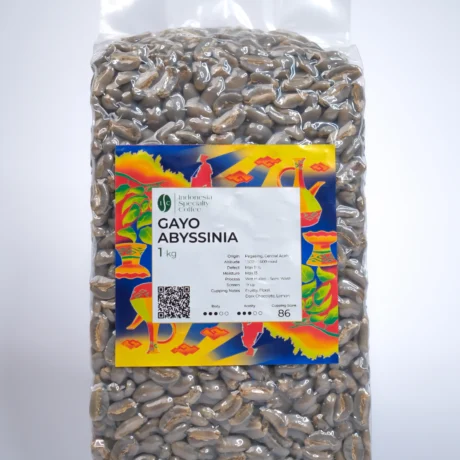
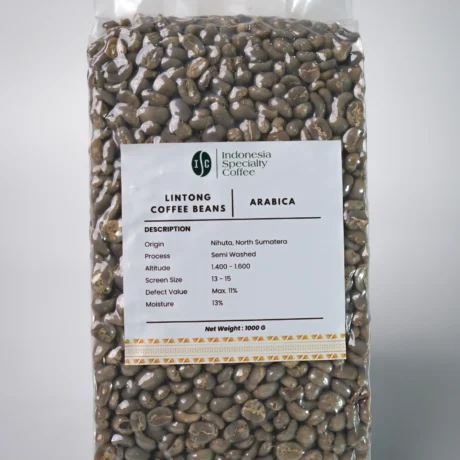
Whatever supplier you use, ask one question before you commit: Was anything added during or after fermentation, and what was the full two-step process? A clear answer tells you what you’re really buying, and lets you price it and describe it honestly to your own customers. If you want to compare traditional Indonesian fermentation against the newer experimental lots, Indonesia Specialty Coffee ships 1 kg cupping samples of the Gayo and other origin coffees we export from Medan. You can request a sample or see the current price list.