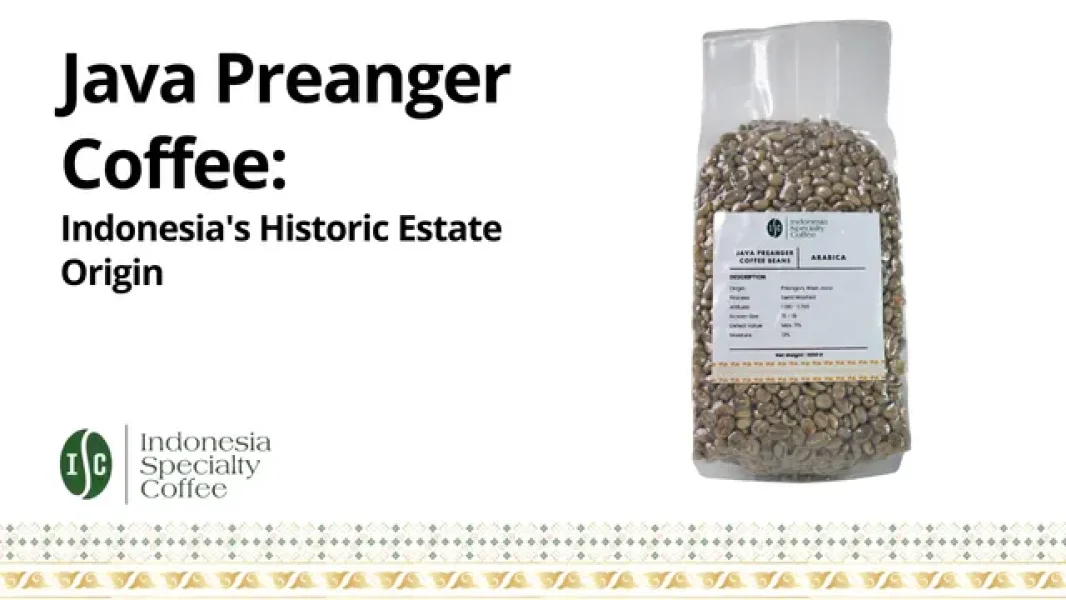
Java Preanger coffee, grown in the volcanic highlands of West Java between 1,200 and 1,700 metres above sea level, is one of the oldest specialty Arabica origins in the world. This guide walks roasters and importers through its Dutch colonial roots, growing terroir, flavor profile, SCA cupping scores, processing details, and current wholesale options from Indonesia Specialty Coffee (ISC), a Medan-based direct exporter shipping FOB Belawan.
The History of Java Preanger Coffee
The story of this origin begins in the late 1690s, when the Dutch East India Company (VOC) shipped Arabica seedlings from Malabar, India, to Java. The first batch arrived in Batavia in 1696 but was lost to flooding. A second shipment in 1699 took root, and by the early 1700s, the Dutch had pushed cultivation south and east into the cooler highlands of West Java, including the Priangan region (which the Dutch spelled “Preanger”). By the 1720s, Java had become one of Europe’s main coffee suppliers, second only to Yemeni Mocha among coffees of Asian and Middle Eastern origin.
Dutch Colonial Origins and the Cultuurstelsel
By 1800, only about 110 coffee gardens existed in the Preanger highlands. Under the Cultuurstelsel system imposed in 1830, that number climbed to roughly 1,500 plots by 1890. Forced cultivation extracted enormous volumes but devastated local farmers. After the leaf-rust outbreak of the 1880s wiped out lowland Arabica, smallholders at higher elevations preserved the original Typica stock that still anchors the Preanger genetic profile today.
Where Java Preanger Coffee Grows: Altitude and Terroir
Preanger Arabica grows across the Priangan Highlands of West Java, including Ciwidey, Pangalengan, Garut, Subang, and West Bandung. Smallholder farmers cultivate this origin on the volcanic slopes of Mount Malabar, Mount Papandayan, Mount Tilu, and Mount Puntang.
The growing conditions ISC sources from sit within these specifications:
- Altitude: 1,200 to 1,700 metres above sea level
- Temperature: 13°C to 28°C average daytime range
- Rainfall: between 100 and 3,000 mm annually
- Soil: black volcanic andisol, rich in micro-nutrients
- Cherry maturation: nine months from flowering to harvest
- Yield: 800 to 1,500 kg per hectare
Cool nights and slow cherry ripening at this altitude concentrate sugars and acids inside the bean. That density is why this West Java origin cups are noticeably cleaner than lower-elevation Indonesian beans.
Flavor Profile and SCA Cupping Score
In the cup, Java Preanger coffee delivers a profile that surprises buyers expecting heavy Sumatran character. The flavor leans clean, sweet, and structured rather than earthy and dense. ISC’s Q-grader Heri Setiawan curates each lot against SCA protocol before export.
Here is how ISC’s lots score and what they taste like:
| Lot Type | Body | Acidity | Tasting Notes | SCA Cupping Score |
| Preanger Classic (Semi-Washed) | Medium-Full | Medium | Floral, herbal, citrus, chocolate, caramel | 85.50 |
| Preanger Natural | Medium | Medium-Low | Tropical fruity, floral | 87.50 |
Both scores fall within the Premium Specialty (83–85) to High-end Microlot (86–88) brackets defined by SCA grading. The Natural process lot in particular pulls fruit-forward notes that compete directly with washed Ethiopians, while still keeping the chocolate-caramel base that buyers associate with West Java.
Processing Methods for Java Preanger Coffee
Most lots of ISC ships use the semi-washed (wet-process) cherry method, then dry-hulled at roughly 12 to 13 percent moisture. This is a key difference from Sumatran Gayo or Mandheling, which are wet-hulled (Giling Basah) at 35 to 40 percent moisture.
Available processing tracks for Preanger Arabica:
- Semi-Washed, Dry-Hulled: the classic Preanger style; clean cup with chocolate and caramel sweetness
- Full-Washed, Dry-Hulled: brighter acidity, more transparent floral notes
- Natural Process, Dry-Hulled: fruit-forward, tropical, higher cupping potential
The dry-hulled finish is why this West Java origin keeps a more refined acidity than Sumatran beans. Roasters preparing single-origin filter programs typically request the full-washed or natural lots.
ISC’s Java Preanger Coffee Products and Specifications
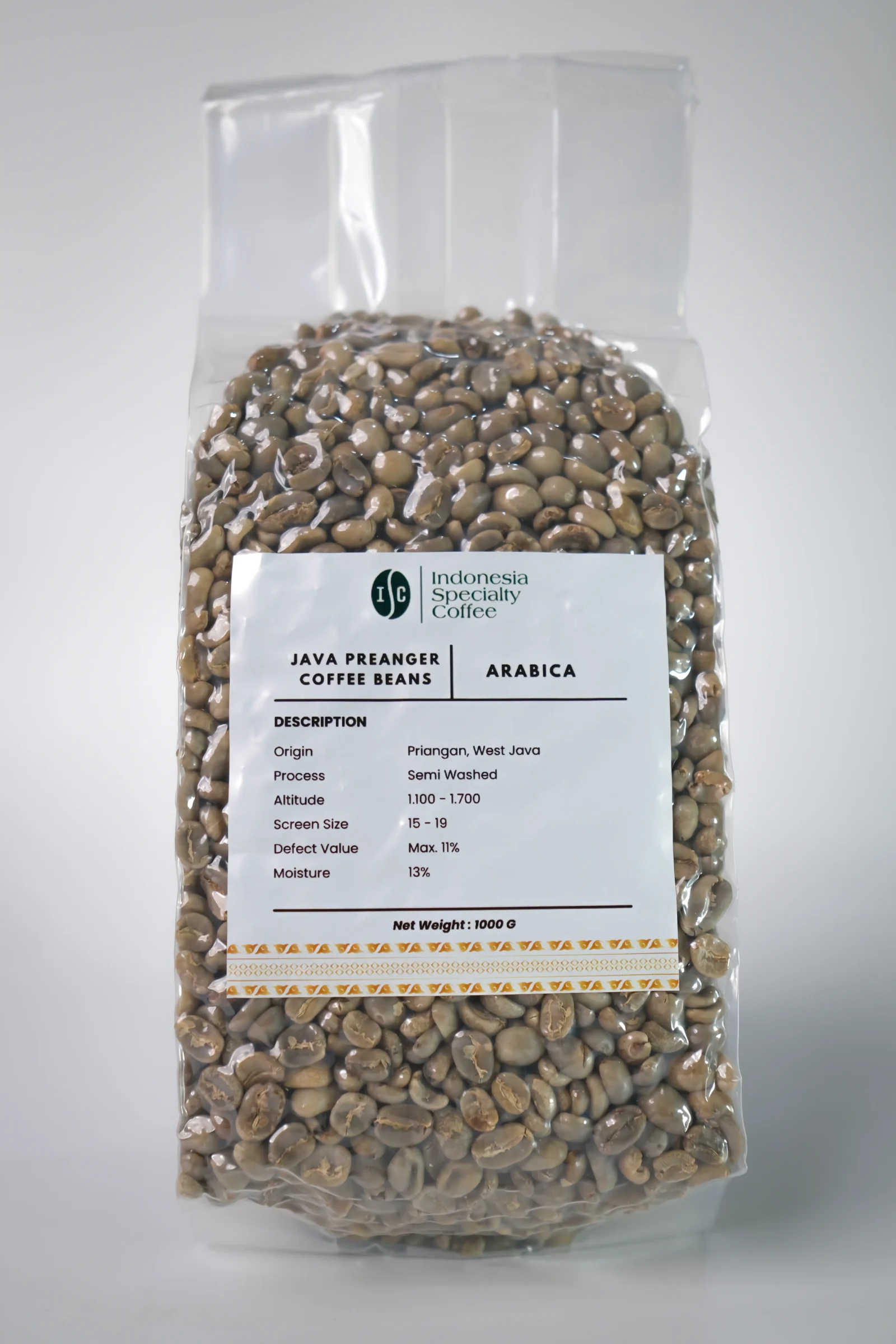
Indonesia Specialty Coffee currently lists this origin as Grade 1, classified under SNI 01-2907-2008, the Indonesian National Standard for green coffee. According to the April 2026 ISC catalog, wholesale green beans are priced at $9,500 per metric ton (USD $9.50/kg) FOB Belawan, with roasted beans at $19.50/kg and ground powder at $21.50/kg. All prices are indications and subject to confirmation.
| Specification | Value |
| Grade | Grade 1 (SNI 01-2907-2008) |
| Variety | Typica, S-795, Sigararutang, Catimor (regional) |
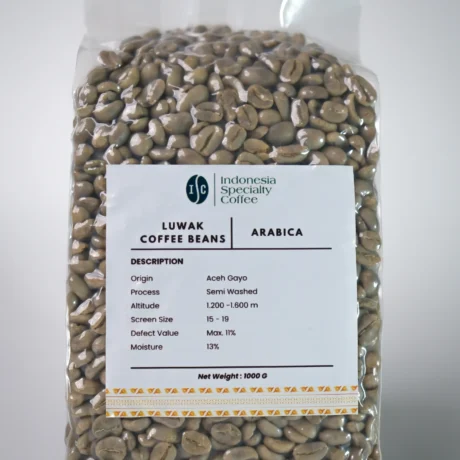
| Screen Size | 15–19 |
| Moisture | Maximum 13% |
| Triage | Maximum 6–8% |
| Defect Value | Maximum 11 |
| Caffeine | 0.8% to 1.4% |
| Processing | Semi-Washed (cherry), Dry-Hulled (default) |
| Production Areas | Ciwidey, Pangalengan, Garut, Subang, West Bandung |
| FOB Port | Belawan, North Sumatra |
Sample bags (1 kg), microlot (60 kg), and standard wholesale (350 kg) are all stocked. Container loads from 9 MT carry a custom per-MT quote.
Frequently Asked Questions
What does Java Preanger coffee taste like?
This West Java Arabica tastes clean and balanced, with floral and fresh-spicy notes layered over dark chocolate and caramel sweetness. The acidity is soft to medium, and the body is strong but smooth. Natural-process lots add tropical fruit character, while semi-washed lots stay grounded in chocolate.
Where does Preanger coffee come from?
Preanger Arabica comes from the Priangan Highlands of West Java, Indonesia. The main growing districts are Ciwidey, Pangalengan, Garut, Subang, and West Bandung. Farms sit on the volcanic slopes of Mount Malabar, Mount Papandayan, Mount Tilu, and Mount Puntang at altitudes between 1,200 and 1,700 metres above sea level.
Is Preanger Arabica or Robusta?
This origin is 100 percent Arabica. The original Typica trees were planted by Dutch colonists in the 1700s, and S-795, Sigararutang, Catimor, and Kartika varieties were added later. Robusta is grown elsewhere on Java but is not part of the protected Preanger Geographical Indication designation.
What is the SCA cupping score of Preanger Arabica?
ISC’s lots cup between 85.50 SCA points for classic semi-washed and 87.50 SCA points for natural process, based on protocol assessment by Q-grader Heri Setiawan in January 2026. Both scores qualify as Premium Specialty to High-end Microlot under SCA standards.
How much does wholesale Java Preanger coffee cost?
According to the April 2026 ISC catalog, Grade 1 green beans are priced at $9,500 per metric ton ($9.50 per kg) FOB Belawan. Roasted beans run at $19.50/kg and ground powder at $21.50/kg. All figures are indications, subject to confirmation, and depend on harvest year and order volume.
Order Java Preanger Coffee from Indonesia Specialty Coffee
Indonesia Specialty Coffee supplies roasters, importers, and distributors worldwide with Grade 1 green beans sourced from partner farms across Ciwidey, Pangalengan, and Garut. Every lot ships from Belawan with documented cupping scores, defect grading, and moisture analysis.
Order tiers available right now:
- 1 kg sample: for cupping evaluation
- 60 kg microlot: single-farm lots
- 350 kg standard wholesale: best per-kg rate
- 9 MT container load: custom quote per metric ton
Request the current ISC pricelist or contact the team via WhatsApp at +62 811-6380-606 or email info@specialtycoffee.id.
Conclusion
Preanger Arabica carries more than three centuries of coffee history in every harvest, from the late 1690s VOC shipments to today’s smallholder farms across Ciwidey, Pangalengan, and Garut. Its volcanic terroir, preserved Typica genetics, and clean semi-washed profile give roasters a coffee that delivers chocolate, caramel, and floral notes few origins can match.
Buyers ready to source authentic Java Preanger coffee can order Grade 1 green beans directly from Indonesia Specialty Coffee, with documented cupping scores up to 87.50 SCA points, FOB Belawan shipping, and bulk pricing above 350 kg. Request a 1 kg sample today, or message the team for a custom wholesale quote.