Most coffee regions start with someone wanting to grow coffee. Wonosobo did not. On the steep slopes below Dieng and Mount Sumbing, the first serious arabica plantings went in to stop the hillside from sliding into the valley, after decades of tobacco and potato farming left the soil bare and moving. The award-winning cup came later, almost as a surprise.
So here is the direct answer. Arabica Wonosobo is a young, high-grown specialty arabica from the Wonosobo highlands of Central Java, including the famous Bowongso gardens on Mount Sumbing and the coffee of the Dieng plateau. It grows cold and high, from about 1,450 meters up past 2,000, on volcanic soil, and it shares the Java Sindoro-Sumbing Geographic Indication. This piece covers where it grows, the erosion-control history that started it, the varieties in the ground, and what the coffee actually tastes like.
Last updated: September 2026
What is Arabica Wonosobo and Dieng?

Arabica Wonosobo is a high-grown specialty arabica from Wonosobo Regency in Central Java, grown on the slopes of Mount Sumbing and across the Dieng plateau. Its best-known name is Bowongso, a village coffee from around 1,450 meters that won a Central Java cupping competition in 2013. It shares the Java Sindoro-Sumbing Geographic Indication and cups clean and bright, with citrus, spice, and floral notes.
Wonosobo sits right next to Temanggung, and the two share the same protected origin name and the same volcanoes. If you have read about Arabica Temanggung, think of Wonosobo and Dieng as the higher, younger, colder side of that story. This is not the earthy wet-hulled arabica of Sumatra. It belongs with Indonesia’s brighter, washed Java arabicas, grown about as high as coffee will go on the island.
Where it grows: the Dieng plateau and the Sumbing highlands
Arabica Wonosobo grows on the upper slopes of Mount Sumbing and across the Dieng plateau in Central Java, from around 1,450 meters at Bowongso up past 2,000 meters on the Dieng highlands near mounts Prau and Bismo. This is cold, high country, roughly 18 to 25 degrees Celsius, on young volcanic soil, and it is about as high as arabica is planted anywhere in Java.
Altitude is the whole story here, and Wonosobo has almost too much of it. The Dieng plateau is one of the highest inhabited places in Java, cold enough that frost occasionally settles on the potato fields at dawn. For coffee, that cold is a gift: the higher and colder the ground, the slower the cherry ripens, and slow ripening is where sweetness and clean acidity come from. A Bowongso lot at 1,450 meters and a Dieng lot higher still both get the long, cool maturation that a bright cup needs.
The setting is also steeper and more fragile than it looks in photos. These are sharp volcanic slopes where the topsoil has been worked hard for generations, first for tobacco, then for the intensive potato farming that carpets Dieng today. Coffee arrived on the worst of those slopes for a specific reason, and that reason is the history of the region’s arabica.
Coffee planted to hold the mountain: Wonosobo’s history
Wonosobo’s arabica story is short and unusual. While Temanggung’s arabica dates to a Dutch replanting in the 1920s, Wonosobo’s serious specialty plantings are much younger, going in around 2009 when the local agricultural office promoted coffee on the steep upper slopes as erosion and landslide control. The seedlings came from the national Coffee and Cocoa Research Center in Jember. The first job of these trees was to hold the soil in place.
That origin explains almost everything about the coffee. Decades of tobacco and vegetable farming had stripped the steep ground bare, and bare volcanic slope in a wet highland slides. Coffee, a perennial shrub with a real root system that grows happily under shade, was planted to anchor the hillside and give farmers a crop that did not require tearing the soil open every season. It started as conservation with a side benefit, not as a specialty ambition.
Then the side benefit turned out to be very good. In 2013, only a few years after those first seedlings went in, Bowongso arabica took first place in the Central Java arabica tasting competition, and Wonosobo suddenly had a name. We would argue this is the most interesting kind of origin to watch: one where the coffee earned its reputation almost by accident, because the ground was so high and so cold that even young trees, planted to stop a landslide, produced a cup worth competing with. The quality was latent in the altitude. Someone just had to plant something to find it.
The variety: Andungsari, Sigararutang, and the Jember selections
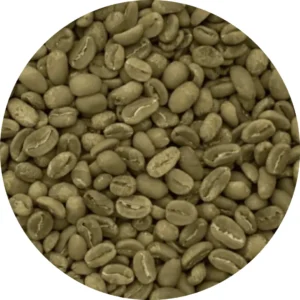
Because Wonosobo’s coffee came from the Jember research center, its gardens are planted with the Indonesian-bred highland selections that center distributes, led by Andungsari and Sigararutang, with Typica, Kartika, and Ateng also in the ground. Andungsari in particular was bred for exactly this kind of high, cool altitude, which is part of why it landed well here.
Each name does a job. Andungsari is a high-altitude selection developed for yield and rust resistance in cold highlands, which made it a sensible choice for slopes above 1,400 meters. Sigararutang is the productive workhorse smallholders across Sumatra and Java rely on, early-bearing and forgiving. Typica, the old heirloom, shows up in smaller amounts, capable of a more delicate cup but lower-yielding and more fragile. Kartika is another Indonesian selection bred for productivity.
Why does this matter to a buyer? Because a region this young is still a moving target varietally. The trees went in relatively recently, farmers are still learning which selections perform on which slope, and a lot labeled simply “Wonosobo” or “Dieng” can be a mix. As with any young origin, and as with the neighboring Java gardens, the variety and the specific garden are worth asking about, because they are still being sorted out on the ground. If delicacy is what you want, ask where the Typica is.
How it’s processed, and what it tastes like
Wonosobo arabica is usually fully washed, the same clean route as its Java neighbors and the opposite of Sumatran wet-hulling. It helps to hold the two-step framework in mind. Step one is the cherry method: here, mostly full-washed, the fruit stripped and the coffee fermented and rinsed so the bean’s own acidity shows, though naturals and honeys turn up as farmers experiment. Step two is the hulling method: dried in parchment and dry-hulled at around 12 percent moisture, like a washed coffee anywhere, not wet-hulled green.
Careful picking is built into the origin, which helps the cup. Under the Geographic Indication guidelines, Bowongso farmers are meant to pick only fully red cherry, skip chemical inputs, and work the soil as little as possible, the last part being the whole conservation point. Ripe picking plus very high, cold ground is a good recipe, and it is why young trees here punched above their weight so quickly.
On the table, a clean Wonosobo lot reads bright and lively: citrus and lemon up top, a distinct spice note, florals, and a medium body, closer to a bright washed Java or Bali Kintamani than to anything from Sumatra. There is one recurring quirk worth flagging: because coffee here is often intercropped with tobacco, the same as in Temanggung, some lots carry a tobacco-and-floral aroma. That comes from the beans sitting and drying near tobacco, not from the roots, and a cleanly separated, well-stored lot shows far less of it. Do you want that tobacco whisper or a clean citrus cup? Ask, because both exist under the same origin name.
Wonosobo sits with Indonesia’s brighter, washed arabicas. This table places it against its closest neighbor and two reference points:
| Origin | Region | Altitude | Cup |
|---|---|---|---|
| Wonosobo / Bowongso | Wonosobo, C. Java | 1,450 m+ | Bright, citrus, spice, floral, medium body |
| Dieng plateau | Wonosobo, C. Java | Up to 2,000 m+ | Clean, high-grown, strong bright arabica character |
| Temanggung | C. Java (same GI) | 1,150-1,600 m+ | Bright, cherry, grape, citrus |
| Bali Kintamani | Bali | 1,000-1,500 m | Citrus, clean, bright acidity |
The point of the table is that Wonosobo and Dieng are the high end of the Java Sindoro-Sumbing origin, sharing the GI with Temanggung but reaching higher and colder up on the plateau.
The honest part: a young origin on borrowed slopes
Here is what a straight supplier will tell you. Wonosobo arabica is young, and youth shows. The trees went in around 2009, the processing culture is still maturing, and volumes are small and variable. You will find genuinely excellent, competition-worthy lots, and you will find rough ones that were dried too fast or picked too green, all under the same district name. A cupping-competition win in 2013 is a real signal, but it describes a peak, not a guarantee for every bag.
There is a deeper fragility, and it is the same one that created the coffee. This is conservation planting on erosion-prone slopes, intercropped with tobacco and potatoes, and it competes with those crops for the farmer’s attention and land. When potato or tobacco prices spike, coffee is the crop that can get neglected or pulled. The supply of good Wonosobo arabica depends on farmers deciding, season after season, that the coffee is worth keeping, which is not guaranteed on ground this steep and this contested.
And the cup competes on honest terms. A bright, high-grown Wonosobo lot goes up against other clean Java and island arabicas, including its own neighbor Temanggung and origins with longer, steadier track records. What Wonosobo offers is real altitude, careful picking built into the origin, and a genuinely good story of coffee that saved a hillside. If you value catching a young high-grown origin early, this is one. If you need large, uniform, year-after-year volume, it is not there yet.
What this means for roasters and buyers
For a roaster, Arabica Wonosobo wants a light or light-medium roast, the same as any bright washed highland coffee. Push it dark and you bury the citrus and spice that make it worth buying over a generic Java. It works as a filter and pour-over coffee and as a fruit-forward single origin, and its very high-grown lots can carry real clarity when they are clean.
If you are buying green, treat it as the young, small origin it is. This is microlot territory, not container territory, so buy on the specific lot, not the district name. Confirm the variety and garden, the process and how it was dried, and where it lands against the Indonesian coffee grading standard, and cup a current-crop sample yourself, because a young origin’s quality is uneven and a bright washed lot shows every fault. Ask about storage too, given the tobacco intercropping.
One planning note. Volumes are small and the good lots move fast, so if you cup a Bowongso or Dieng lot you like, secure it in that crop year rather than expecting to reorder the same profile later.
Frequently asked questions
What is Arabica Wonosobo coffee?
Arabica Wonosobo is a young, high-grown specialty arabica from Wonosobo Regency in Central Java, grown on Mount Sumbing and the Dieng plateau. Its best-known lot is Bowongso, from around 1,450 meters. It shares the Java Sindoro-Sumbing Geographic Indication and cups bright and clean, with citrus, spice, and floral notes.
What is Bowongso coffee?
Bowongso is an arabica coffee from Bowongso village in Kalikajar district, Wonosobo, grown on the slopes of Mount Sumbing at about 1,450 meters. It became well known after winning first place in a Central Java arabica cupping competition in 2013, and it is grown under Geographic Indication rules that require ripe-red picking and minimal chemical inputs.
Where is Dieng coffee grown?
Dieng coffee is grown on the Dieng plateau in Wonosobo Regency, Central Java, on high slopes near mounts Prau and Bismo, in some places above 2,000 meters. It is one of the highest-grown arabicas in Java, cultivated by local farmers in a cold, volcanic highland better known for its temples and potato fields.
How high is Wonosobo and Dieng coffee grown?
Wonosobo arabica grows from about 1,450 meters at Bowongso up past 2,000 meters on the Dieng plateau. That is very high for Indonesian coffee, and the cold, slow ripening at those elevations is a big part of why the region produces bright, clean, high-acidity arabica.
Why was coffee planted in Wonosobo?
Serious arabica planting in Wonosobo began around 2009, promoted by the local agricultural office as erosion and landslide control on steep slopes stripped by tobacco and potato farming. Coffee anchored the soil and gave farmers a perennial crop, and its cup quality, proven by Bowongso’s 2013 competition win, came afterward.
What does Wonosobo arabica taste like?
A clean washed Wonosobo arabica cups bright and lively, with citrus and lemon, a spice note, florals, and a medium body, closer to a bright Java or Bali than to an earthy Sumatran coffee. Some lots carry a tobacco-and-floral aroma from being grown and dried near tobacco.
Sourcing Wonosobo and Dieng green coffee: where to start
Whatever supplier you use, treat this as a young origin and buy on the lot, not the name: confirm the variety and garden, the full two-step process (washed, then dried and dry-hulled), and the crop year, ask how it was stored given the tobacco intercropping, and cup a current sample yourself because quality is still uneven. If you want to compare Wonosobo and Dieng against Indonesia’s other high-grown arabicas, Indonesia Specialty Coffee can send green samples of the washed Java and island lots we export, so you can taste them side by side on your own table and decide where they fit.