Pull the export records for “Sumatra Mandheling” over the last hundred years, and you are, in part, reading the trade history of a coffee that grew somewhere else. Much of it came from the Angkola and Sipirok highlands, walked north to be aggregated in Mandailing, and left the island under the name of the place it was collected, not the mountain it grew on.
So here is the direct answer. Arabica Sipirok is a wet-hulled specialty arabica from the slopes of Mount Sibual-buali in Tapanuli Selatan (South Tapanuli), North Sumatra, grown at roughly 1,200 to 1,500 meters on volcanic soil. It carries an official Indonesian Geographic Indication and cups earthy and full-bodied, with palm sugar, spice, and a low, gentle acidity. This piece covers where it grows, why its name went missing for so long, the varieties in the ground, and what the coffee actually does in the cup.
Last updated: August 2026
What is Arabica Sipirok?
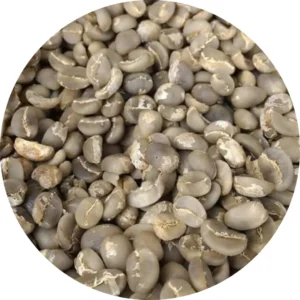
Arabica Sipirok is a single-origin specialty arabica from Sipirok and the surrounding Tapanuli Selatan highlands in North Sumatra. It grows at 1,200 to 1,500 meters on the volcanic flanks of Mount Sibual-buali, is processed by wet-hulling like most Sumatran coffee, and holds an Indonesian Geographic Indication granted in February 2018. The cup is heavy-bodied, low in acidity, and sweet with palm sugar and spice.
If you already know Gayo, Lintong, or Mandheling, Sipirok sits in the same family of Sumatran arabicas and shares their basic DNA: high-grown, wet-hulled, earthy, and built for body over brightness. What sets it apart is a specific microclimate, a distinct grower community, and a history worth telling. The Geographic Indication matters here in the way a French appellation does. It ties the name “Kopi Arabika Sipirok” to a defined production zone and a defined way of doing things, at least on paper.
Where Sipirok grows: Mount Sibual-buali and the Tapanuli highlands
:strip_icc():format(webp)/kly-media-production/medias/5035590/original/064529400_1733338549-IMG_8684.jpeg)
Sipirok coffee grows on the slopes of Mount Sibual-buali, an active volcano in Tapanuli Selatan, mostly at 1,200 to 1,500 meters above sea level. The gardens sit inside and around the buffer zone of the Sibual-buali nature reserve, on young volcanic soil, in a cool, wet highland climate that arabica needs to develop density and sweetness slowly.
Altitude is the first thing a buyer should ask about, and Sipirok has the numbers arabica wants. Above roughly 1,200 meters, cooler nights slow the cherry’s maturation, and slow maturation is where sugar and acid structure come from. The volcanic soil of South Tapanuli does the rest. It drains well and holds nutrients, which is why so many of Sumatra’s serious arabica origins, Gayo and Lintong included, sit on the shoulders of volcanoes.
Production is not one single hillside. Coffee in this district comes out of several sub-areas, including Marancar, Angkola Timur, Arse, Saipar Dolok Hole, and Aek Bilah, alongside Sipirok itself, with more gardens near the Lubuk Raya valley and the Dolok Sordang range. Almost all of it is smallholder coffee, farmed in gardens of a hectare or two rather than estates. That structure shapes everything downstream, from how the cherry is processed to how consistent a container will be.
A coffee that lost its name: Sipirok’s colonial history
Coffee reached the Sipirok highlands around 1839, during the Dutch colonial period, when arabica cultivation and trade took root under the local Angkola Batak kingdoms. For the next century the region became one of North Sumatra’s quiet arabica engines. The catch: its coffee rarely traveled under its own name.
Here is the part most origin stories skip. In the colonial trade, coffee from the Angkola and Sipirok hills was carried north and aggregated in the Mandailing district before it was sold and shipped. By the time it reached a European buyer, it was “Mandheling,” named for the place it was collected and graded, not the mountain where it was picked. That is the honest history behind one of the most famous names in coffee.
So we would argue the received story is backwards. Sipirok is not a lesser sibling of Mandheling that has to prove itself. For generations, a good share of what the world drank as Mandheling was Sipirok and its Angkola neighbors, sold under a warehouse’s name instead of a mountain’s. The Geographic Indication that Sipirok received in 2018 is, in a real sense, the region finally getting its own name back on the bag. Locally the pride is loud: Sipirok’s coffee festival has twice earned Indonesian record-book recognition, in 2014 and again in 2023.
The varieties: Sigararutang, Ateng, and old Typica
Arabica Sipirok is not one variety but a mix, dominated by Sigararutang, a high-yielding local selection widely planted across the North Sumatran highlands, alongside Ateng (a catimor-type dwarf) and scattered stands of older Typica left from earlier plantings. Most gardens grow a blend, which is normal for Sumatran smallholder coffee and part of why the cup reads as a regional style rather than a single-variety signature.
Why Sigararutang dominates comes down to a farmer’s economics. It bears early, yields heavily, and handles the humid highland conditions and disease pressure better than the delicate old types. For a smallholder with a hectare of gardens, that is the difference between a crop and a gamble. Ateng, part of the catimor family bred for leaf-rust resistance, shows up for the same reason.
The trade-off is real, and worth stating plainly. The legacy Typica that the Dutch first planted can be more expressive in the cup, but it is low-yielding and rust-prone, so it has slowly given ground to the hardier selections. If you are chasing a specific varietal character in Sipirok, you will usually be chasing pockets, not the district norm. For most buyers, what you are actually buying is a terroir and a process, expressed through a productive, resilient varietal base.
How Sipirok is processed, and what it tastes like
Sipirok is made the Sumatran way: the cherry is usually semi-washed to strip the skin and most of the fruit, then wet-hulled (Giling Basah), meaning the parchment is removed while the bean is still soft and wet at around 35 to 40 percent moisture, before final drying. That two-step process is the single biggest reason Sipirok tastes the way it does. In the cup, expect a full body, low acidity, and sweetness that reads as palm sugar (gula aren), with spice, chocolate, and sometimes a lemon-tea top note.
Wet-hulling is not a shortcut or a defect to apologize for. It is climate engineering. Drying coffee in the Tapanuli highlands is a negotiation with a sky that rains most afternoons, and no smallholder can slow-dry parchment through that the way a Colombian mill would. Pulling the parchment off early lets the bean finish drying faster, and that scramble against the weather is exactly what builds the heavy body and earthy, low-acid profile that people either love or avoid in Sumatran coffee. Which camp are you in? That answer usually decides whether Sipirok belongs on your bar.
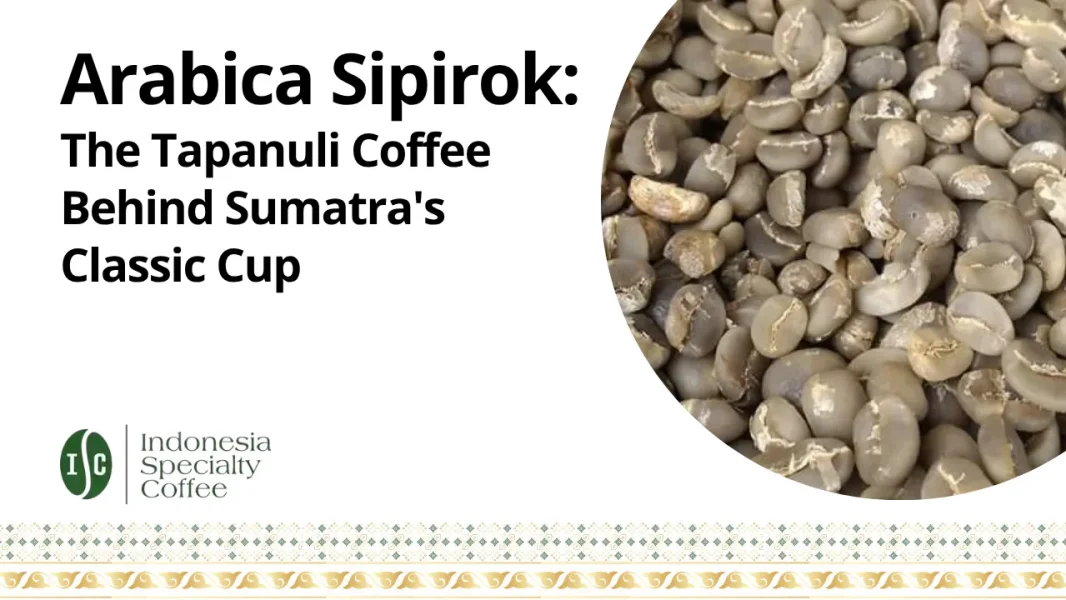
You can see it before you ever roast it. Wet-hulled green beans carry that distinctive blue-green, slightly mottled look, and the bean shape is often a little open at the center cut. On the cupping table, the gula aren sweetness is the tell for a good Sipirok lot. It sits underneath the earthiness rather than on top, and it is what separates a clean, well-sorted lot from a flat, purely savory one. Here is a detail only someone who cups a lot of Sumatra will flag: the sweetness and the roughest earthy notes both shift as the green rests, so a lot that cups muddy fresh off the container will often clean up and settle after a few weeks in the warehouse.
Sipirok sits inside the broader family of Sumatran arabicas. This table places it against three origins a buyer is likely to know:
| Origin | Region | Elevation | Body | Signature notes |
|---|---|---|---|---|
| Sipirok | Tapanuli Selatan, N. Sumatra | 1,200-1,500 m | Full | Palm sugar, spice, chocolate, low acid |
| Lintong | Humbang Hasundutan, N. Sumatra | 1,200-1,500 m | Full, syrupy | Herbal, dark chocolate, earthy |
| Mandheling | Tapanuli region (aggregated name) | 1,100-1,500 m | Heavy | Earthy, cedar, tobacco, spice |
| Gayo | Aceh, N. Sumatra | 1,400-1,800 m | Full | Earthy, dark chocolate, cedar, brown sugar |
The family resemblance is obvious, and it is the point. These are all wet-hulled highland arabicas, and they cluster around body, earth, and low acidity. Sipirok’s calling card within that group is its palm-sugar sweetness and a slightly cleaner, more aromatic lift than a heavy classic Mandheling.
The honest part: what “Sipirok” on a label guarantees
Here is what nobody selling this coffee wants to spell out. A Geographic Indication protects the name, but on the ground the label is loosely policed, and a bag marked “Sipirok” can be a genuine single-district lot or a broader Angkola-Tapanuli blend that leaned on the famous name. The GI tells you a coffee is eligible to be called Sipirok. It does not, by itself, tell you the lot in front of you is any good.
And there is a second honest point, the one about the cup. If you put a wet-hulled Sipirok next to a washed, high-grown Kenyan or Ethiopian on a clean-cup scale, the Sipirok will lose on clarity and brightness every time. That is not a flaw. That is not what you buy it for. You buy Sipirok for the opposite of clarity: for weight, for earth, for that palm-sugar sweetness and spice that no washed African coffee can fake. Ask for the wrong thing and you will be disappointed. Ask for what it does well and little else competes at the price.
The variety mix cuts the same way. A Sigararutang-and-Ateng base is productive and consistent, but it is not built to deliver the delicate, high-acid florals some buyers chase. Where a lot cups flat or woody, the usual culprit is not the origin but the sorting and drying: too many defects left in, or parchment dried too hard, too fast. That is a green-buying problem you solve with samples and a defect count, not with a regional name.
What this means for roasters and buyers
For a roaster, Arabica Sipirok is a body-and-sweetness coffee, and it rewards a roast that respects that. Taken to a full City-plus or light Vienna, it gives you the classic Sumatran base: heavy mouthfeel, low acidity, chocolate and palm sugar, a little spice. It shines in espresso and in blends where you want weight and a sweet, earthy backbone that holds up under milk.
If you are buying green, treat the name as the start of the conversation, not the end. Two things separate a Sipirok lot worth a container from one worth walking away from. First, the defect count and grade: ask where it lands against the Indonesian coffee grading standard (SNI 01-2907-2008), and cup for how clean it is, because wet-hulled coffee hides a lot until you rest and roast it. Second, the crop year, since Sumatran greens move fast and an older lot loses the sweetness that makes Sipirok worth choosing over a generic “Sumatra.”
One practical note for planning. This is smallholder coffee from a defined highland zone, so volume at a specific quality level is finite. If you find a Sipirok profile you like, lock in early in the crop year rather than assuming the same lot will be there in month nine.
Frequently asked questions
What is Arabica Sipirok coffee?
Arabica Sipirok is a wet-hulled specialty arabica from the Mount Sibual-buali highlands in Tapanuli Selatan, North Sumatra, grown at about 1,200 to 1,500 meters on volcanic soil. It holds an Indonesian Geographic Indication and cups full-bodied and low in acidity, with palm sugar, spice, and chocolate notes.
Where is Sipirok coffee grown?
Sipirok coffee is grown in Tapanuli Selatan (South Tapanuli), North Sumatra, on the volcanic slopes of Mount Sibual-buali and across sub-districts including Marancar, Angkola Timur, Arse, and Aek Bilah. Most of it is smallholder coffee farmed at 1,200 to 1,500 meters in and around the Sibual-buali nature reserve buffer zone.
Is Sipirok coffee the same as Mandheling?
Not exactly, and the history is the reason. Sipirok and Mandheling are neighboring Tapanuli origins, but “Mandheling” became a trade name because colonial-era coffee from the Angkola and Sipirok hills was aggregated in the Mandailing district before export. Much of what shipped as Mandheling was, in fact, Sipirok.
What does Sipirok coffee taste like?
Sipirok cups full-bodied with low acidity, sweetness like palm sugar (gula aren), and notes of spice and chocolate, sometimes with a lemon-tea lift on cleaner lots. Like most wet-hulled Sumatran coffee, it favors weight and earthiness over the bright, clean acidity of a washed African arabica.
What coffee varieties grow in Sipirok?
Sipirok gardens are dominated by Sigararutang, a high-yielding North Sumatran selection, alongside Ateng (a catimor-type) and scattered older Typica. Most farms grow a mix, which is normal for Sumatran smallholders and part of why Sipirok reads as a regional style rather than a single-variety coffee.
Does Sipirok coffee have a Geographic Indication?
Yes. Kopi Arabika Sipirok received an Indonesian Geographic Indication in February 2018 from the Directorate General of Intellectual Property. The certification ties the name to a defined production area and method, though buyers should still verify grade, crop year, and cup quality on the specific lot.
Sourcing Sipirok green coffee: where to start
Whatever supplier you use, ask for the crop year, the full two-step process description (semi-washed, then wet-hulled), and a recent cupping score and defect count before you commit to a bag, let alone a pallet. A good sample should show you clean palm-sugar sweetness under the earthiness, not just savory heaviness. If you want to cup Sipirok and its Tapanuli neighbors side by side, Indonesia Specialty Coffee ships small green samples of the North Sumatran lots we export from Belawan, so you can judge the coffee against your own roast and your own bar rather than a label.